Oh, China

Standard

Pingyao, China

Oh, China.

The most populated land in the world. The land of communism, of high-speed trains, of emperors, of tea, of tradition. The land where stuff is made. The land that is fast-developing, fast-acquiring power, fast-causing the world to wonder, “What’s next?”

After nearly two years living and traveling in Asia, China proved to be an altogether different experience from any of the other countries I had visited and on many different levels.

I originally did not have much interest in visiting China. In my mind I pictured one massive, overpopulated gray city after another, but after spending three months in India, another living ancient civilization, I figured that China must offer a more colorful culture to visit than I had given it credit for. At the very least, I decided I could not finish a trip throughout Asia without experiencing the world’s supposed next super power.

So off I went. Gritting my teeth, I dropped the $150, one-month, single-entry visa fee required only for Americans (other countries pay significantly less) and made a basic plan to hit China’s most significant destinations. Starting with the Special Administrative Regions (SARs), I decided to fly to Macau then travel the country in a counter-clockwise manner, hitting Hong Kong, Guangzhou (Canton), Shanghai, Beijing, Xi’an and Chengdu, before traveling through Tibet on way to Nepal. As always, this was a rough plan, subject to changing circumstances and interests. Sure enough, I found myself half-way dropping another $150 to extend my visa for a second month to accommodate the new destinations of Yangshuo, Wuhan, Hangzhou, Nanjing, Pingyao and Western Sichuan.

To be fair, China wasn’t entirely unlike my original expectations. I was a bit disappointed to find that China really was, in fact, often one massive, overpopulated gray city after another. While bits of the country’s glorious culture still survived (no thanks to Mao’s Cultural Revolution), I began to notice themes that repeated themselves throughout. For instance, Chinese people LOVE gardens, especially old Chinese people. It seems no matter where you find yourselves in the country, you will always come across groups of women dancing in the park, old men playing cards and mahjong, and people throughout practicing Chinese opera or musical instruments. The traditional architecture of Chinese temples, walls and buildings also repeated itself throughout the country, though I imagine to a lesser extent than what you would have found 60 years ago.

To my surprise, China was much more modern than I suspected. After months of dealing with frequent power outages, disorganization and dirty, garbage-lined streets, China was like visiting a developed country. Streets were clean, trains ran on time and modern chains like McDonalds, Starbucks and H&M popped up everywhere. Even the toilets, which though nearly all squatters, were the cleanest I’d found anywhere in Asia. That is, however, until I visited Western China, but I digress…

While these “luxuries” certainly made travel easier, there was one aspect that made China by far one of the most difficult countries through which to travel: the language barrier. Chinese people do not speak English.

No really. Chinese people do not speak English.

Furthermore, most signs and menus are written exclusively in Cantonese or Mandarin (or another Chinese dialect), making any attempt at figuring things out on your own nearly impossible. I knew going in that language would be an issue, but what surprised me the most was not that the Chinese could not speak any English but that they could barely communicate outside of their own language at all. So many times I found my efforts at speaking their language or using simple hand gestures completely in vain, even using the most seemingly-universal methods of communication. If my pronunciation did not sound exactly the way it does when they speak, the Chinese had no idea what I was saying. Simple gestures, like indicating locations on maps, mimicking the action of rolling on deodorant or pointing to an actual tissue in request for more left me only with a series of blank looks. I remember having a 10-minute “discussion” with a cab driver once in the beginning of my trip where he tried to tell me I needed to pay an additional 2 RMB for my cab fare. Instead of writing down the number two or indicating two with his fingers or a variety of other creative methods of communication, he simply said the word for “two” louder using the Chinese hand gesture repeatedly. I found this method of repetition, volume and fervor frequently throughout my travels in China (except near Tibet), like there was a total incomprehension that people could actually not understand their language.

All I can say is thank goodness for the bilingual friends I made throughout my travels and the Lonely Planet. I soon gave up any attempts at speaking and learned simply to point to the phrase I wanted in guidebook and hope for the best.

In addition to development, my method of traveling throughout China also made for an entirely different experience than the rest of my travels. After months of staying in cheap guest houses in both Southeast Asia and India, I decided instead to CouchSurf my way throughout China and save some money.

CouchSurfing is the greatest idea ever.

Basically, CouchSurfing is an international travelers’ network where people from different countries open up their homes to host travelers free of cost. While the network is ideal for those who have little money to spend on accommodation, the main idea of CouchSurfing is to break down cultural barriers to allow people of different backgrounds to share each other’s experiences on a more intimate level. While it may sound dangerous, the website’s highly-detailed profile system requires all members to fill out thorough information about themselves and what they’re offering and also contains a very comprehensive reference system where people can leave positive or negative reviews about the other CouchSurfers they meet to hold them accountable.

I joined the system when I moved to Malaysia in order to take part in the social events and meet new people. It wasn’t until my travel budget began to dwindle that I decided to CouchSurf properly and find local hosts, which proved to provide a completely different experience for my travels.

Unlike staying in a guest house, staying with a local resident is much more like being at home, and often times you find yourself with your own room and comforts and a more authentic living situation than you’d find elsewhere.

I was fortunate to find some amazing hosts. Whether it be Suraj, my first host in Macau who picked me up from the airport when I first arrived in China and made sure I didn’t gamble away my savings or Althea in Hong Kong who spent three days showing me around her city and inviting me to a home-cooked Chinese meal with her family, or Stephen, my witty American host in Beijing with whom I spent a week discussing American politics and singing 60s music, I made some amazing new friends in China, many of whom I expect to remain friends with for a long time.
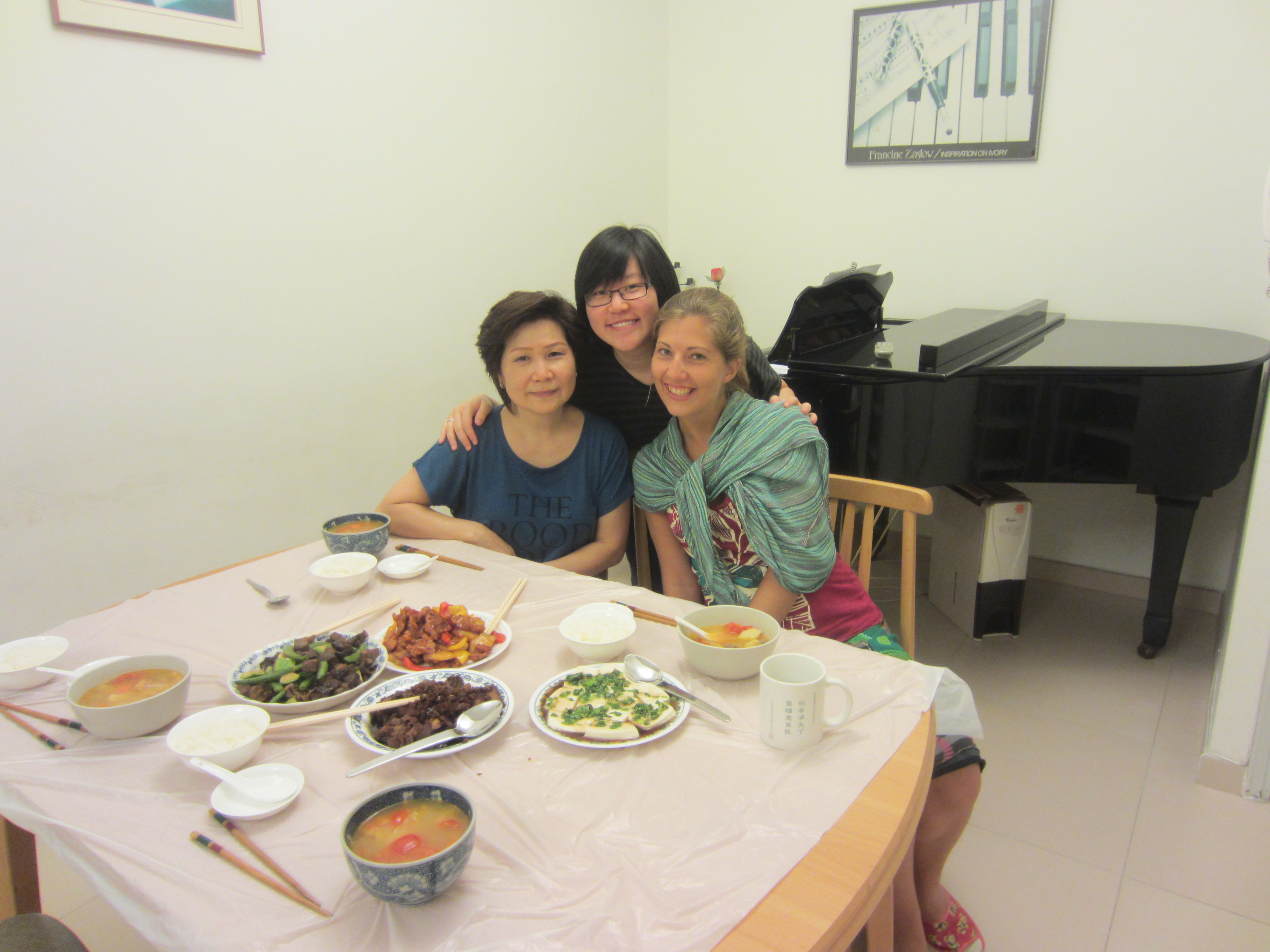
Hong Kong Meal

Enjoying a home-cooked meal with Althea and her mother

On the other hand, CouchSurfing purely also posed its own set of difficulties. When traveling alone, it’s usually in guest houses where you make travel buddies and exchange ideas on where to go next or where to avoid. While my hosts were amazing, they also had real lives and jobs, and I often found myself alone during the day to experience the sites by myself, which can get a bit lonely, especially in a country where people do not speak English.

After nearly two years living in Asia, China also reunited me with two people from my past who also happened to be in the country. Josh, my former childhood neighbor who moved to Beijing over 10 years ago, brought a welcome taste from home as we discussed our lives, our families and our changes since being in Asia. I was also fortunate to meet up with my college friend Marja who was on a dance tour throughout China. After losing touch after college, it was wonderful staying up until 5 a.m. chatting together and catching up on our lives from the past six years.

Among all these people, new and old, was a common theme: the real world, something I had successfully and delightfully avoided the previous eight months. Unlike other wandering, carefree backpackers, these people had real jobs, real lives, real aspirations and for the first time in months, I found a real pressure to “be productive” and do something important with my life. Instead of dreaming of future travel destinations, I found myself fantasizing about returning to the young professional life back in the U.S. and really developing some kick-ass career. Thank God I went back to hippie-land in India afterward ;).

While I wasn’t always in love with the country, the new relationships I made in China and the modernity of the land itself reminded me much of the world I had left behind and caused me to question what I really wanted out of life. Though I’m still sorting all that out, I am grateful to the new experiences and challenges China presented to me.

The following are largely photo essays and a collection of the most beautiful, entertaining or interesting things I discovered in China.

The Big Jump

Standard
The Big Jump

“Darr Ke Aage Jeet Hai,” – Beyond Fear Lies Victory.

This Hindi saying, shared with me by my Indian friend Naren on convincing me to jump off a 160-meter bridge, is quite apt.

While some may disagree, I have realized in recent months how many of my decisions have been motivated by fear: fear of public perception, fear of death, fear of rejection, fear of regret. I’m not afraid to take risks, moving abroad and backpacking solo for nearly a year across Asia is evidence of that, but that doesn’t always extend to all parts of my life.

For me, bungy jumping was never even a consideration.

Aside from the fact I really had no interest in the activity, my mother had firmly ingrained this “bungy jumping is dangerous and equals sudden death” mentality into my head since I was a child. That stuff runs deep.

But the minute I landed in Kathmandu, Nepal and saw the bungy advertisements, something changed. My birthday was coming up, and somehow that firmly ingrained idea of “never” changed into “wouldn’t it be crazy if…” While 28 has never been considered a milestone, this birthday was coming near the end of my once-in-a-lifetime epic journey throughout Asia, and I knew I wanted it to be special.

Still, this was a long shot. Even if my thirst for adrenaline were to eventually rise to bungy-level, I was still on the white water rafting/rock climbing/parasailing stage, bungy jumping was an exponential leap up.

When I met up with Naren and semi-jokingly put forth the idea, I should have known better than to ask a guy who runs adventure sports camps for a living. His very enthusiastic “Yes, we’re doing it!” scared the daylights out of me. Though my reply was “Let me think about it,” my sharply rising anxiety levels told me the decision had already been made: I was going to jump.

For days my fake indecisive self was stressing. I suddenly found the need shop constantly and eat everything (how many momos are too many? ;)) and sleep was fleeting.

The night before, waiting last minute to hand over my $100 to the bungy agency, signing a “you-realize-you’re-jumping-off-a-bridge-wearing-only-an-elastic-band-it’s-not-our-fault-if-you-die-insane-person” waiver, my crazy levels rose yet again. I began running all over Kathmandu asking every person I met whether or not they had ever jumped from a 160 meter bridge and what they thought of it, while constantly chanting (or rather butchering) “Darr Ke Aage Jeet Hai” (luckily Naren is a very patient person and found my nuttiness rather amusing).

And then, the big day. The craziness peaked.

Nepal Bus Ride

On the bus ride to the bungy jump!

Aside from death, I was more realistically afraid of the intensity of the adrenaline rush and if the free fall would be too much for me, leaving with me memories of extreme terror and a fear of heights I did not have before.

But on the lovely five-hour bus ride through the mountains (which realistically, is WAY more dangerous), I decided that I could control my reaction to how this jump turned out and whether or not it would be a positive or negative experience. If I chickened out, I not only lost $100 but my pride. I was going to own this jump. Like a boss.

Step 1: Sleep deprivation. Deciding to pack four hours before your scheduled bus departure puts you in a loopy enough mood to soften the reality that you’re about to plunge yourself over a bridge into a massive canyon.

Step 2: High energy dance music. Probably the most fun part of our bus trip was Naren and I riding up the last strip rocking out to Rick Astley, Queen and Motown (“ ‘Cause baby there ain’t no mountain high enough…” ;)) working ourselves into a manic frenzy to prepare ourselves.

Step 3: Don’t think. Just do.

When we finally reached the resort, I think everyone in the bus had a moment of “Oh $%!#! Are we actually doing this?” And then it was the briefing: stand here, hold this, don’t look down…

Bungy Canyon

The 160-meter drop down…

While I had actually signed up for traditional bungy, I opted last minute to switch to canyon swing, an equally terrifying jump in a harness that would put less strain on my bad knee and offer twice as long free fall time.

And then it was time to walk the plank. To my surprise, the line moves along rather quickly, and I was running out of chicken out moments. Harness on, inches from the jumping platform, I asked the jump master to give me a second to catch my bearings. He smiled and said, “Don’t worry, you get three.” Very funny, that one.

Erica Hobbs Bungy Jump

Freaking out before the big jump

As Naren waited a few feet behind me, anticipating a highly-dramatic, song-and-dance freak out routine, my mind went suddenly clear. I felt the pull of the canyon line, looked ahead to the mountains and did the only action required of me: I jumped.

The minute you step off the platform the decision is made. No more freak outs, no more opportunities to back out, all you can do is sit and enjoy the ride. And what a ride it was.

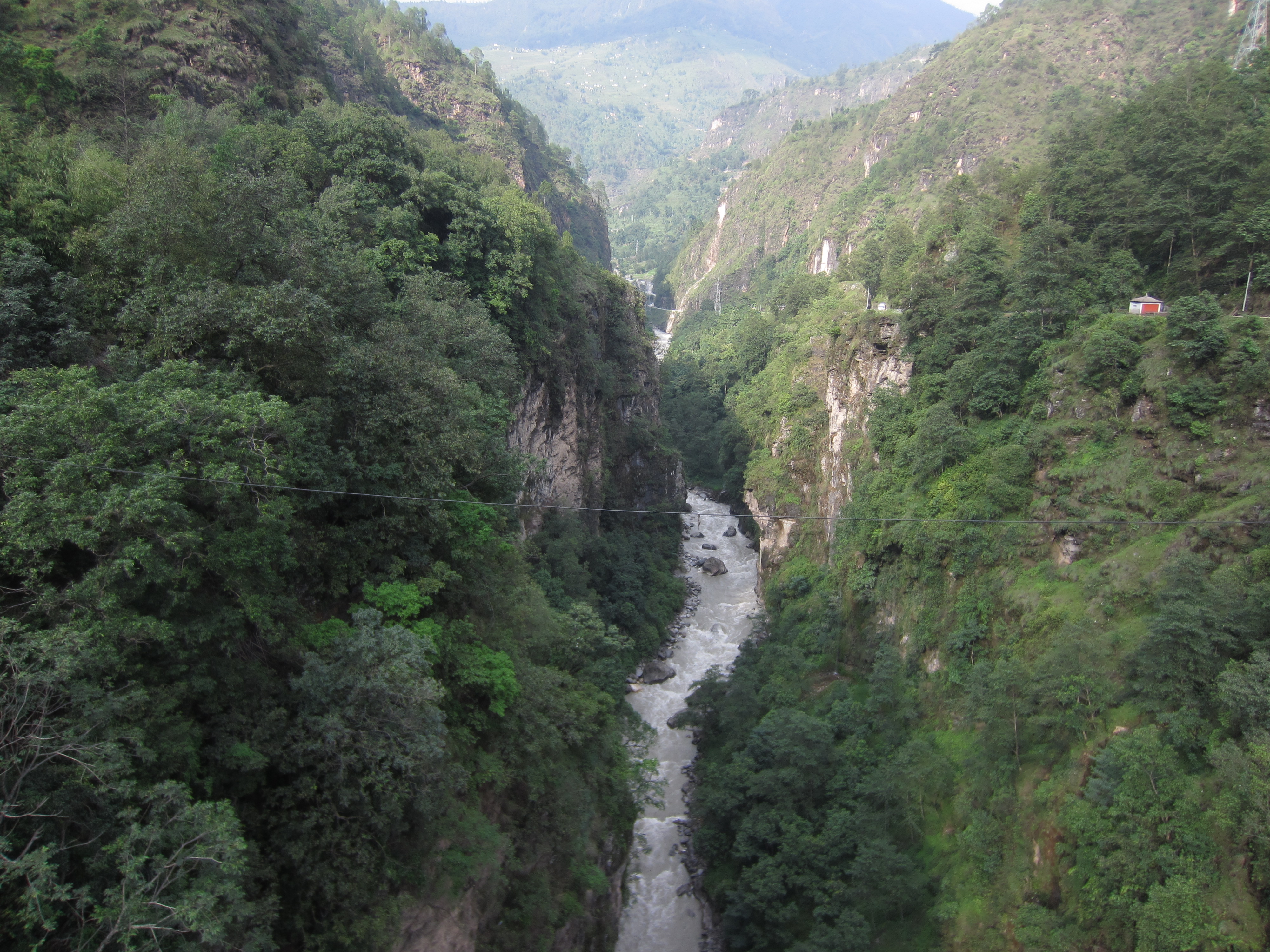
Like a second before, my mind went blank, I didn’t even scream. Instead, I felt my eyes get very large as I took in the blurry mountains, trees and river that were rushing by all around me. For seven seconds, I was weightless, and though it was by far the biggest adventure rush I had ever had, it wasn’t nearly as scary as I thought it would be. And when I felt the harness catch (yay, I survived!), the leisurely swing through the canyon provided one of the most beautiful sights I’ve ever seen.

Bungy Canyon Nepal

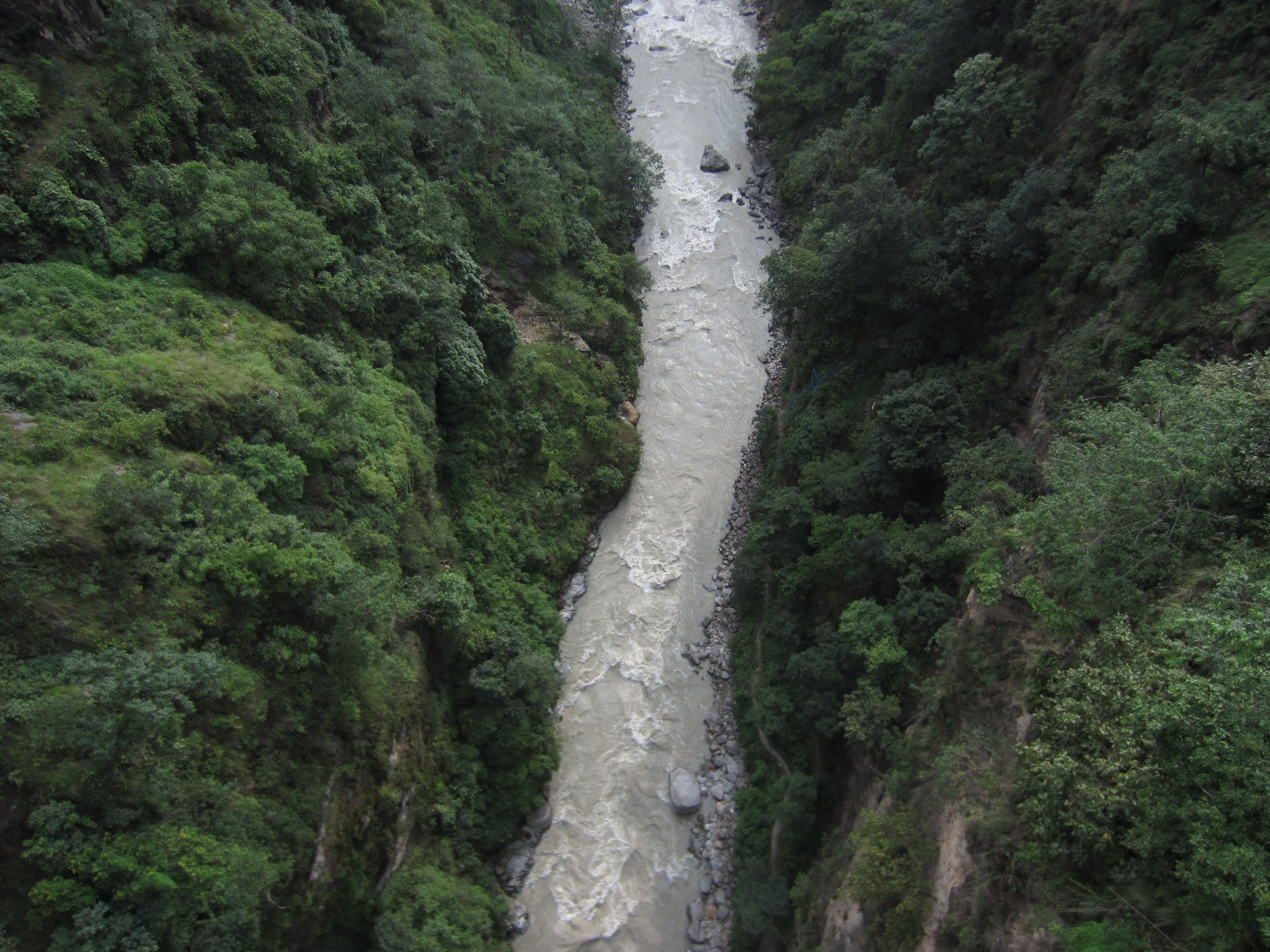
The view from the bungy bridge – in Panglang, Nepal, 12 km from the Tibetan border

But more incredible and unexpected than anything was the immense sense of satisfaction I felt afterward. I had faced my fears and won. And the feeling was truly victorious.

While it was only a jump, freeing yourself from the control of fear is one of the most liberating feelings ever. I’d like to think now that it will be easier to apply this “jump” to other aspects of my life as well.

If not, I suppose I can always try again. Skydiving anyone? 😉

After the Jump

Victorious – Darr Ke Aage, Jeet Hai!

Elections

Standard

As mentioned in my first Myanmar post, I was a bit nervous traveling to a country whose government has such a violent and oppressive reputation.

And of course, they would be having by-elections during my visit.

While everybody said election time should be safe, I wasn’t really sure what to expect. This would be the third time in more than 20 years Myanmar had a democratic election, and only two years since the military government transformed into a “civilian” government, still led by former military men. Furthermore, this would be the first time Aung Sang Suu Kyi’s National League for Democracy (NLD) party would be running for office since “The Lady” was put under house arrest in 1989 and her party’s landslide 1990 election victory nullified by the military junta.

Curious? Yes. But very, very concerned…

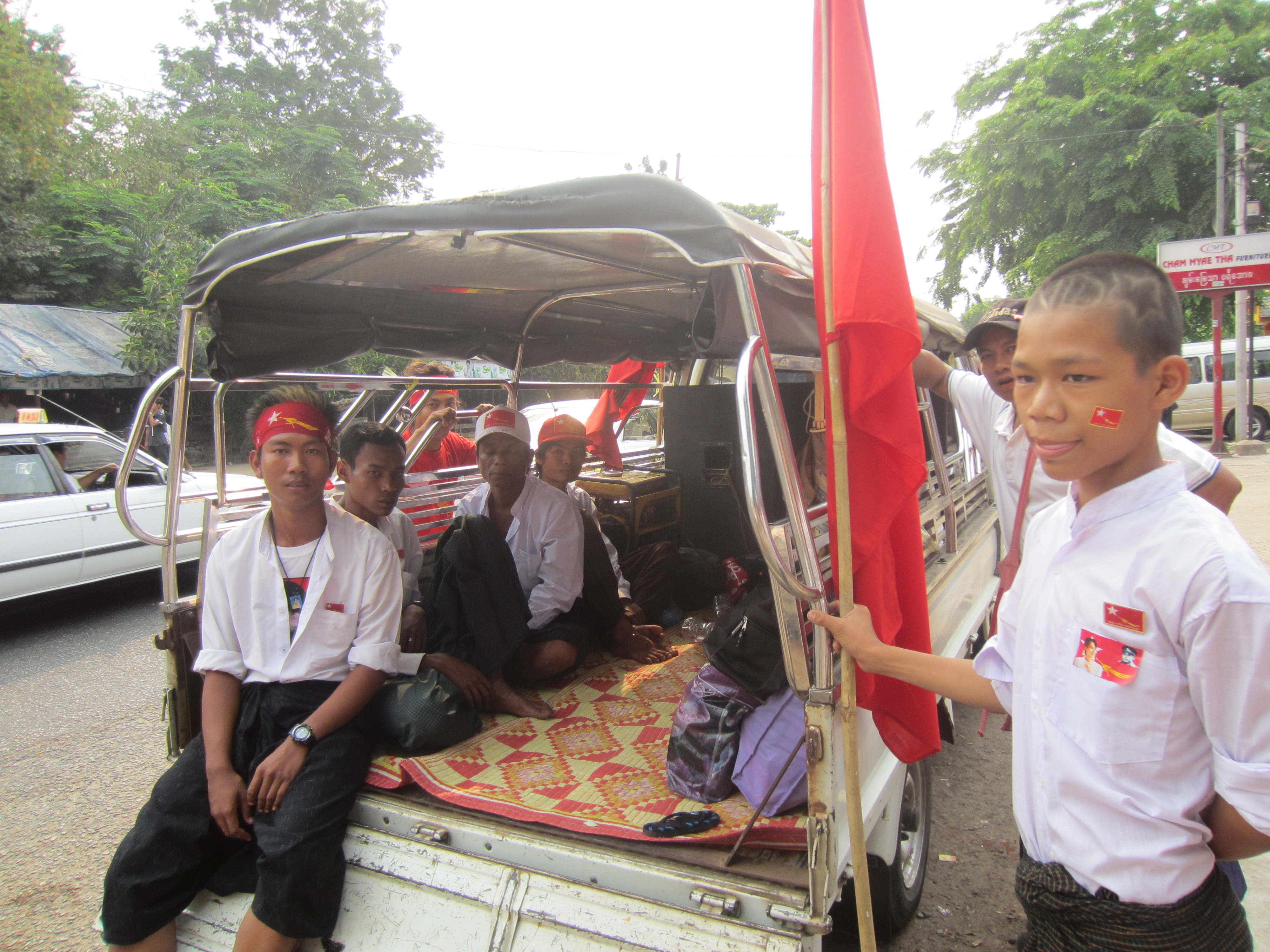
In the weeks leading up to the election, we saw campaigning throughout Myanmar, and it was fascinating. Parades of trucks drove through small towns bearing loudspeakers and loads of people, all wearing NLD t-shirts and all with big smiles on their faces. Campaign tables sold t-shirts, buttons and flags bearing the red NLD slogan and faces of Aung Sang Suu Kyi, as well as her father General Aung Sang, heralded by many as the father of modern day Myanmar.

Myanmar Elections - Kalaw

National League for Democracy campaigning in Kalaw

As the world watched (foreign observers being allowed in for the first time), the NLD succeeded in winning 43 out of the 44 seats it contested and largely without problems. While the win only gives the NLD a small minority in Myanmar’s still military party-dominated parliament, it does give them a foot in the door and a voice unheard for the past 20 years.

Unfortunately, I was caught in a 12-hour bus to Yangon on the day following elections, but when I did finally reach the city I still found plenty of activity happening in the NLD headquarters. While the immediate celebrations had finished, dozens of people still loitered both inside and outside the building, while supporters continued to sell NLD t-shirts and other items outside. In fact, vendors all throughout the city were selling NLD t-shirts, something that would have been unheard of, even illegal, just a few months beforehand.

Myanmar Elections - NLD Headquarters

NLD supporters outside the party’s headquarters in Yangon

While speaking with supporters outside, one girl invited me to an election celebration to be held the following day in a town nearby. Between her broken English and our rushed conversation, I really had only a 30 percent idea of what was actually going on the next day. All I knew was I had an address scribbled on a piece of paper written in English and Burmese with instructions to arrive around 9 a.m. the next morning.

Somehow the next day, I managed to convince my friend Gloria plus two random strangers to share a taxi with me to the middle of nowhere to take part in a random event I vaguely understood. And the experience was unforgettable.

An hour from Yangon, we found ourselves in North Okkalapa, a small, poor village and hometown of Naing Ngan Lin, the NLD winner of Dakkina Thiri, one of the constituencies of Myanmar’s capital city, Nay Pyi Taw. We had been invited to his post-election party.

When we arrived in the town, Naing Ngan Lin and about 50 friends, family and supporters were eating and celebrating in a small restaurant in town. As the only foreigners, we were quickly made the center of attention, with everyone, including Naing Ngan Lin himself, eager to speak with us.

Naing Ngan Lin

Naing Ngan Lin and his family

Naing Ngan Lin had an interesting story.

He told me he had been involved in politics for the past seven years, though mostly as part of a separate democratic party, the United Front of Burmese Activists for Democracy, before choosing to join the NLD.

His main contribution, however, were his schools.

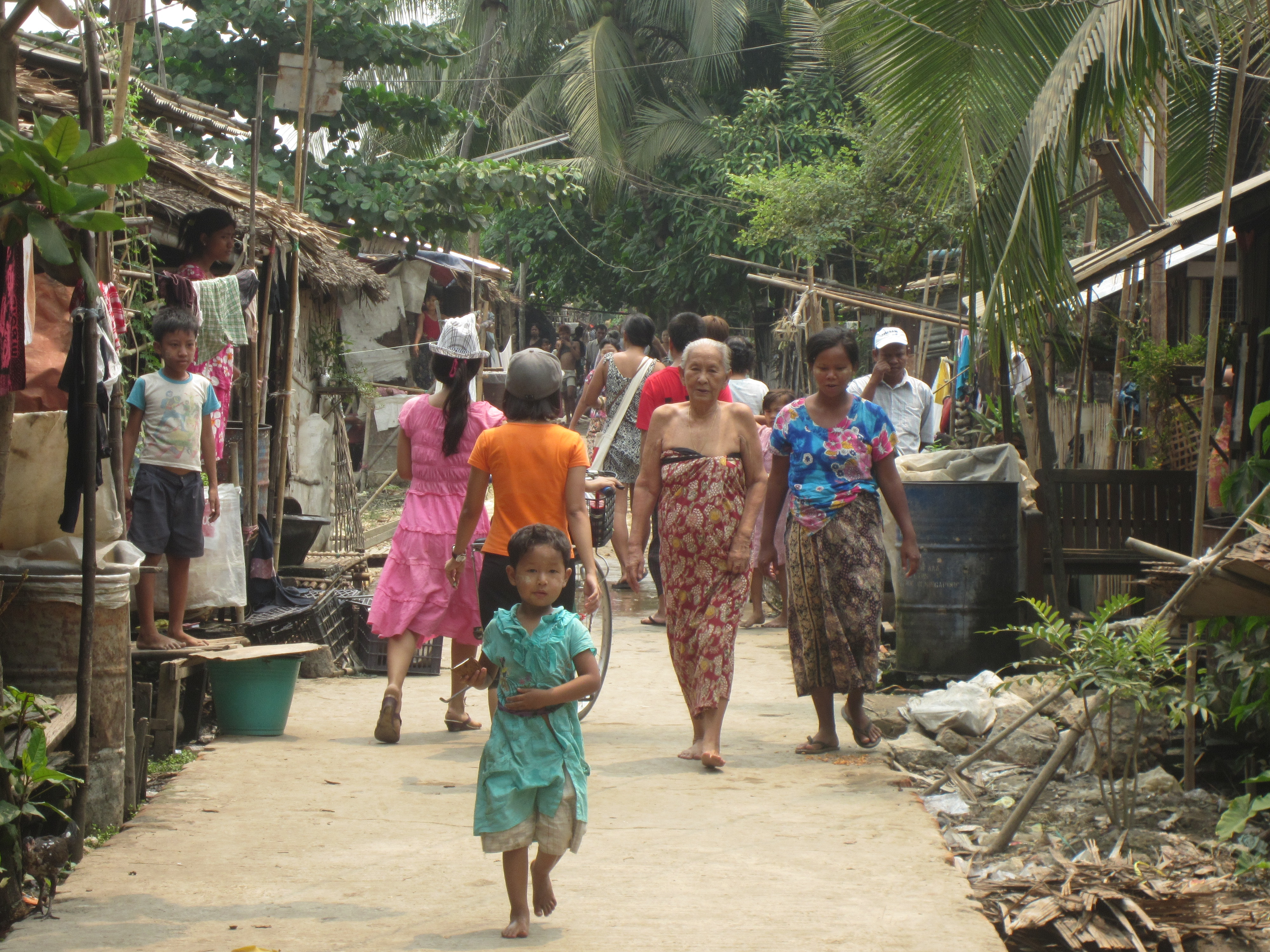
Walking through Northokkalapa, rundown houses stand on stilts standing above mucky water and garbage-covered dirt, while children and stray animals run freely throughout. While money was clearly an issue, one woman told me that many children could not attend school, because they had to stay home and take care of their younger brothers and sisters while both of their parents were at work.

Northokkalapa, Myanmar

Northokkalapa

Naing Ngan Lin’s goal had been to build free schools for children who could not afford to attend the government schools, and he had created five schools to date.

But Naing Ngan Lin’s political activities had made him a suspicious figure by the government for years. In fact, he told me he had been arrested twice, first in 2006 for suspicions that a foreign teacher had been illegally giving scholarships for his school (which Naing Ngan Lin said was false) and second in 2009 for “no reason” one day outside an Internet café. Naing Ngan Lin said, though treated well, he was detained for two months the second time and only released after American Senator Jim Webb’s high profile visit to the country in 2009.

Even during his legal campaign for his NLD seat, Naing Ngan Lin told me two of his campaign workers had been threatened, though none of that seemed to faze him. His sights were set on the future. Now, he said, his constituency had two main problems: access to clean water and consistent electricity, and he told me he planned to build a new well.

Leaving Northokkalapa, I was grateful I had taken that random taxi to the middle of nowhere and gotten just a little piece of what these historic elections are like for people on a more intimate level.

While it’s only been a few months since the elections, things have already started changing for Myanmar, with both the European Union and the United States lifting some of its sanctions against them. Though only small steps so far, I will be very eager to see what happens next…

This slideshow requires JavaScript.

Breathtaking Bagan

Standard

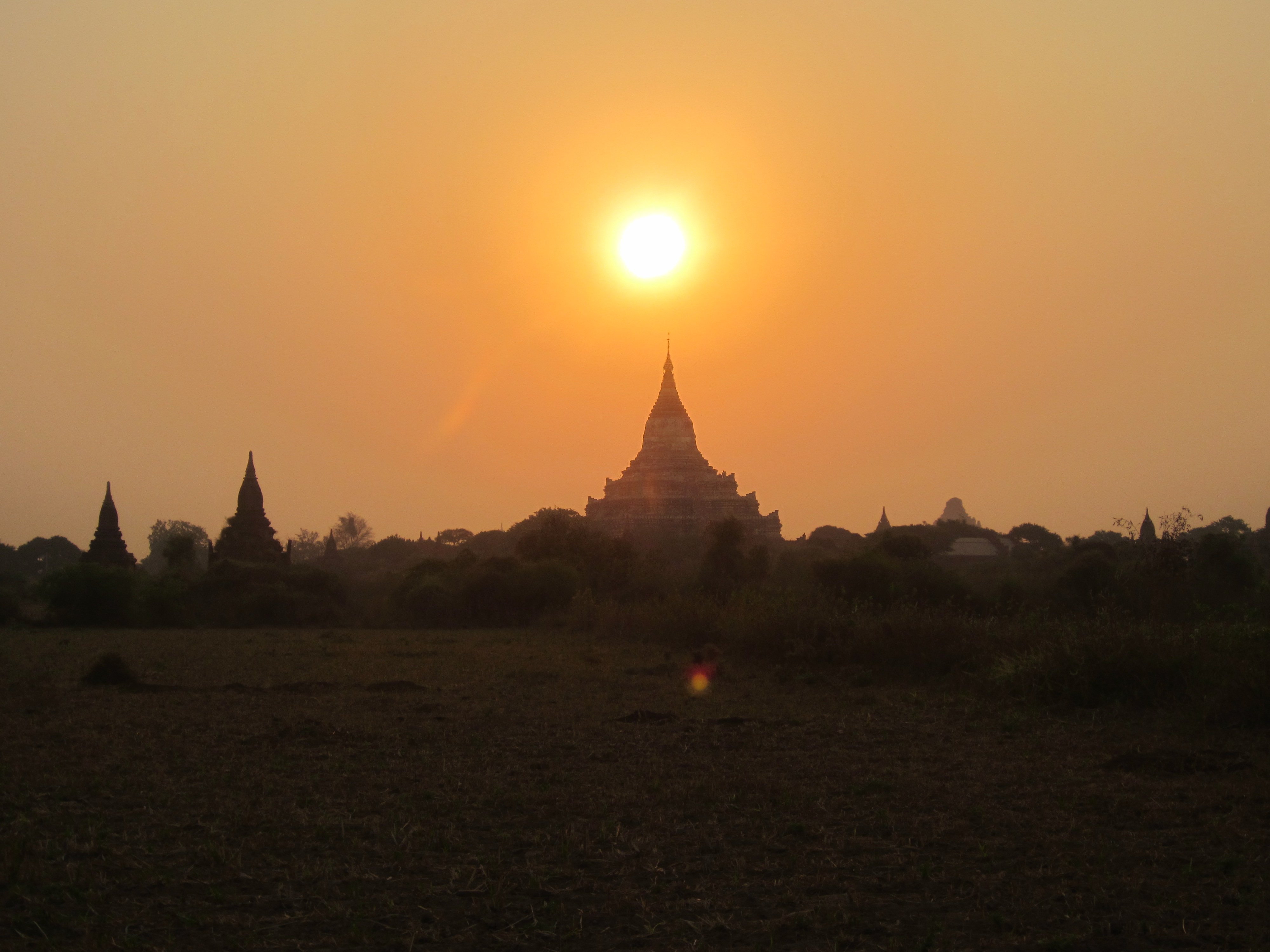
There are a few times in life when everything just seems to come together to create a truly incredible experience. For me, that was Bagan.

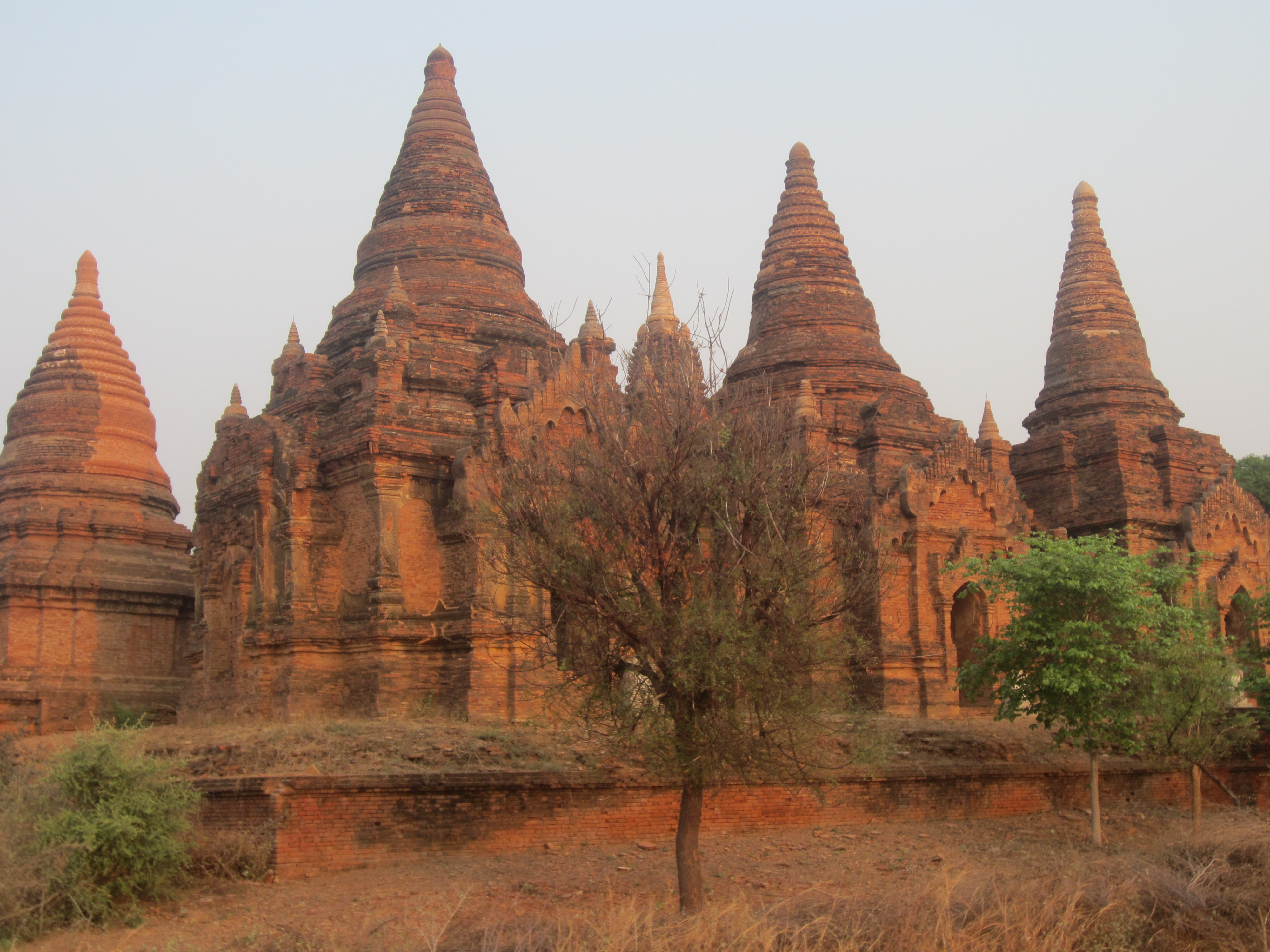
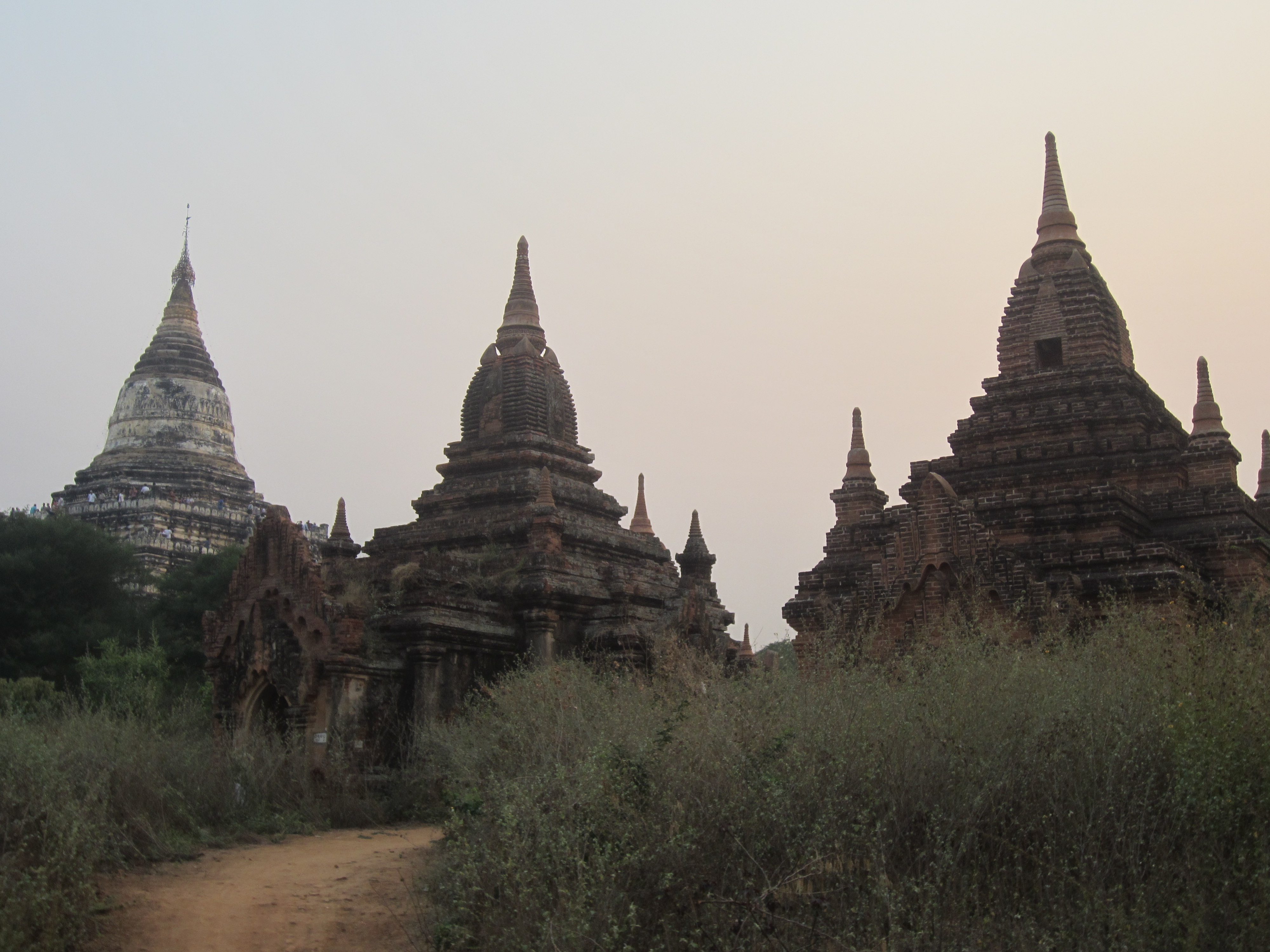
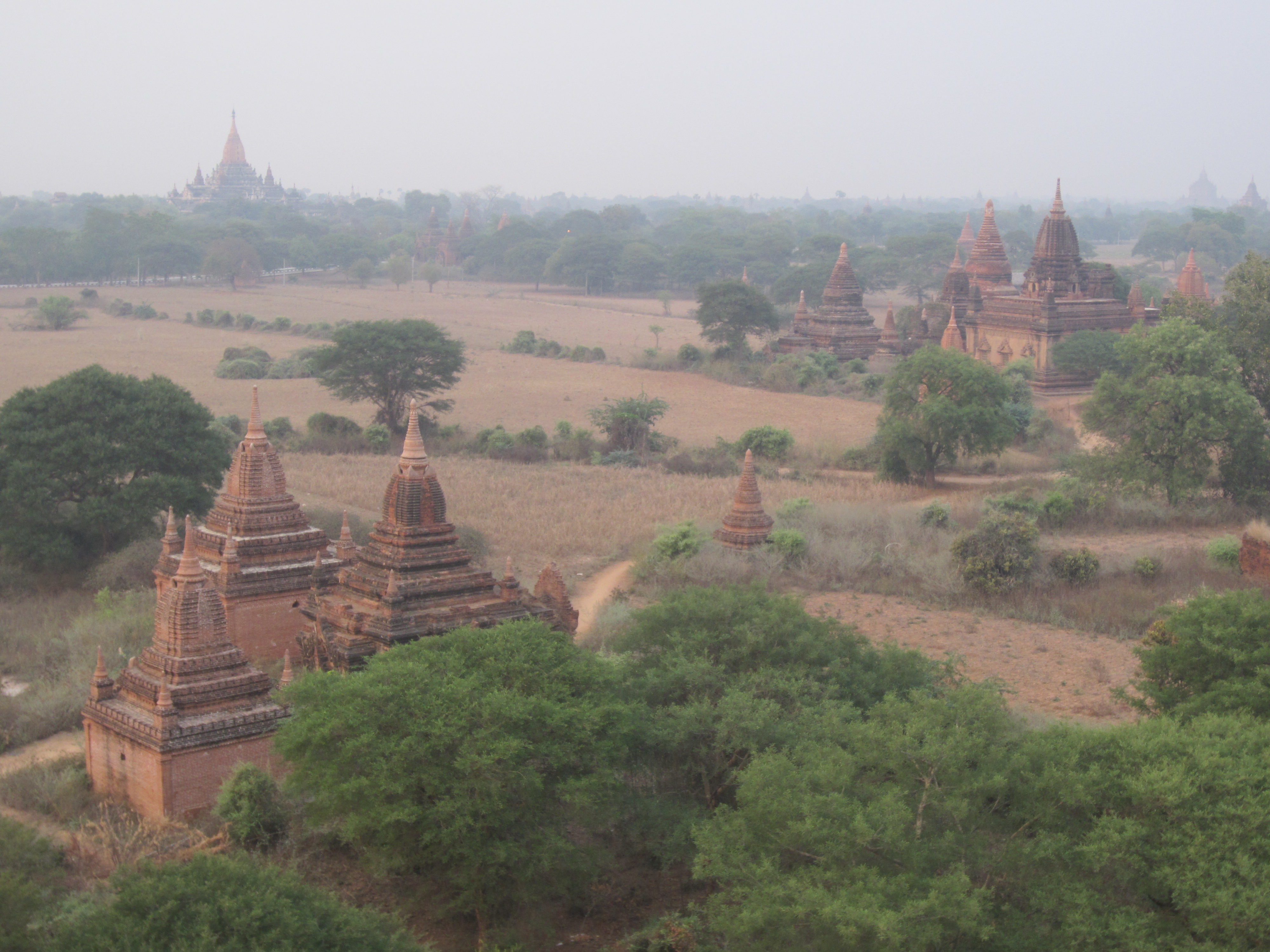
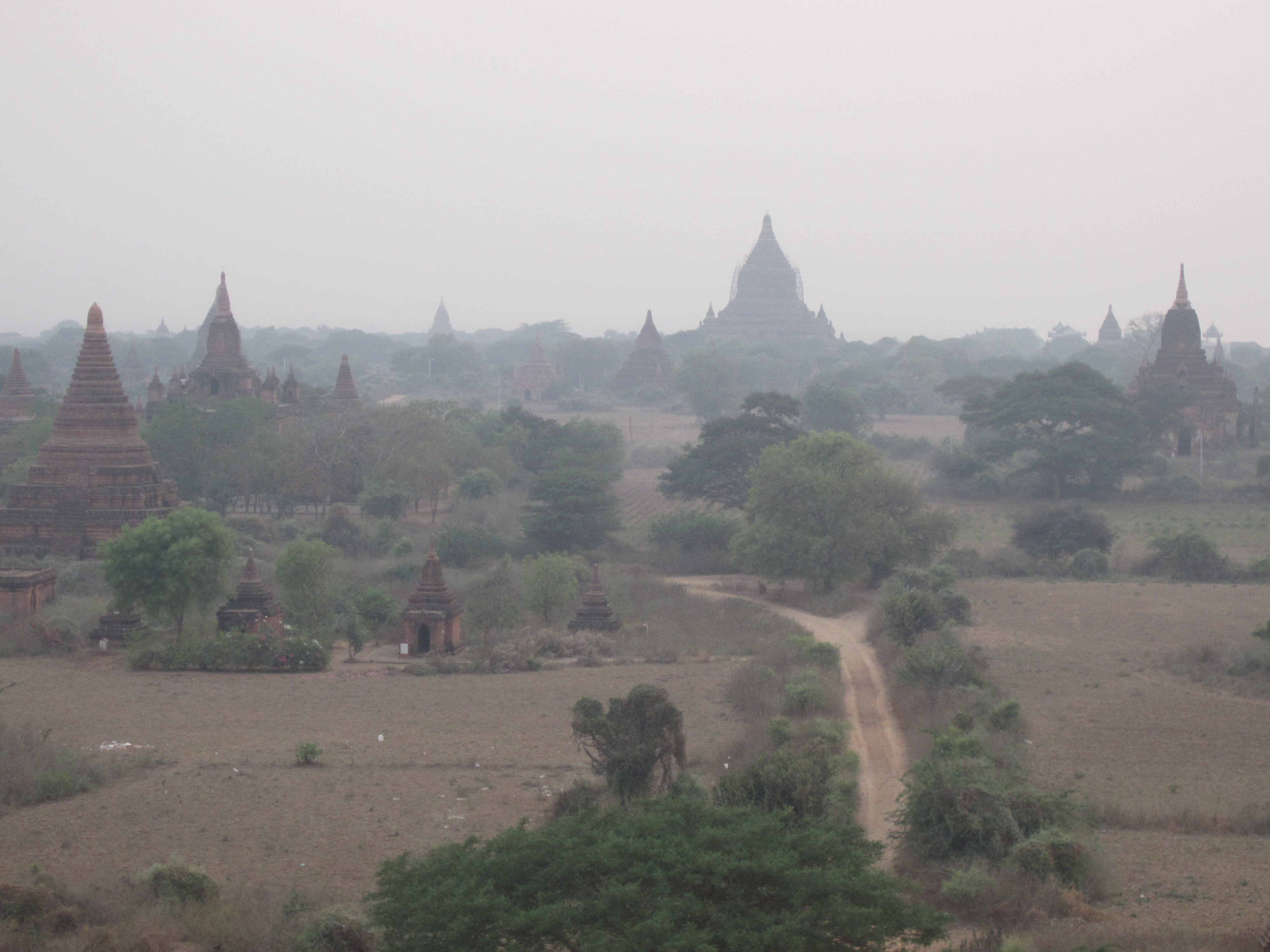
Situated in Western Myanmar, Bagan is THE destination to visit in Myanmar and definitely a highlight of all Southeast Asia. While itself just a small town, Bagan is famous for having possibly the world’s most concentrated collection of temples, pagodas and stupas, most dating from the 11th- 13th centuries. In fact, more than 2,500 temples are scattered among a 13 by 8 km area, leaving endless opportunities for exploration.

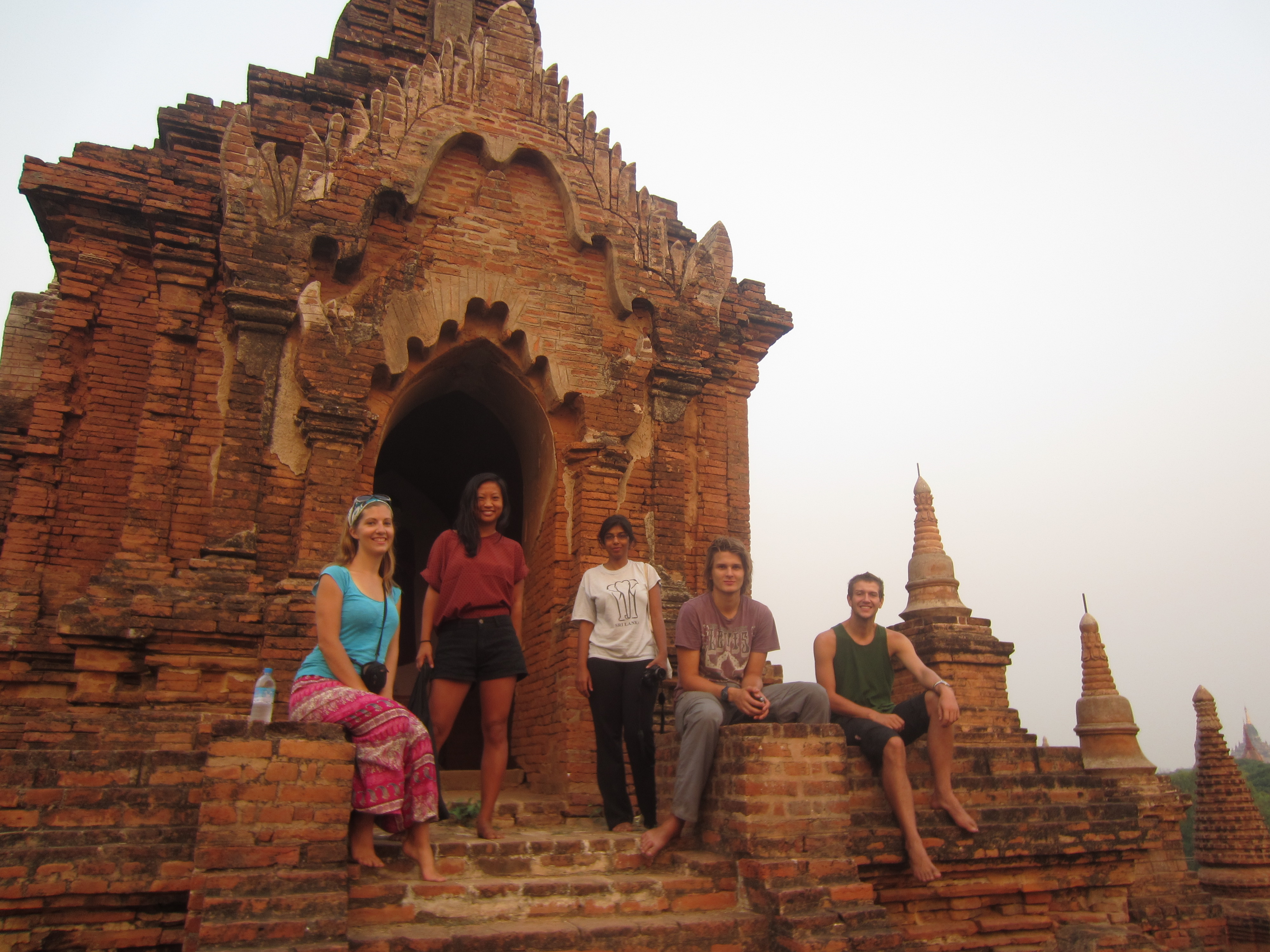
While in itself Bagan is a spectacular destination, what really made the experience incredible were the people. For this trip, I was able to meet up with my former India travel buddies, Gloria and Sirisha, as well as a few new friends, Waldo, James and Tom. Together, the six of us spent an incredible three days, cycling around the temples, arguing over what time to get up for sunrise, getting lost and, eventually, cycling back together, four out of six bikes with flat tires (a special thank you to Waldo for cycling back with me in the back seat WHILE carrying my bike when both my tires went flat!). There were also plenty of fun non-temple moments, watching movies, cutting up “80s” t-shirts, and making a strange pact to volunteer to dig up dinosaur bones in Utah with the paleontologists we met at breakfast…

At the end of the day, Bagan is much better seen than described, and below I have the best pictures of the temples, and fun, of Bagan.

This slideshow requires JavaScript.

Bridge Over Troubled Water

Standard
Bridge Over Troubled Water

A close friend of mine always says no matter how stressed out I get, things always have a tendency to work out for me. Sometimes I think he’s right.

After having spent an incredible few days in Kyaukme, a small Shan town in northern Myanmar, I headed to Mandalay to meet up with some friends. As Myanmar’s second largest city, Mandalay is noisy, dirty and, frankly, one of my least favorite places in Myanmar. It’s real draw, however, are the ancient cities surrounding it, especially Sagaing, Inwa and Amarapura, home of U Bein’s Bridge, the world’s longest teak bridge.

My friends James and Tom and I decided to share a taxi for the day and hit all three cities together, ending with a spectacular sunset viewing off the bridge.

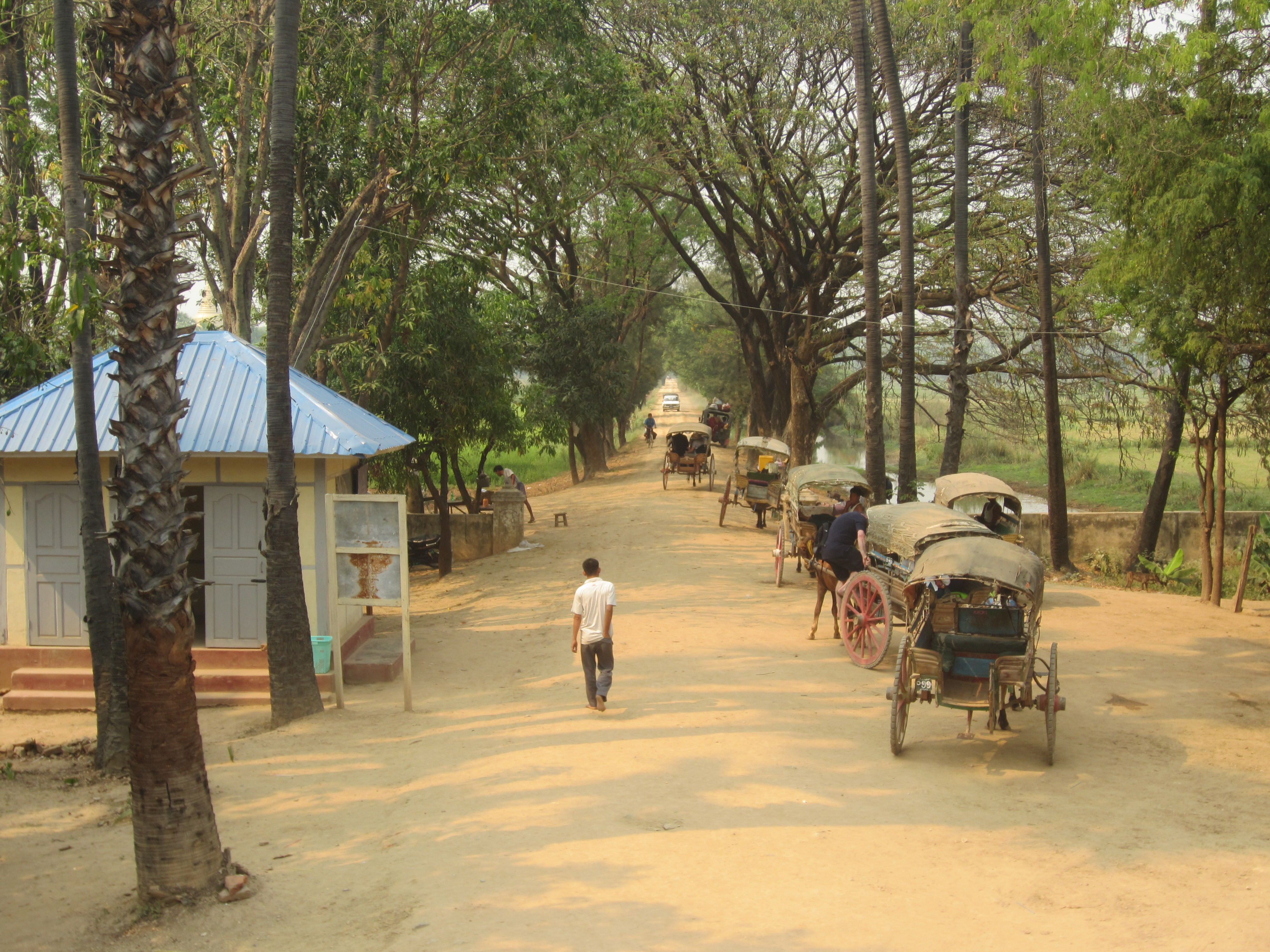
We hiked up the endless stairs of Sagaing Hill and viewed the stunning interconnected monasteries below. Then we took a boat and headed to Inwa, my favorite, where we took a horse-drawn carriage past endless sunflower fields to view the town’s ancient temples. Unfortunately, as I stood poised to capture a particularly beautiful temple, I heard my camera beep and watched my lens sink back to the base in exhaustion. I had forgotten to charge my battery the night before.

Inwa

Inwa

While I kicked myself for my mistake, James and Tom graciously shared their cameras with me, allowing me to use my memory card so I could take my own pictures. Though it wasn’t a super easy situation, I thought it was a pretty neat trick.

After a busy day climbing steps and walking around villages, our exhausted bodies were ready for a relaxing evening in Amarapura where we could enjoy a peaceful sunset off the bridge.

“Peaceful” ended up being the least accurate word I could use to describe that evening.

Upon arrival in Amarapura, James and Tom headed off to travel the length of the bridge, while I decided to grab a snack before sunset. As I sat down to a steaming plate of deep fried corn (snack options were limited), I met Marcus, a solo traveler from Toronto and struck up a conversation.

When sunset approached, Marcus and I headed for the bridge together, making our way down the 1.2 km bridge to join the hundreds of other tourists who had also come to watch the sunset. I had told Marcus about my camera battery situation, and he generously offered to share his photos with me via email later on.

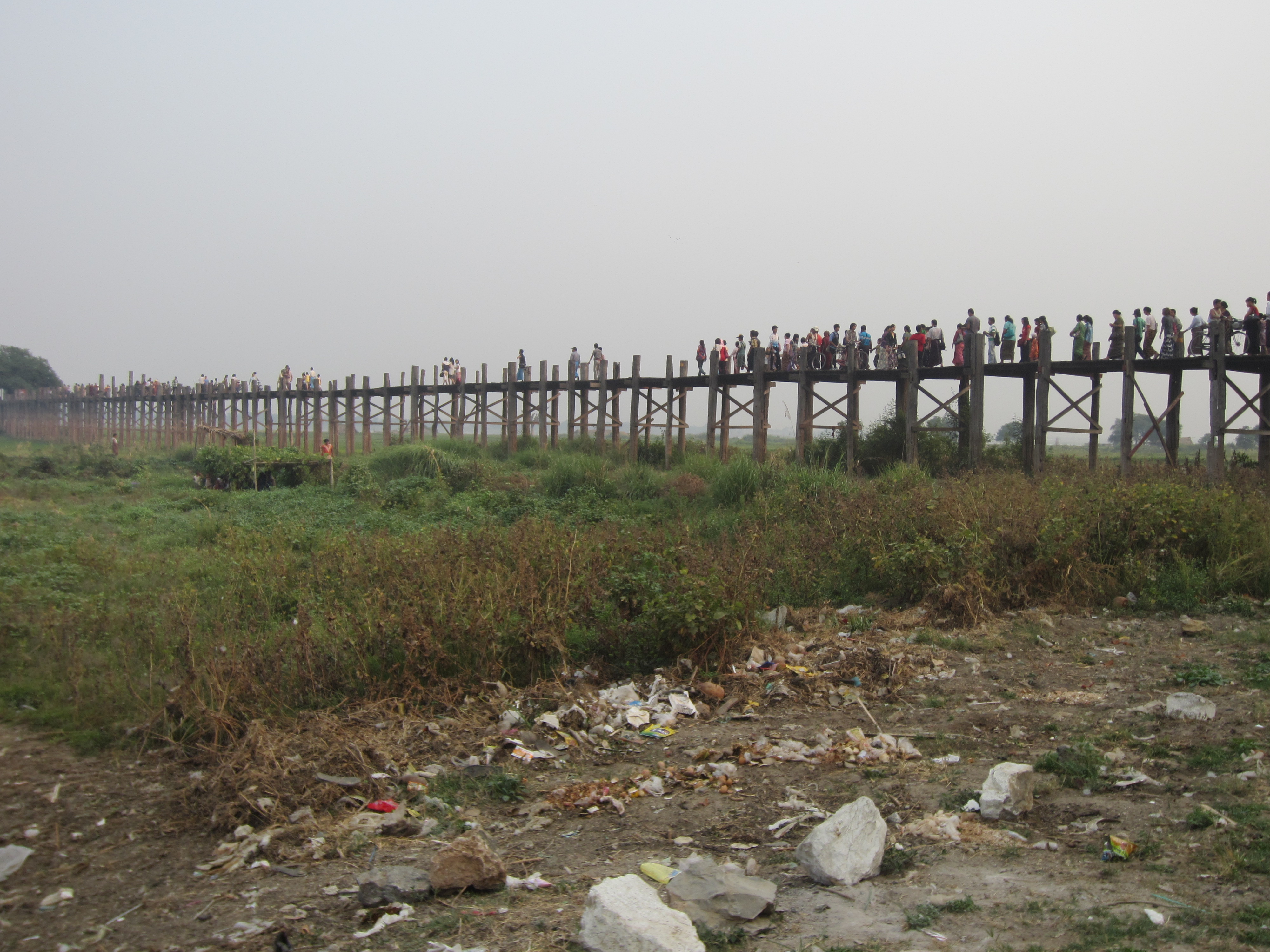
U Bein's Bridge

U Bein's Bridge, the world's longest teak bridge

But as I looked around at the boats, the people, the water and the sinking sun, I didn’t want someone else’s pictures. I wanted my own. So I asked Marcus if he would mind if I borrowed his camera for a few minutes just to take some photos with my own memory card, and he agreed.

Despite the fact we were standing over a wooden bridge amidst a moving crowd, neither one of us thought perhaps exchanging 32mm x 24mm memory cards might be a bad idea. And sure enough, the second I removed the card from the camera a man bumped into me, and it dropped from my fingers.

As I watched the card slip through the wood cracks, I saw every single non-backed up memory of my incredible experiences in Kyaukme and the Shan villages slip away into the green waters below. Unlike all of my other Myanmar adventures, my trip to the north had been solo.

I’m pretty sure my heart stopped for a full minute, which is especially bad when the whole scene appeared to be in slow motion.

In my shock, I turned to Marcus for confirmation that this horrible stupid thing did happen.

“Did you see that? That old man bumped into me. It’s gone now, right? Like, I can’t get it back, right?”

As he stared back at me, equally shocked, my heart sank. My card, though in itself was relatively worthless, contained all the evidence I had of my experience in Kyaukme. And it was a goner.

I stood there, eyes popped in disbelief when suddenly, a beacon of hope: a monk.

“Excuse me, Miss, I help you?”

The monk had seen everything, and though his English was limited, told me the water below was relatively shallow, and I might be able to fish the card out.

I jumped up excitedly, “Yes, yes!”

As I looked around for the best way to get down, I heard the monk speak to a local boatman below about the situation, and he too agreed to help.

I instantly went into super focus mode. By the look of the sun, I had about 15 minutes left until sundown, when all would be lost. Even if the card was retrievable, this was a race against the clock.

I immediately shot off, gaining an incredible second wind that allowed me to dodge people, leap over obstacles and round off back handspring back to land (more or less ;)). Once there, I realized how far along the bridge I had been and began the awkward walk through the dried plants back in the direction I’d come from to find the closest place from which to wade.

When I finally reached the location (luckily Marcus had stayed to mark the place where I had dropped the card), I was relieved to find the boatman was already in the water scooping with his fingers in the muck below.

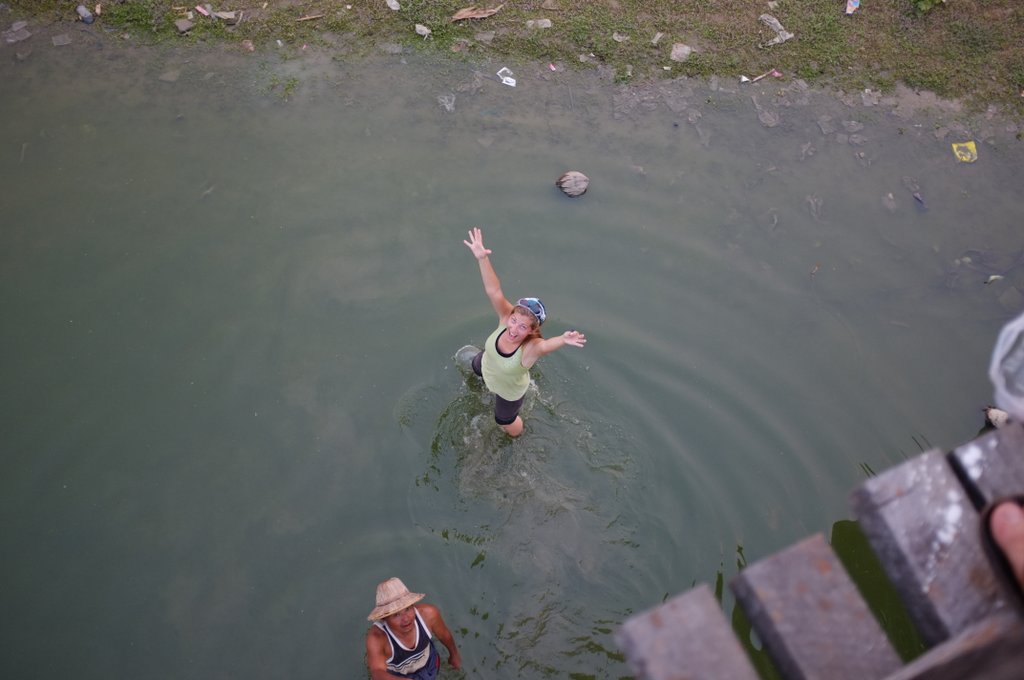
As much as I’d like to say I jumped right out there and joined him, I must admit, I had a moment of princess, er, I mean panic… That water looked nasty, and I began to wonder about diseases, infection and any unwanted surprises in general. But I couldn’t let a random stranger remedy my bad judgment without me, so I hiked up my pants, dropped off my purse (my protective traveler instinct wondering if my bag was safe on shore) and waded in.

I kept my memory card in focus while I walked through the unnaturally green, toxic-looking lake. As I sunk my hands into the mud below, pulling up mostly shells, I gritted my teeth and prayed these would be the worst of my findings.

But as my friend predicted, just a few minutes later, my luck returned. The boatman had succeeded and stood, holding out my tiny blue card for me to retrieve.

Memory Card Saved

Memory Card Saved!

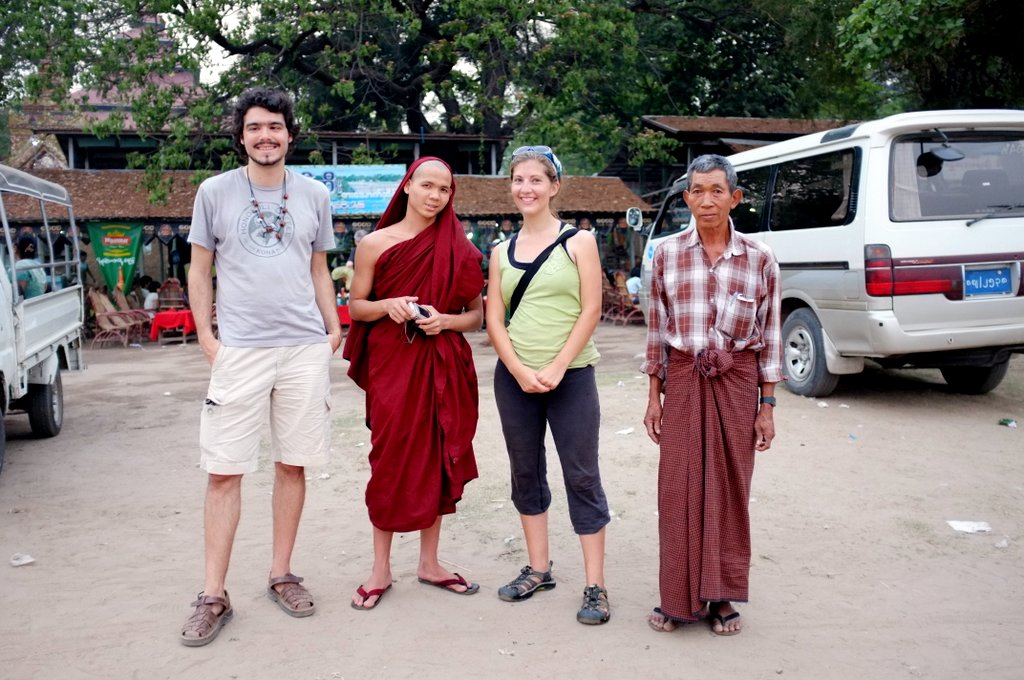
I don’t know if I was more elated to have found the card or shocked that we had actually managed to rescue it. All I know is I began jumping up and down and threw my arms around the boatman in a big, awkward thank you hug, which was quickly rescinded seeing his discomfort (cultural barriers, whoops :/).

Memory Card Rescuers

Me and My Heroes!

When asked what they would save if their house was on fire, people almost always say they’d grab their photo albums. I suppose memory cards, hard drives and CDs are our modern day equivalent, and it’s not until these things are in jeopardy that we realize just how precious they are.

I think now, I’m always going to back up ;).

This slideshow requires JavaScript.

Off the Beaten Track

Standard
Off the Beaten Track

I had barely awoken from a nap when two energetic young adults jumped into my carriage and asked if they could practice English with me.

In my groggy state, my immediate reaction was to avoid aggressive, young Asians, who usually had an ulterior motive or sale up their sleeves. But then I remembered I was in Myanmar, a gentle country, largely isolated from much of the world, and relaxed.

“Ok,” I replied.

I looked around and realized, despite having already traveled six and a half hours by train from Pyin U Lwin, we were only in Kyaukme, a small town still 20 miles away from Hsipaw, my final destination. I recognized the town from my guidebook, an alternative jumping off point to go trekking in the Shan state, which it had described as “far off the beaten track.” While this had initially interested me, the nice lady at the travel agency in Mandalay had quickly dismissed the idea, saying there was nothing to do at Kyaukme, and Hsipaw was the far better option.

To be fair, I had never really wanted to go trekking to begin with. But I had three days to kill before meeting up with my friends in Mandalay, and after months of playing it safe, I thought it might be a good idea to push my travel limits a little bit and try a destination less well-known.

As I began to chat, I remembered to speak slowly as we covered the basics: Where are you from? What is your name? What do you do?

The two, a 20-year-old boy and a 19-year-old girl, were students at one of the town’s English schools. Every night, they joined a handful of others in the small schoolhouse to learn English with one of the town’s few English speakers, other locals like themselves who’d taken great pains to learn English on their own. Not native English speakers themselves, the teachers encouraged the students to talk with Western visitors during the 30-minute train stop on the way to Hsipaw.

As the conversation continued, another teenager joined our group, and I immediately noticed his English was much more advanced than his peers. John was a university student studying English who worked part time as a tour and trekking guide to the few tourists who make it to Kyaukme. From the off-handedness of the information, I knew he wasn’t trying to sell me anything, yet there was something about him and this small town that interested me more. Small, soft-spoken with carefully-placed “messy” black hair, John looked younger than his 19 years. But his direct, yet polite, demeanor revealed a young man with big plans for himself. I pulled out my guidebook as we continued to chat, searching again for why I had planned on going to Hsipaw. Markets, temples, hills, Hsipaw had lots of attractions listed, while Kyaukme literally had none. I sighed. I liked these guys, but I was going to have to give Kyaukme a miss.

But as I heard the train horn sound to leave, something inside me changed. Before I realized what I was doing, I heard myself say, “Ok, I’ll stay!” and the boys quickly helped me grab my backpacks, as we scrambled off the train.

No guidebook, no fellow travelers, no recommendations, I had no idea what I was getting in to. But I was ready for adventure.

A small village in the eastern part of central Myanmar, Kyaukme has only one guest house licensed to host tourists, and John offered to drive me the short distance on his motorbike. As we rounded the corner to the guest house entrance, he pointed to the young man across the street chatting with an older white couple and told me that was his English teacher, Joy.

With only a few English schools in town, none with native speakers, Joy asked if I would mind dropping in to class to speak directly with the students, and I was happy to oblige.

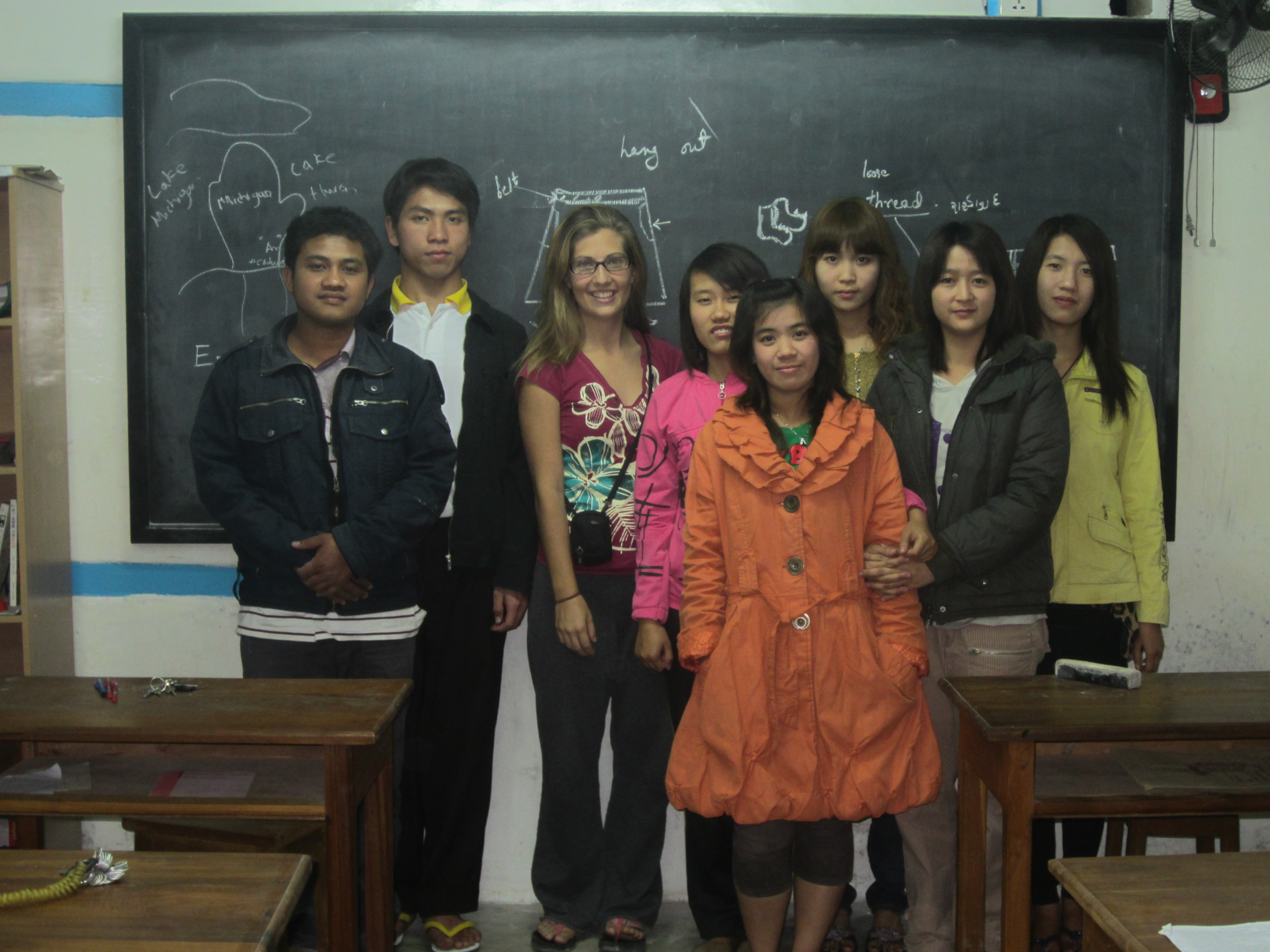
Later that night I found myself at the “Best Friend English School,” a small classroom in a building in town. As John and I walked in, I realized I was interrupting a lesson on articles of clothing. About 10 students sat in long, rectangular tables facing their teacher who pointed to a pair of pants and a belt buckle drawn on the chalk board.

But despite his own lesson, the teacher warmly welcomed me to the class and immediately pushed me to the front to speak to the students directly.

As I stood in front of them, a bit nervous at first, I was greeted by a sea of smiling faces and a cup of tea. A fairly even mix of men and women stared back at me, all ranging from older teenagers and college students to young adults with established jobs or families.

I really had no idea what I was doing, so I decided to start slowly and see where things went. After a short introduction, the girls especially, seemed very interested in knowing about my life, and I found myself answering questions about my age, what I did, my marital status and what I thought of Myanmar. At some point, I found myself drawing a mitten on the chalkboard surrounded by some half-haphazard wavy lines as I pointed to my hometown(s) and explained Michigan’s shape, lakes, industries and surrounding states.

Kyaukme English School

Me with the students at “Best Friend English School” in Kyaukme, Myanmar

My second visit to the English school took me a little by surprise. Instead of a Michigan geography lesson, this time the teacher asked if I would teach the students a song. Luckily for them, I’m a bit of a diva ;).

Perhaps I was a little homesick, or maybe I just thought a sweet tune with simple, happy lyrics would be a great tool for teaching English, but the next thing I know I’m belting out “My Girl” by the Temptations and pointing to the words I’d scribbled on the board. To my delight, the students really seemed to enjoy themselves, and I got them to do a pretty good rendition of it, if I say so myself. It made me really happy to be able to share a little bit of my home state with them, even if it was in the form of a Motown song that came out 20 years before I was born :P.

Though I enjoyed teaching at the school, I had other ideas on how to spend my time in Kyaukme. As part of the volatile Shan state, the town is only a few hours away from some of Myanmar’s ethnic fighting between the Burmese state and the Shan people, fighting for greater autonomy.

While I was not interested in getting too close to the fighting, I was curious to explore one of Myanmar’s ethnic minorities and see how an entirely different group of people live among a controversial and repressive military regime.

To my delight, John was free to take me to the Shan mountain villages, and since he had his motorbike, I did not have to go trekking after all. It was perfect!

The next day, as promised, John met me bright and early for our journey to the Shan villages. Our plan was to visit three villages that day, sleep over in the last town and return to Kyaukme the next morning.

Helmets on, backpacks attached, we rode through the mountains past endless green rice paddies, grazing water buffalo and children playing in the fields. Surprisingly, we did not pass many other travelers on our two-hour long journey, though the all-encompassing dust resulting from the villagers’ annual burning season let us know that we were far from isolated.

Shan Mountains

Reaching our first destination, I discovered a scene that would repeat itself throughout the subsequent Shan villages. All around, wooden houses with corrugated tin roofs dotting along the windy, dirt road that looped its way through town. Tea leaves lay on mats outside, drying in the sun, as John explained that nearly every villager was a tea farmer. While largely quiet, men worked outside, chopping up bamboo stalks for building or weaving, while women took care of the housework, washing clothes, weaving fabric or preparing food. Nearby up the hill, children gathered in the village’s lone school house, repeating the chanting of the monks to learn their native Shan language.

In the middle of town, a small shop sold snacks, drinks and basic necessities, where adults and children alike gathered to pick up supplies, have a drink or simply to visit. And resting quietly at the top of every village lay a gold-covered pagoda, the town’s center for worship and most sacred point.

Kyaukme Pagoda, Myanmar

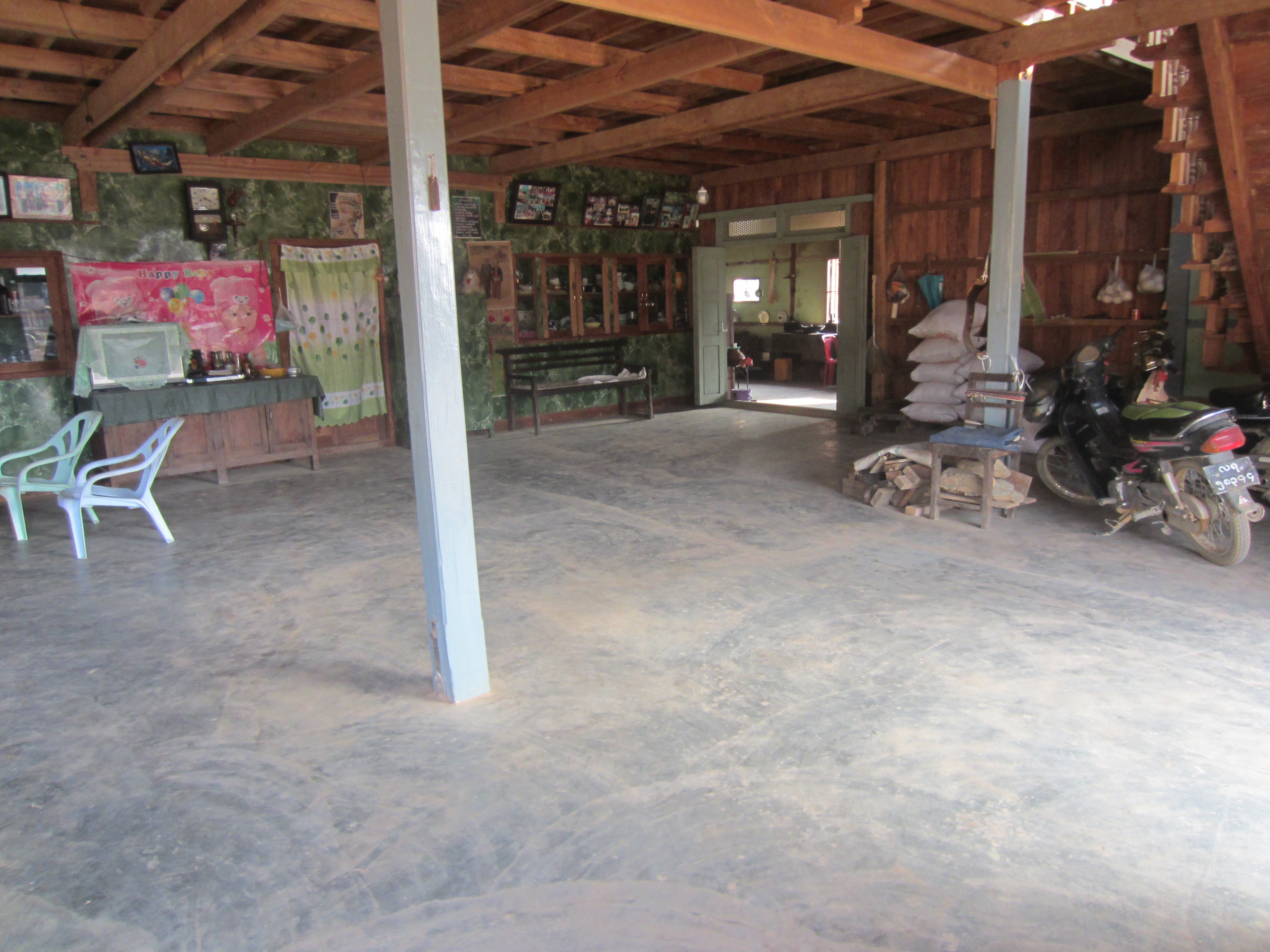
On my trip, John took me to visit several families he knew. While communication was limited, these people graciously invited me into their homes, offering me tea and sunflower seeds while I explored their houses. Surprisingly large, the wooden Shan houses were often two stories high, comprising of a main room, kitchen and one or two bedrooms containing basic beds or lots of open space for bamboo mats and blankets. Plastic or wooden chairs and tables filled corners, while photos of family members and children fulfilling their traditional monk duties dotted the walls. And in every home, a large cabinet full of Buddhas, flowers, incense and photos served as the family shrine. Out back, basic, outdoor faucets on concrete floors provided running water with wooden outhouses nearby.

Shan House

Inside a Shan House outside in the mountain villages outside Kyaukme, Myanmar

When we reached our final destination, John took me to the home of the village chief who often provided accommodation to the village’s visitors. While he was out of town, his wife made us a simple dinner of rice, eggs, peanuts and a watery vegetable soup. As the power was often out, sunset covered the town in a silent, all-encompassing blackness where even the stars’ vivid brilliance was not enough to keep the town awake.

Around 9:30 p.m. John and I headed up to the second floor to find our pillows, blankets and bamboo mats laid out among those of the female farm hands who come to the village seasonally to pick tea leaves. Despite the early hour, I fell asleep quickly in a surprisingly restful night sleep. Around 5:30 a.m. in a stereotypical rude awakening, the roosters began to crow to signal the start of a new day. While John wasn’t too keen on the early rise, I enjoyed watching the women prepare for their day, saying their morning prayers, combing their hair and carefully applying the bark-based thanaka paste to their faces to protect their skin from the Myanmar sun.

After breakfast, a large spread of noodles, peanuts and eggs, John and I said our goodbyes and began our descent back to Kyaukme.

While I never did make it to Hsipaw, my last-minute journey to Kyaukme ended up being one of the best travel decisions I’ve ever made and a true adventure off the beaten track.

Though I know much of the rest of my travels will include the well-paved and well-shared roads to monuments, big cities and tacky souvenirs, I will be forever grateful knowing there is at least one memory that is all mine.

This slideshow requires JavaScript.

Myanmar.

Standard
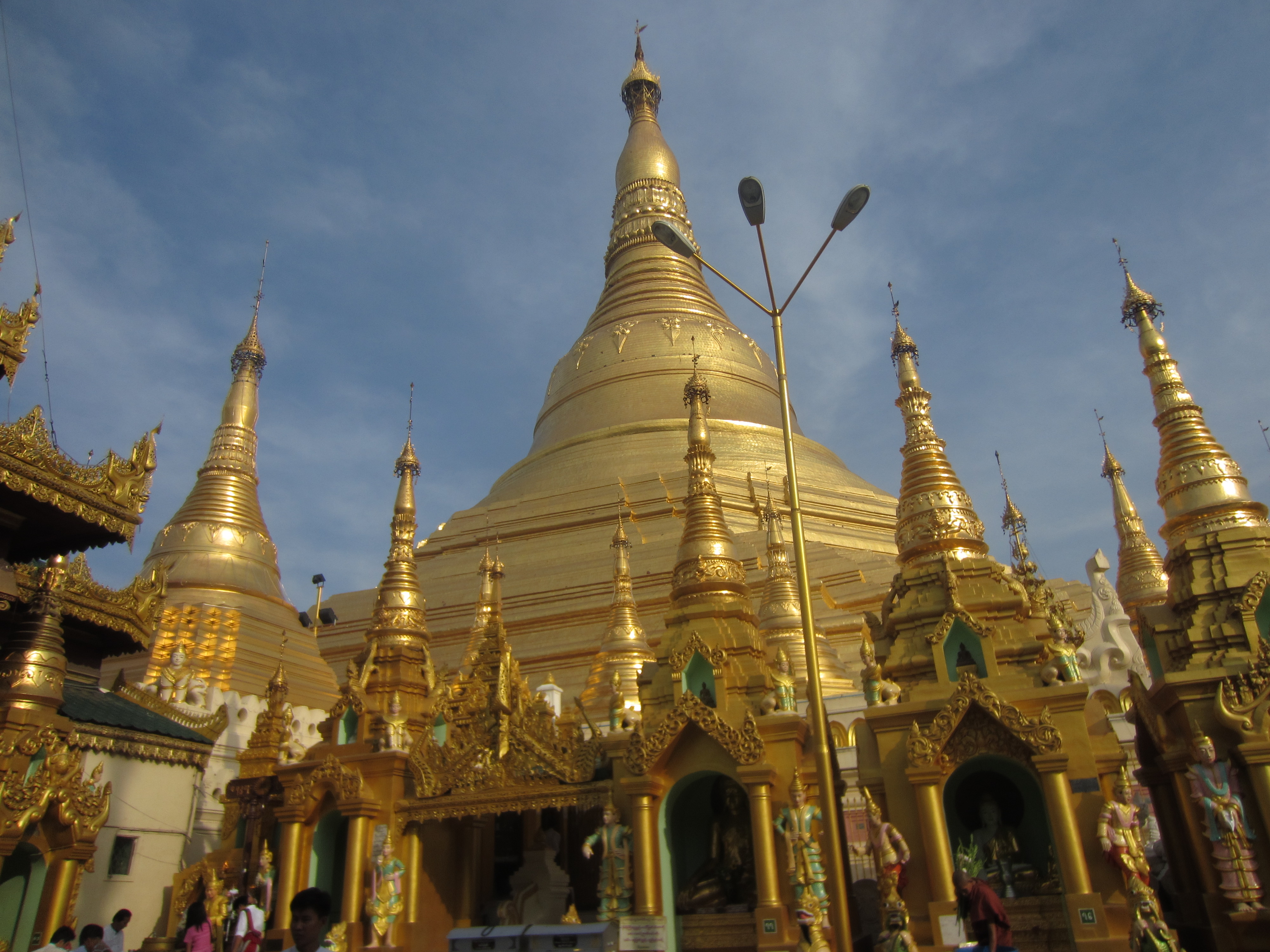
Schwedgon Pagoda, Great Dragon Pagoda, Golden Pagoda

Schwedgon Pagoda in Yangon, Myanmar. The most sacred pagoda in Myanmar and a national symbol.

I went to Myanmar with low expectations.

Though I’ll admit my knowledge of the political situation was relatively limited, something about the words “Myanmar” or “Burma” sent chills down my spine with ideas of violence, oppression and scary men in military uniform.

As I began to research further for the trip, my fears both soared and subdued, depending on the day and who I was speaking with. On the one hand, stories from other travelers painted a picture of a beautiful country full of beautiful people where mass tourism had yet to leave its mark, where foreigners, especially, had nothing to fear from a country trying to make good with the West.

On the other side, this is a country whose infrastructure and relations with the West are so poor that it doesn’t even have ATMs, a country where travel is restricted to limited government-approved destinations and where locals are forbidden to communicate too closely with outsiders. This is a country where, for the first time I’d come across, Lonely Planet openly encouraged travelers to avoid government-run shops and hotels in order to reduce the amount of money going into the hands of an unlawful, oppressive regime.

And if that weren’t enough, this was a country whose violent past caused my own parents and those of my fellow travelers to worry, insisting on obtaining the contact information and detailed itinerary of every planned location in case of disaster. Oh, and for the first time in more than 20 years, Aung Sang Suu Kyi’s government-opposed National League for Democracy party was going to participate in Myanmar’s by-elections during our trip. Yeah. I was a little bit nervous…

But the minute I landed in Yangon my fears instantly subsided. After months battling aggressive Indians, Thais, Cambodians and other Asians jaded from the commercialization and indulgence of mass tourism, I was amazed to find that the people of Myanmar are some of the kindest people I’ve ever met. Everywhere we went, the Myanmar people went out of their way to greet us, help us or simply to smile at us and, unlike nearly every other Asian country I’ve been to, were willing to bargain fairly without taking advantage of us.

The generosity of the Myanmar people was also incredible. Whether it was having lunch at the home of a family in Yangon that Waldo met on the train, or receiving homemade cigars and flower leis from the old lady on the boat or trying the incredibly popular yet disgusting betel nut with the men at the ticket agency (see video below), the hospitality of the people of Myanmar was extraordinary. My personal experience with a certain monk and boatman who went vastly out of their way to help me after my extremely bad judgment was a particular kindness I will never forget.

As a travel destination, Myanmar is honestly not unlike every other neighboring Buddhist country in Southeast Asia – except with extremely poor infrastructure. Not gonna lie, unless you are extremely patient or really enjoy long, bumpy bus rides, poor Internet connections or frequent power outages, I would not recommend traveling Laos and Myanmar back to back – at least not for seven weeks straight. But once you are there, Myanmar can provide some truly beautiful experiences into an old world whose existence has remained largely untouched by modernity.

The following are a handful of my most memorable experiences in Myanmar.

Big Girls Do Cry: Disaster in Southern Laos

Standard

When traveling through foreign countries, there’s always an element of risk. Communication barriers are expected, though bigger concerns like theft, accidents or illness are always in the back of your mind. But somehow, being stranded in the middle of nowhere with no money, no friends and no idea how to get out was never a concern…

After having spent a day and a half in the Four Thousand Islands (Si Phan Don) at the tip of Laos, I was determined to squeeze in a quick visit to Champasak to see the town’s famous temple before racing to Pakse in time to catch a 15-hour bus to Bangkok where my flight to Myanmar awaited me. With Laos’ unreliable infrastructure and time restrictions, many said the trip couldn’t be done, but I was determined.

After discussing the situation with a travel agent, I worked out with the bus company to pick me up directly from my day-long kayaking trip in the Four Thousand Islands to take me to the boat jetty across from Champasak. The plan was to arrive in to the town in the evening, then rise early the next morning to view the temple before taking the two-hour journey to Pakse from where my bus would leave at 3 p.m.

Perhaps as a warning, my arrival in Champasak started off pretty bad. I reached the small village right after sunset and soon discovered how remote of an area I was in. No one spoke English, and though my guidebook had listed a series of guesthouses “near the fountain,” I saw no evidence of this anywhere. In fact, there were a few things my guidebook forgot to mention…

As I walked along the town’s main road in the dark, people just kept pointing further along, and I was beginning to think these guest houses were a myth. With my large pack on my back plus a smaller (and breaking) backpack in front, I would have gladly paid good money for a cab to a hotel, but there was no public transportation around. And as I walked about 10 minutes in, I discovered another problem: food poisoning.

Let me tell you, lost in the middle of nowhere carrying two large bags on either side of you is not the time you want to be running to the toilet.

Luckily, I soon found a hotel that, despite being pricier than what I had hoped for, was the best I could do given the circumstances. Since I only had 50,000 kip ($6.30) left on me, the hotel lady said I could just pay for the room and dinner the next day after I had reached the town’s only ATM in the morning.

When I awoke the next morning I had a very precise itinerary in mind: reach the ATM by 8 a.m., grab a quick breakfast, then spend two to three hours at the temple before heading back to the hotel to check out and grab the 12 p.m. bus to Pakse. If all went according to plan, I’d reach the city by 2 p.m., a solid hour before my bus departure. Ambitious? Yes. Impossible? No.

But as the machine returned my ATM card to me sans cash, I noticed the sign on the wall: “Foreign Cards Not Accepted.”

Ok, no big deal. The bank was due to open any minute and maybe they could work out something with me. As the clock continued to tick, 8:05, 8:10, 8:15, I began to wonder where the bankers were at. I knew things were more laid back in Laos, but geez, this was a bank and it was a Wednesday morning!

Soon I met another traveler, a German guy who was also disappointed (though much calmer) to find his ATM card didn’t work either. As the bank continued to remain closed, he remembered that today was Women’s Day, and therefore no women had to work that day.

Apparently all the people who worked at the bank in Champasak were women, because no one came to work that day.

At this point, my stress level began to rise. Apparently, the nearest ATM was in Pakse, anywhere from a half hour to a two-hour bus ride/boat ride away and also where I had to catch a bus later that afternoon. As I slowly accepted the fact that I did not have the time or the money to see the Champasak temple after all, I began to worry how I was going to get out. All I had on me was 50,000 kip, exactly the amount needed to take the bus to Pakse. The problem was, I still owed my hotel about $10 for my room and dinner, and there was no way I would be able to leave and return and still make my bus to Bangkok.

Luckily, the German guy had an idea. He too had to head to the ATM that day, and since he still planned to spend another couple days in Champasak, he agreed to return to my hotel to pay my bill for me, leaving his passport as a deposit. As it was still mid-morning, we thought we’d have plenty of time to reach Pakse before my bus, so we decided to try to hitch a ride.

As we walked along the road with our packs, the sun beating down mercilessly through the thick, sticky air, no one was stopping. We waited for more than an hour before the German guy had the idea to rent a motorbike and told me to wait at the shop for him to return with the bike. As he began to walk away, he suddenly turned around and told me that, if a bus comes along while he’s gone, I should take it anyway and not worry about paying him back for the hotel.

I waited nearly an hour and, not only did the bus not come, neither did he. As it was nearly reaching 12, the only guaranteed time I knew there was a bus, I decided I could not wait any longer. I had just enough money to leave and somehow I had to make it.

But as I headed back into town, I realized that I was back at the start near the boat jetty in the mysterious land of no English and no guest houses. No one seemed to know (or understand) anything about how or where to get the bus from Pakse, and it appeared my only hope was to reach one of the hotels on the other side of town.

As I looked down the road ahead, I began to panic. After not having eaten anything all day, I was feeling weak, and I was not looking forward to another long, sweltering, heavy walk. But as I looked at the time, I didn’t think I’d make it anyway. My German friend was nowhere to be found, and I honestly did not know what to do.

So, I did the only thing I could do, I sat down and cried.

This was definitely not one of my finer moments, but we all have our bad days, and this one was turning out to be pretty bad.

As I sat there, defeated, a Laos lady came over to me to ask me what was wrong. Though she could only speak a little English, I somehow communicated to her that I was stranded and needed to get to the other side of town to catch a bus to Pakse. The next thing I know, I’m on the back of a motorbike headed to the hotel area.

With only 15 minutes to go, I managed to book my bus just in time, relinquishing the last of the cash I had.

Nearly three hours later I reached my bus with just 10 minutes to go, enough time to reach the ATM (finally!), buy my ticket and run on board, honestly, desperately thankful to finally be leaving Laos.

I learned a very valuable lesson that day: always carry extra cash and never assume anywhere in Asia will have an ATM.

In retrospect, things could have been a lot worse, and I’m eternally grateful to the German guy and the Laos women who helped me on my way. Despite all the bad, it’s good to know that kind people exist everywhere.

Unglorious Food

Standard

Much to my father’s frustration, I’m not food adventurous.

I don’t eat weird parts of animals. I don’t eat weird animals. I won’t go anywhere near seafood. And, at the end of the day, if I can’t identify it, I’m not going to eat it.

This sort of limits my sustenance options when traveling Asia (and is probably why I will never get my own travel show :/).

That being said, I certainly have observed a lot of strange foods here, particularly in Laos, and have had one close call almost eating something I really did not want to try…

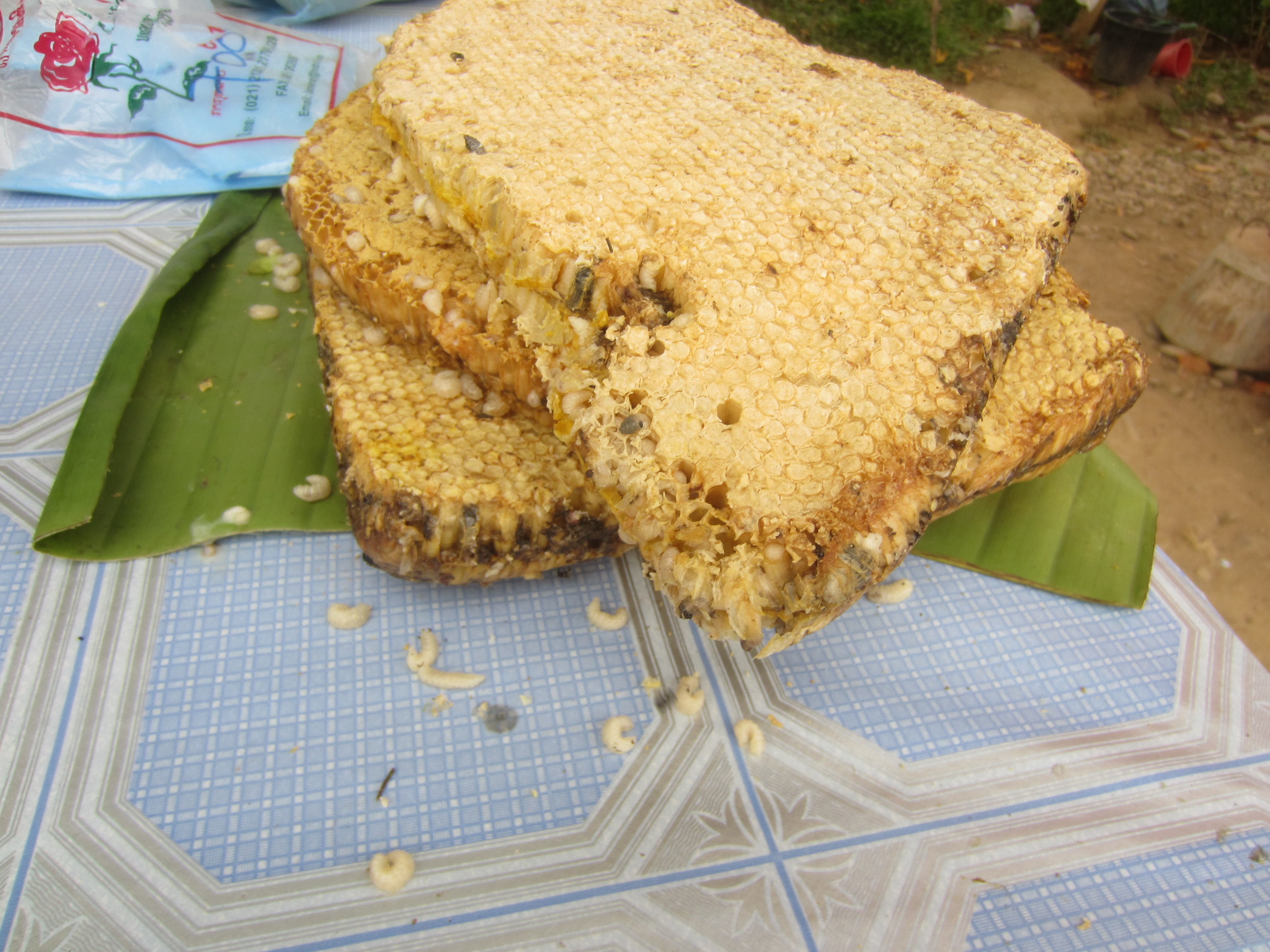
My second day in Vang Vieng, my German friend Marcel and I decided we would go explore one of the caves nearby. As we headed toward the entrance, we saw a row of women selling what looked like grilled honeycomb.

“I love honey,” I thought. “What a great chance for me to try local Laos food!”

Apparently, Marcel was thinking the same thing, so we both headed off to buy one.

Luckily, we decided to share.

Wrapped in pandanas leaves, straight from the grill, this new dish looked pretty good. But as Marcel slowly started to unwrap the honeycomb, I looked back at the grill and noticed something strange: there were bug larvae on top of those honeycombs.

Shocked, I looked at the grilling lady and pointed, trying hard to physically communicate the fact that her food was essentially covered in maggots. Seeing my reaction, she too communicated without words: she picked one up and popped it into her mouth.

As I turned back to Marcel, we began to look more closely at our snack. Instead of honey, we found that every single hole was filled with bug larvae! In fact, some of them were still wriggling around!

That was pretty much game over for me. Marcel, however, after his one bite, informed me the bug babies had an interesting nut flavor (he would not learn until later that many of them were still alive).

Please enjoy a lovely photo essay of our find plus a few other curious, apparently edible, things I’ve found around Laos.

Grilled Bug Larvae

Wriggling grilled bug larvae nestled between honeycomb

Chicken and Fish on a Stick

Chicken or fish?

Feces Soup

There are no words.

Little Fish on a Stick

Little fish on a stick in Four Thousand Islands

Monk Food

Alms made to monks in Luang Prabang

Eggs on a stick

Strangely, these eggs had no yolk in them...

Grilled Frog

Grilled frog in the Four Thousand Islands

Kruisin’ Through Kong Lo

Standard

Described by Lonely Planet as something out of “Star Trek,” the Kong Lo Cave is by far the coolest cave I have ever seen, and quite possibly, the coolest thing I saw in Laos.

Situated near Phu Hin Bun NPA in Central Laos, the 7.5-meter-long underground cave is accessible only by the motorized boats that travel beneath it, leaving you with a magical, albeit creepy, adventure through the dark.

To start, the journey to reach the cave is breathtaking in itself. Long bus rides drop you off in the middle of nowhere, where the only traveler support you have is a small row of guest houses situated in a tiny rural village less than a mile away from the cave entrance (i.e. no Internet, no ATMs). All around, endless green tobacco plants fill the fields, guarded by gigantic limestone cliffs (“karsts”), with only a handful of houses and bicycle-riding children breaking up a sense of overwhelming serenity.

Kong Lo Cave Village

Village outside of the Kong Lo Cave

The walk to the cave leads you through a small forest before reaching a sea-green river surrounded by more trees and karsts, which, aside from providing stunning scenery, holds the mouth of the cave.

At the edge of the forest, men playing a curling-type game and women selling snacks are eager to help you hire a boat. For about 50,000 kip ($6.30) a person, a boatman will lead you and up to two other people on a three-hour journey to explore the cave.

River Outside Kong Lo Cave

River Outside Kong Lo Cave

I took the tour with my new friend Ritesh, a man from Bangalore, India I met on the seven-hour long bus journey from Vientiane. And let me say, the cave was quite an adventure.

Entering into the mouth of the cave, things immediately get nearly pitch black, with the only light you have coming from your flashlight or headlight. As you cruise underground, sometimes stopping to carry the boat over shallow rocks, crazy-looking stalagmites and stalactites come into view, breaking up seemingly smooth cave walls all around. While I’m not “Trekkie” enough to vouch for the Star Trek reference, I will say half the time I was expecting Gollum to pop out from around the corner, or maybe a cursed locket

At one point, the boatman stopped so we could explore some of the cave on foot, and that’s when the really beautiful formations came into view. Icicle-looking stalactites dripped from the ceiling, while mini-sky scrapers came up from the ground, some connecting to all the way through from the top. At one point, I even found a “Michigan”-looking stalagmite, though in reverse.

Michigan Stalagmite

"I'm from here"

After about an hour or so, we saw a beacon of light ahead, “at the end of the tunnel,” if you will. Soon we found ourselves at the exit of the cave, floating along between more limestone karsts, green trees and water buffalo, where we had a quick rest, before plunging back into the dark.

While the ride back seemed quicker than the first ride, there’s something about cruising underground in a boat through the dark that is just exhilarating. For some reason, all I could think of was that I wished I had brought my iPod so I could play the Phantom of the Opera soundtrack.

I think next time I will ;).

This slideshow requires JavaScript.