As many of you know by this point, I’m leaving Malaysia.
Yes, it is official. But as to the standard follow-up question, no I’m not coming home. Not yet…
After more than a year in Malaysia, I decided it was time to move on. Since I moved here in July of 2010, I have seen and learned some incredible things. But as I began to enter August of 2011, the start of my second Ramadan in Malaysia, I realized that much of the novelty of this country had worn off for me. I’d already experienced every major holiday here, visited my top travel destinations in Southeast Asia and felt I had gotten a fairly thorough understanding of Malaysian culture. And frankly, as grateful as I am for the experience, I decided that one year in Malaysia was enough for me.
However, I realized that I was still not done with Asia and certainly had not attained the goals I had originally set out for myself (as mentioned in my previous post). So I have decided to continue to achieve them, but to do it elsewhere…in India.
Before I came to Malaysia, I didn’t have a good understanding of Asian culture. All I really knew about Indian culture was that there were a lot of people, they had good food and they were Hindus. But after living in KL where ethnic Indians make-up 10 percent of the population, visiting Hindu temples, meeting Indian people and attending Indian festivals, India has shot to the top of my travel destination list and is a country that I want to explore hardcore.
So when an old friend of mine messaged me that he was planning on backpacking India for three months starting in the fall, I thought it must be more than a coincidence. How often does one come across someone with the same time, money and timing to take a dream trip? It was too good of an opportunity to pass up. After much consideration, I officially resigned from my job.
The feeling was both absolutely freeing while absolutely terrifying. Since I was 20, I have found continuous ways to travel, either through studying abroad, working abroad or short trips. And while I’ve always said I wanted to travel around the world, I’ve never traveled continuously for more than a few weeks at a time. For years, friends and family have kept waiting for me to get this travel bug out of my system, but I really don’t think that is going to happen until I really have the chance to travel freely. So it’s all built up to this: the trip of a lifetime.
The plan is now to meet James in New Delhi starting in the beginning of October and just go: wherever we want, for as long as we can. No job, no income, no restraints, no guarantees: pure travel and all that comes with it. While James is planning for a three-month trip, I honestly don’t know when I’ll be back. If I love India, I plan to use the full extent of the six-month visa and maybe have the ashram experience. I might also try to volunteer for awhile, either in India, Nepal or perhaps another country entirely. And if I run out of money, I may move again somewhere and teach English or search for volunteer exchange programs. I honestly have no idea where I’ll be in six months, but the great thing is, I don’t have to.
So now begins the great challenge of both leaving Malaysia and preparing for my new adventure. Already I have resigned from my job and am now in the process of getting out of my contract, clearing my tax forms, selling my car, selling my furniture and electronics and getting someone to take over my lease. I am also in the process of obtaining my Indian visa, getting all my vaccines, researching the country and mentally preparing for what could be the biggest challenge of my life, but quite possibly, the most rewarding.
I have one month left to figure everything out. Here’s hoping for the best!
Yelling all around, shoving my way through a crowd of 20 men to squeeze through a two-foot gate with angry, baton-holding police at our heels, those few minutes during the Kuala Lumpur Bersih 2.0 rally ended up being some of the most terrifying minutes of my life.
Some few seconds before, I naively assumed my friend Jullian and I were in the “safe” zone, a quieter area on a hill above the city streets looking down on the now-vacant intersection of Jalan Pudu and Jalan Tun Perak that, minutes before, had been full of thousands of protesters demanding fair and frequent elections and an end to corruption.
Jullian and I had arrived earlier that day to Masjid Jamek – one of the protesters’ several gathering points throughout Kuala Lumpur – to witness a major political rally that had the potential to completely change the Malaysian government. After failing to compromise on a suitable protest location, the government had declared the street rally illegal, blocked all major accesses into the city and threatened to arrest anyone who disobeyed that day. Armed with a backpack full of bottled water, extra clothes, snacks and surgical masks, we had prepared for the worst.
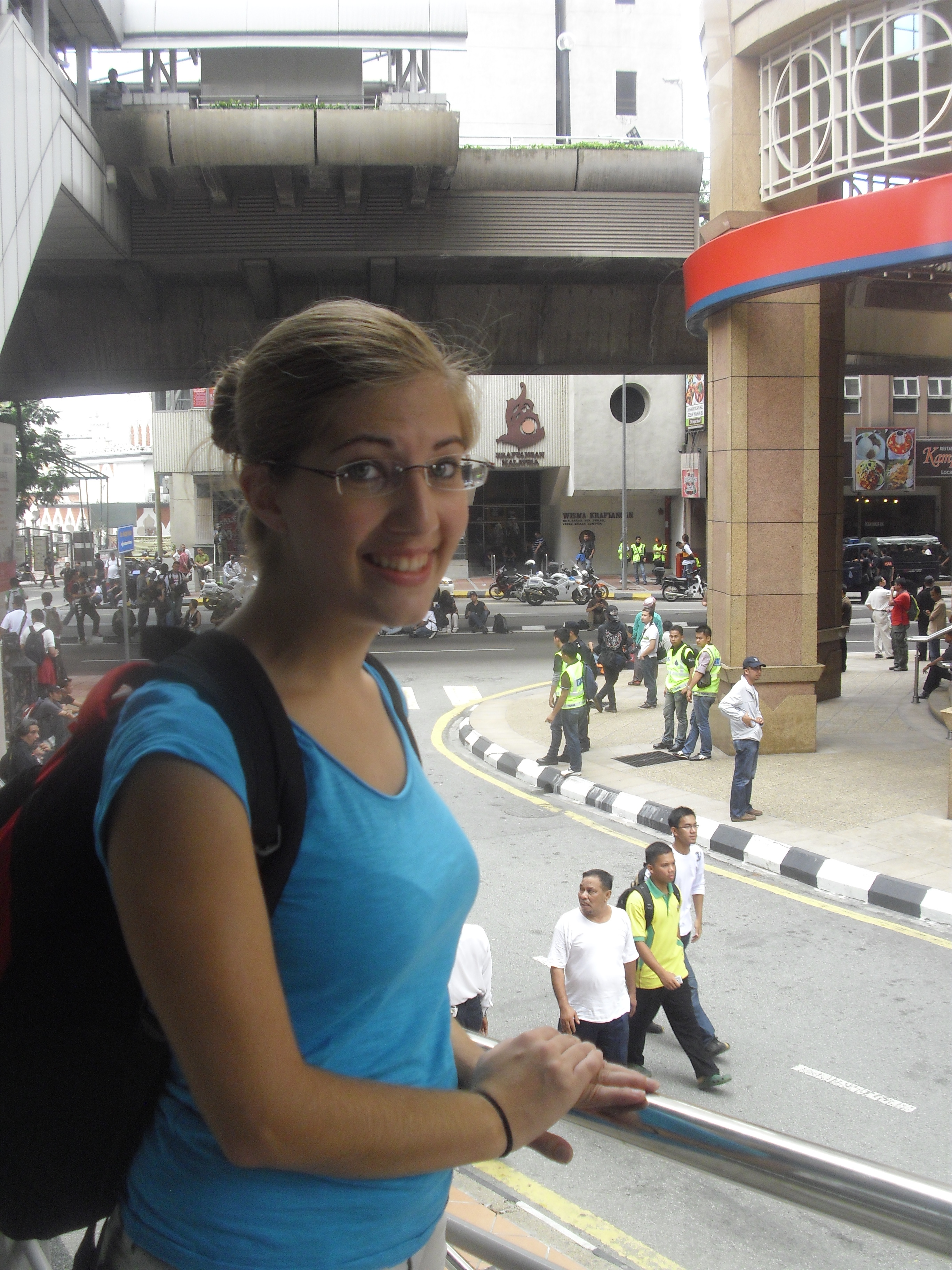
Me at Masjid Jamek before the rally - not really sure what's going to happen
Jullian and I had arrived at the Masjid Jamek subway station around noon, a full two hours before the protests were supposed to start. As I looked around outside, I was surprised to find things quite calm. As all major roads to the city had been shut down the night before, nearly all the shops were closed and most of the streets had been deserted. Local police officers in their dark blue uniforms casually patrolled the streets, as patches of reporters, gawkers and protestors stood around, some taking pictures, some chatting amongst themselves but all waiting for what was about to happen.
Behind the first line, however, it was clear that police were prepared for anything but a casual afternoon. Dark blue “Black Maria” trucks with benches in the boot and gates in the back waited to take away protesters. Behind them, giant red trucks stood patiently for their turn to hose down the crowds. All around, riot police, donned in black uniforms and red helmets, wielded their weapons, some toying with their tear gas guns, others tapping their batons against the plastic of their shin protectors.
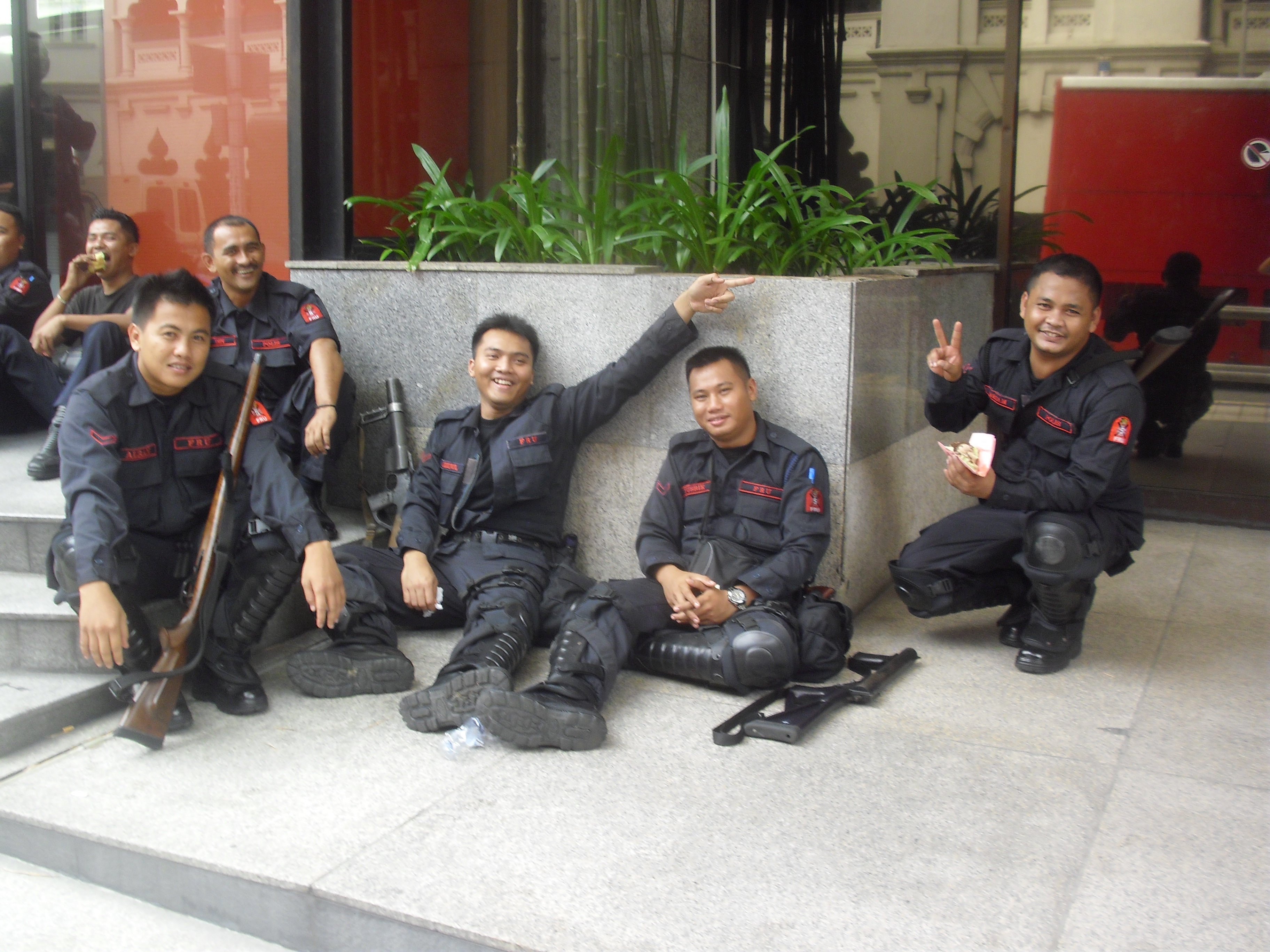
To avoid trouble, Jullian and I had decided to play the roles of tourist and tourist guide, despite the fact that I’ve been in Malaysia for a year now, and he is one of my best friends and colleagues. We did our best to smile and act normal as we walked behind the police lines and decided to join the cops and get an ice cream with the vendor on the corner. To my surprise, the police were really friendly with me. They welcomed my requests to take pictures and even invited me to pose with them, as they slouched on the steps, also enjoying their ice creams.
Riot police relaxing and eating ice cream before the rally
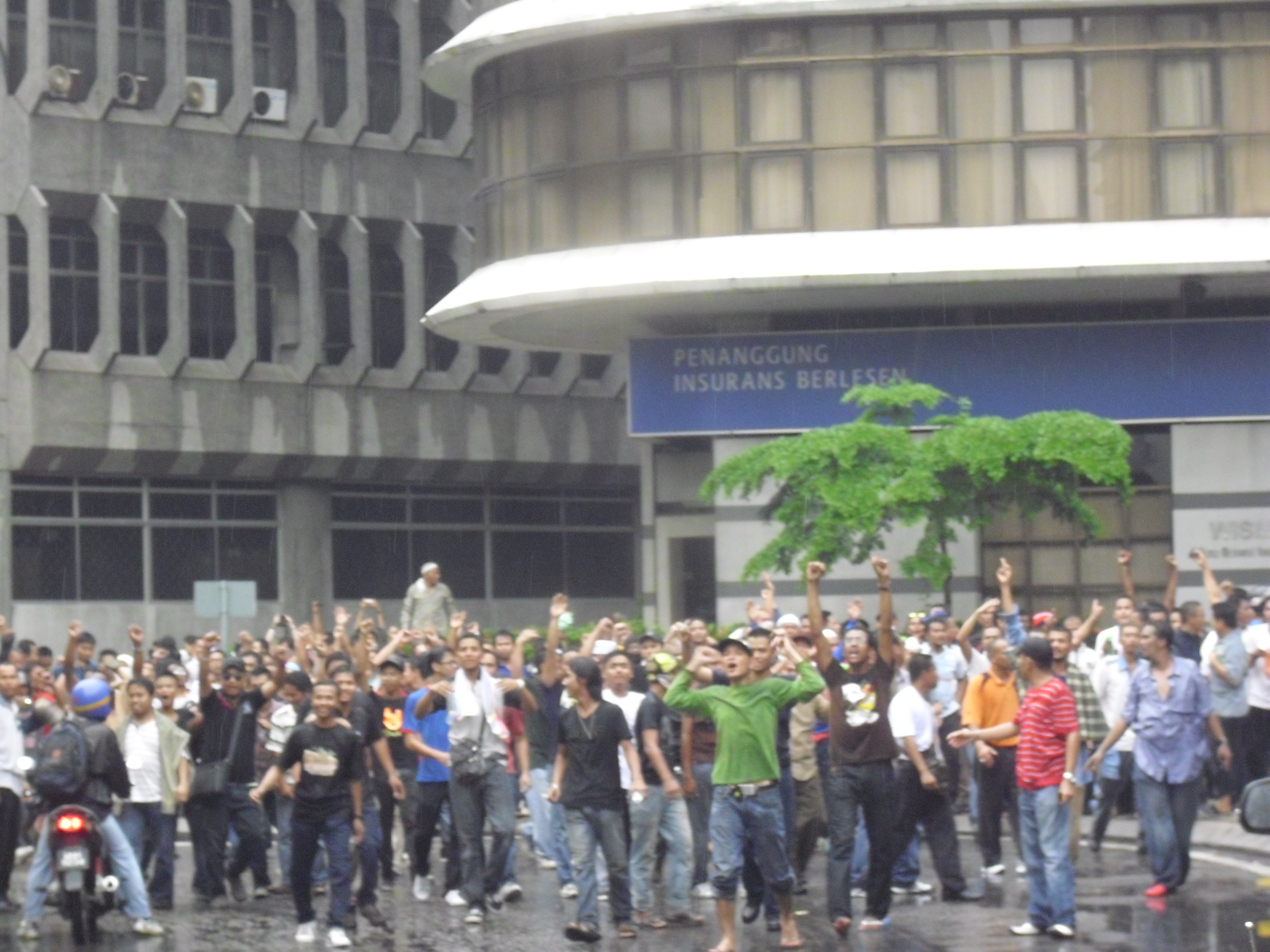
But within minutes, before I could even finish my ice cream, that peace was ended. Suddenly, the random crowds began to turn the corner, journalists running, and Jullian and I followed to find the rally had officially begun. With rhythmic chants of “Hidup, Hidup, Keadlian!” and “Reformasi!” (“Long Live Justice!” and “Reformation!”) several hundred protesters had begun to march.
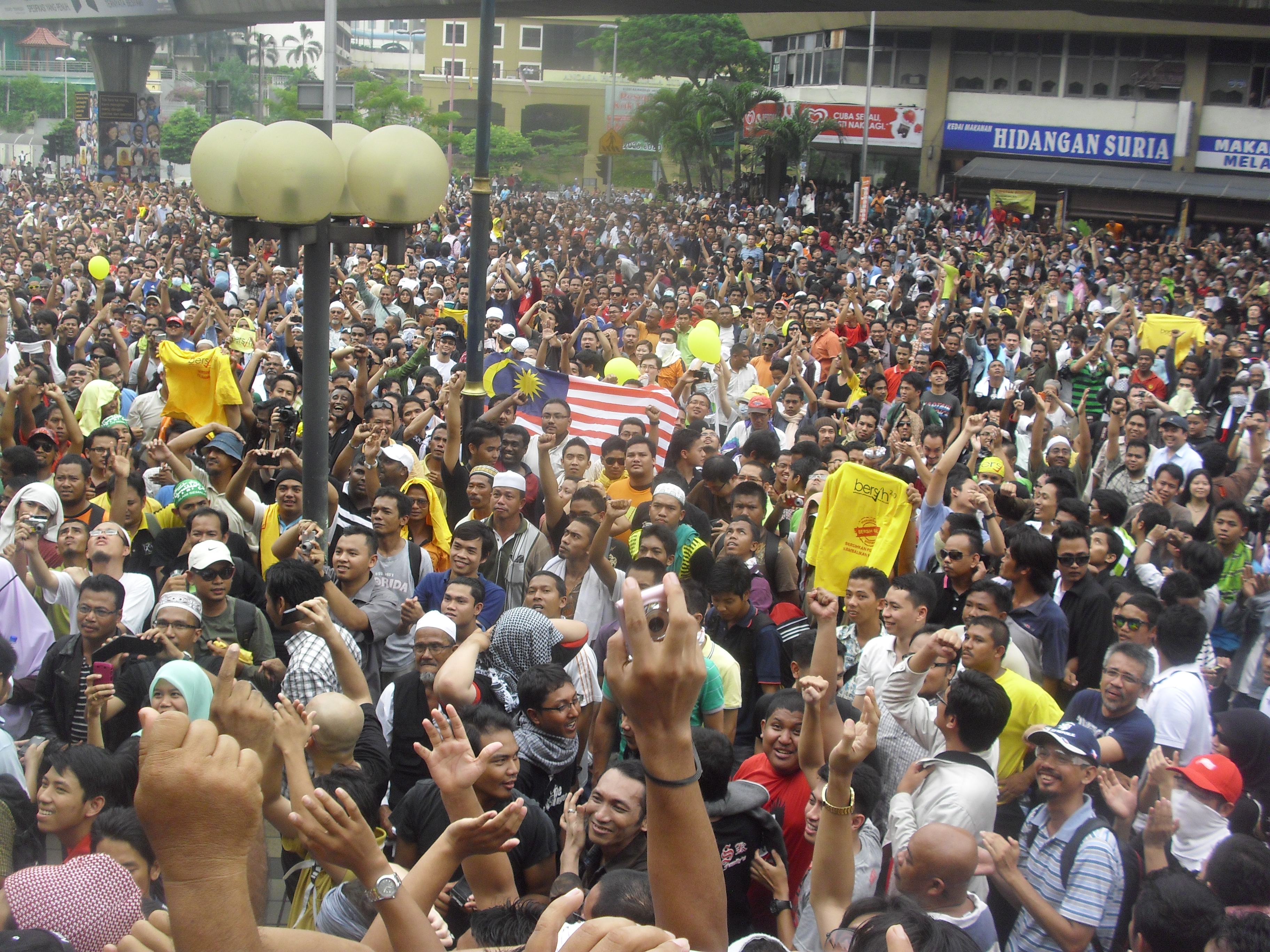
To my surprise, the protesting crowd was quite small, far less than the tens of thousands of people the organizers had expected. But as we made our way to Jalan Tun Perak, it soon became apparent that our little crowd was just the beginning. As we stood on the steps of the Maybank Tower, the apparent gathering point of the rally, we watched as swarms of protesters from all corners of the intersection joined in what soon became a massive crowd of thousands. Around us, people continued to chant, brandishing Malaysian flags and waving around smuggled in yellow t-shirts and balloons – representations of Bersih’s official color. Somewhere in the distance, instructions were being given in Malay from a loudspeaker connected to a phone from unseen leaders who had been banned from entering the city, while police on the outside began to warn the crowd to disperse immediately or they would move in.
Thousands of protesters gathered in Kuala Lumpur demanding fair and free elections
Jullian and I decided our best bet was to stay close to the police, with easy access to move behind the line and run if necessary. As we stood on the side, directly in line with the riot police, I realized the careless, relaxed faces I had seen earlier had been completely replaced with expressions of anger and threat.
As we watched the large red truck enter into the intersection, my heart began to race: the water cannons were coming first. Safe behind the police line, we watched as gallons of water were turned on the crowds, spewing around 180 degrees. It wasn’t until the red truck started reversing toward us and the tear gas came out that we began to run. Loud shots fired from behind and my heart began to pound as we headed even further behind the police line and stopped to watch what was going on. A haze of gas and water lie ahead of us in the street and all around people began to cough, some rinsing their eyes out with bottles of water to relieve the sting. It took a few minutes for me to feel the effects, but soon my eyes began to sting and tear, as if I had just cut up a lot of onions, and my throat began to burn. Jullian and I quickly joined with the others in rinsing our eyes with water and headed to higher ground in hopes of both escaping the gas and gaining a vantage point on what had happened to the crowds.
Riot police make an arrest during the Bersih 2.0 rally
As we reached the top of the hill, the saturated, foam-covered pavement below revealed there was clearly something other than just water in those cannons – and clearly that substance had done its job. Crowds began dispersing into other streets of the city, and though we were in front of the police line, I didn’t realize that the small crowd gathered around us, some praying fervently, would be next in line for arrest. As I stood photographing those who were praying, ignoring Jullian’s calls to move, I didn’t realize that a band of riot police were beginning to surround us, ready to charge. It wasn’t until Jullian screamed at me to run that I realized they were coming for us – and they had weapons. In front of me a group of men were fervently trying to squeeze through a narrow gate and Jullian kept pushing and yelling at me to run and get out. The prospect of brushing up and competing to escape against this aggressive, stampede of men more than terrified me, but when I turned around to see a line of angry riot police waving their batons and grasping for arrests, I was scared out of my mind. As the police grabbed one of the men and pulled him to the ground, I ran behind them and pressed myself against the wall of the building, clinging to Jullian and shaking in fear. For some reason, they didn’t bother with us and Jullian and I ducked slowly back to the “safe zone” to recuperate and observe.
Around, police began to bring in the new arrests, one dragged by his arms, another with torn clothing and still another, donned in bright yellow, wearing a tribal indigenous hat with a big smile on his face. Even old ladies were detained, and soon those earlier empty “Black Marias” were fully-loaded and headed for the jails.
Physically and emotionally exhausted, Jullian and I returned to Masjid Jamak – now vacant – to sit, relax and regroup. The angry crowds that had filled the street just hours before had vanished, though the groups of local police officers patrolling the now-closed subway entrance made it clear the battle was not yet over. Every now and then, Jullian and I caught a glimpse of a crowd turn the corner, smaller now, but chanting with every bit of passion they had displayed some few hours before.
Despite an exhausting cat and mouse game, protesters refused to give up
Word on the street was that the crowds were headed to the Kuala Lumpur City Centre, the heart of the capital and the site of its famous Petronas Twin Towers, for what could have been a dramatic end to the rally. But as we arrived in front of the gleaming iconic landmarks – representations of Malaysia’s growing strength and development – protesters were nowhere to be found. Instead, rows of riot police roamed the streets, this time on horseback, in an ironic contrast to the modern monuments behind them.
In the end, both the government and the protesters declared that day a success and as Jullian and I left the city centre, tired, sore and starving, I realized our day, too had been a success. Chased, tear-gassed and nearly arrested, we managed to walk away completely unscathed. And as I read of the more than 1600 people that were arrested that day, I recalled the images of the tattered shirts, dragging knees and grounded men and realized how truly lucky we were. Though no physical marks remain, the memory of the Bersih 2.0 rally was a life-changing experience that will stay with me forever.
To hear my live radio interview with WDET Detroit Public Radio on the event, please click here.
It has now been officially one year since I left home to come to Malaysia and what an incredible year it has been. Over the past 12 months I’ve seen some amazing things, met some incredible people and experienced first-hand how differently a huge chunk of the world lives.
For the most part, I have tried to keep my blog positive, sharing the best parts of my time here, especially my travel experiences. But I’m not going to lie, this year has been hard. In fact, it has probably been the most difficult year of my life. Everything from finding an apartment to getting used to my job to making friends has been a struggle. Add to that the additional complications of language barriers, cultural differences and trying to cope without efficient public transportation or easy access to food you like, and it can get pretty frustrating.
Now, to their credit, Malaysians are very nice people. My co-workers, in particular, went out of their way in the beginning to help me find a decent place to live and have made a point to take me around to experience local food and customs. Others, in particular, have been there through the tears and frustrations to bridge the cultural gaps, clarify misunderstandings and guide me through the ins and outs of living in Kuala Lumpur, and for all this I am truly grateful.
Though I won’t go as far to say that I love Malaysia, I will say that I have learned a whole hell of a lot, both about myself and the world around me. Some things, like Eastern religions like Buddhism and Hinduism, I find completely fascinating and want to explore more in the future. Other things, like what it’s like living in a country without basic freedoms such as freedom of the press, freedom of religion, freedom of assembly, etc. are completely mind-boggling and terrifying to me (and I’m not even in that “bad” of a part of the world). Though I love being abroad, I find myself more patriotic than ever and for the first time truly appreciate being from a “free” country.
So now the question I get asked most often is, “When are you coming home?”
Well, I will say this: if I came home now, I would be content knowing I have hit all the initial “must sees” on my Southeast Asia travel list. However, I would also leave with a sense of dissatisfaction knowing that I folded in the face of frustration instead of rising to the challenge to overcome it. So, I have decided to stay and do my best to finish my work contract, which ends after another year.
This past year, my 26th, I traveled to some incredible places and saw sights that many will never get to see. I am a bit ashamed to admit, however, that my frustration actually living in Malaysia often brought out the worst in me. So this year, my 27th, my goal is to focus on personal growth, to develop patience and understanding and achieve inner peace as well as pursue some pipe-dream professional goals I have been a bit shy to attempt.
So now, as I begin year two, I have a specific list of goals I want to achieve before coming home:
– Improve in my yoga practice, learn to meditate and spend some time in an ashram
– Volunteer, ideally working at an orphanage, women’s shelter or wildlife sanctuary
– Publish something and get paid for it: attempt my hand at travel writing, freelance reporting or as a fiction writer
– See as much of the rest of Asia as possible, especially India
Now that I have published this list to the Internet, I fear I must now be held accountable for my actions (or inaction). But in the end, maybe that’s a good thing ;).
In the mean time, I miss all of you at home dearly and know I do not keep in touch as well as I should. I’m currently toying with the idea of coming home for Christmas, but if that doesn’t happen, let me know if you’re ever in KL 😉 !
After spending the first half of the week in Ubud, we decided to spend our remaining days in Bali’s other tourist hotspot, Kuta. At first glance, I thought Kuta was great. Like Ubud, it was full of adorable little tourist boutiques and spas, this time, with a beautiful long, sandy beach. Ah, paradise, right?
Wrong.
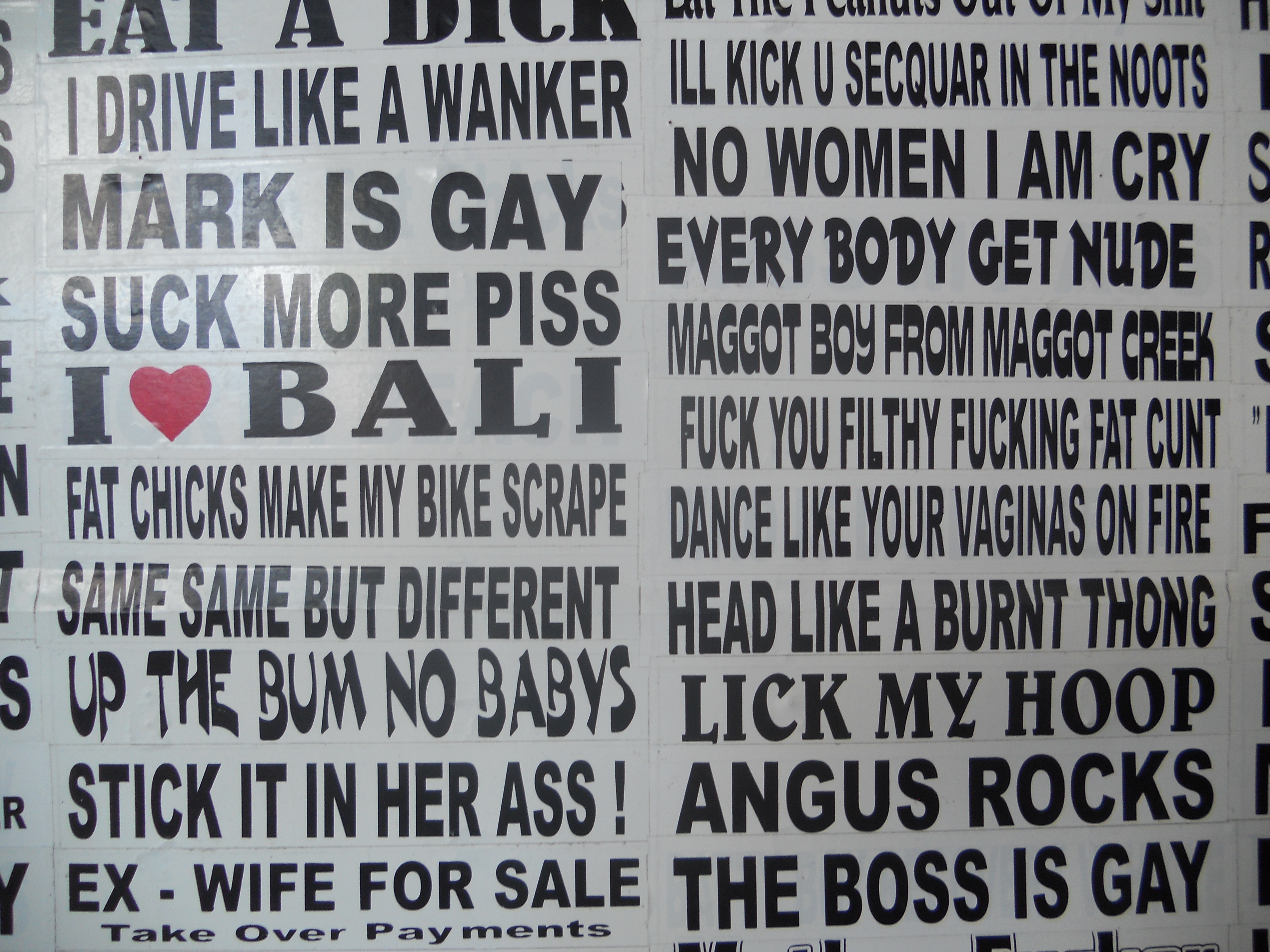
Kuta is completely OBNOXIOUS. Yes, I said it, Kuta is OBNOXIOUS! I really didn’t think tourism could get more annoying than Ubud, until I found the taxi drivers and masseuses even more prevalent and aggressive in Kuta. You can’t walk more than a few feet without people harassing you, and even some of the stuff in the shops was just plain rude. Like this bumper sticker stall:
Charming bumper stickers at a shop in Kuta, Bali
In addition to its over-commercialization, I just think the whole Kuta scene wasn’t my vibe. Kuta is party central, like the Spring Break destination of Southeast Asia. I did enjoy going to the beach, but the waves and current were so strong, even just playing in the water was stressful. At the end of the day, it’s just wasn’t my cup of tea.
I will say, despite all my disappointments and stresses throughout the week, I finally got the Bali I was looking for on my last day of the trip. One of my goals in going to Bali was to take a yoga class at an “authentic” yoga place. Unfortunately, I missed my opportunity to do it in Ubud (where the main yoga spots are) and I sadly discovered there were practically no places to do yoga in Kuta (at least not well-publicized). After giving up hope on the tourist booths, I went to an Internet café and tried to find something online. Again, to my dismay, there were virtually no yoga classes to be found in Kuta online either! The only lead I found was a small resort located outside of Kuta that offered daily yoga classes starting at 8:30 a.m. The only problem was that the website was dated from 2003…
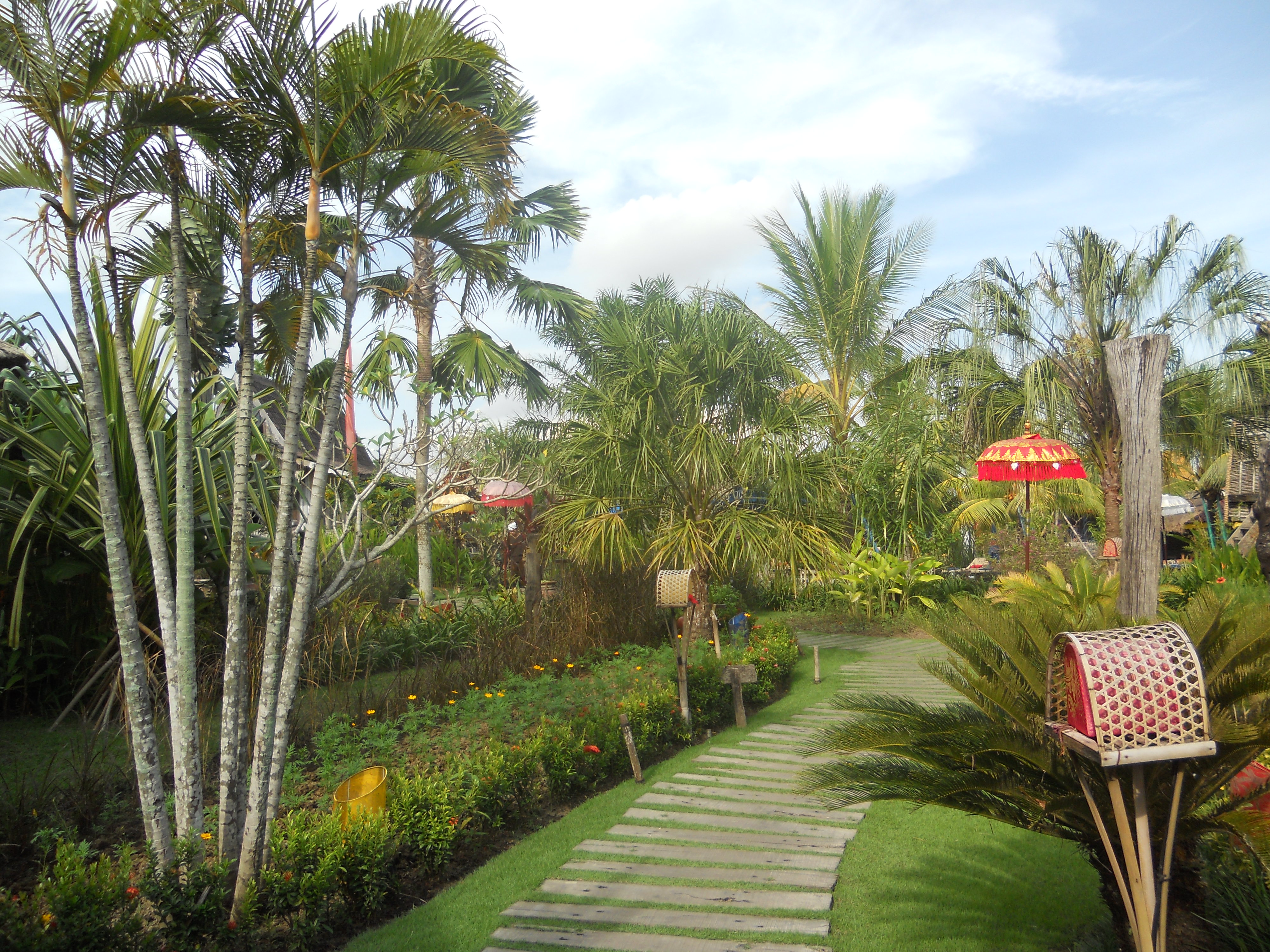
Since I already established I didn’t like Kuta, I figured I had nothing to lose, so the next morning I got up early, packed my bags, put on my yoga gear and set out to find this obscure little resort. To my not-so-surprise, the resort no longer offered Saturday yoga classes, so I was out of luck. But the setting was so charming that I actually didn’t care. Situated behind a small-town road, covered in lush greenery, bright flowers, Balinese statues and rustic chalets, it was exactly the beautiful, serene Bali I had pictured in my head before my arrival. Despite missing out on my class, I felt instantly at peace and decided to just enjoy my last day by wandering around this delightfully tourist-free area.
The Bali resort where I took my yoga class
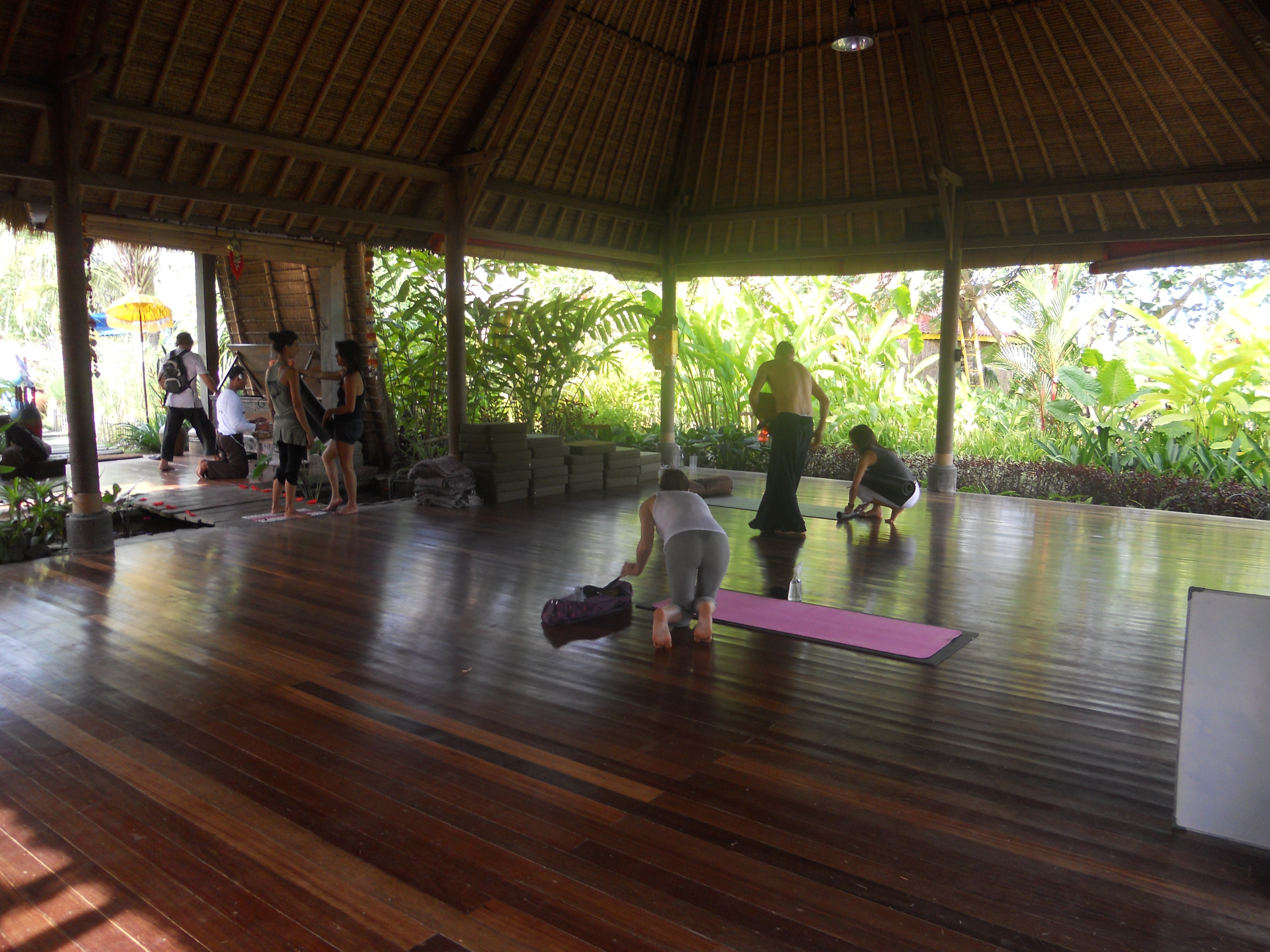
My first stop was this charming Eastern and Western restaurant across the street for breakfast, offering high-class service and organic food for really cheap prices. As I was enjoying a delicious plate of Eggs Benedict and a cappuccino (complete with latte art!) I noticed a rack of brochures near the entrance. As I went to inspect I realized THIS is where they had been hiding all the yoga information, geez! Ideally, I had been looking for a place to try both yoga and meditation and to my luck, I found another resort nearby that was offering a three-hour brain-mind-body workshop that afternoon. Though I really had no idea what this workshop entailed, I headed out once again and delightfully found yet another, lush, serene truly “Balinese” setting. In addition to features similar to the previous resort, this place had an open-air yoga studio, situated in the back of the property, surrounded by flowers and greenery, unbothered by the rest of the world. It was perfect.
The open air yoga studio where I took class
The class itself was also amazing. The first hour our instructor talked to us about the relationship among the mind, brain and body, giving a scientific explanation on what parts of the brain reacted and why when one was meditating. The second hour was spent doing this really simple, yet fascinating breathing technique that put us all into this crazy, zoned-out mindset. Basically, you take two inhalations, first from the stomach, then from the lungs, and then exhale and repeat this over and over and over again. As the whole group lied on the ground, doing these crazy breaths together, it eventually got trippy. I have never experienced anything like this. In what I can only describe as a sort of hyperventilation, your whole body just starts buzzing and your mind goes blank. I really don’t know how else to describe it, except that my arms, legs and head were just “buzzing.” From here, we went directly into an hour-long yoga session, which was absolutely incredible. Having just come from the mind-clearing breathing session, we were all completely calm and “aware” as we did our poses, and I found myself for the first time starting to make the mind-body connection. I also found I could hold some poses longer and further, because I was no longer fighting with my mind about the pain or tedium. It was truly an incredible experience and the perfect way to end my trip to Bali.
The rest of our time in Ubud was really nice. As Bali’s culture “capital,” Ubud is the place people go to learn about Balinese art, dance, traditions, yoga etc. (as opposed to surfing and partying). As Bali’s other tourist hotspot, it is also full of really cute boutiques and restaurants, and it seems everyone is willing to drive you somewhere or give you a massage.
Though we definitely indulged a bit in the shopping and spa treatments, we also made sure to try to explore the local culture. One of the things on my must-see list was to watch a traditional Balinese dance. The bright side of staying in a tourist area is there were plenty of options. The down side is that it’s hard to differentiate between the more authentic Balinese culture and the pre-packaged tourist garbage (we learned on day one that our hired driver had his own agenda in mind to take us to places where he’d get a commission. We had to give him very clear directions after that…). When it came to dancing, my guidebook had warned that there were a number of “B”-list dance troupes around and that authentic Balinese dance should not look like you could do it yourself…
We ended up selecting a dance hall near our homestay, and honestly, I cannot tell you which “level” of dance troupe we saw. To their credit, the setting was amazing. Located behind a lily-pad covered moat with a gold, regal-like backdrop, the open-air stage had a magical, enchanting feel to it. The dancers themselves were absolutely beautiful as well with exotic, colorful costumes and make-up. The performance also had on-stage musicians who play these unique gong and xylophone-like instruments, which is pretty cool to see.
The dance itself, however, was, in a word, unique… It is made up with a series of precise hand, arm, head and hip movements with a lot of bent-angle aesthetics that are often used to tell a story. What I found particularly interesting is that they actually use their eyes to dance by opening them wide and looking right to left to the music. It’s quite fun to watch, though slightly creepy…After watching the same few movements over and over and over again, however, it gets a bit redundant and I wouldn’t exactly describe much of the activity as anything that would require you to break into a sweat…Still an interesting experience though.
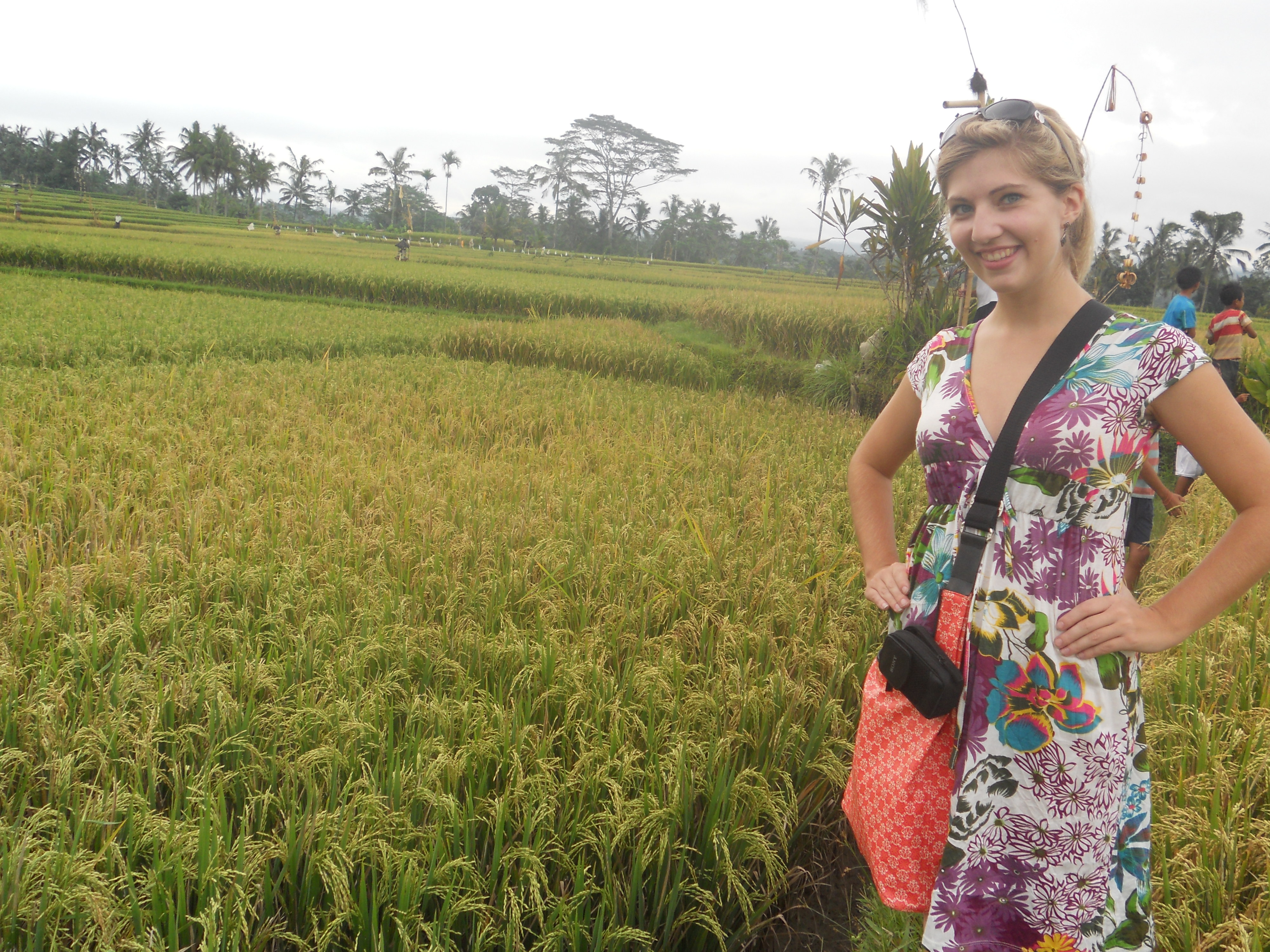
In addition to Balinese dancing, we also had the chance to explore some more local culture in Ubud with a half-day bike tour through the outside villages. What was great about the tour was that you get outside the tourist zones and get to cruise down the hillside (yes, all downhill!), past the rice paddies, past the women carrying baskets on their heads, and past all the local communities. We made several stops along the way to explore on foot, and I must admit, it was really cool to see what rice paddy looked like. Turns out, it looks kind of like wheat or any other grain, who knew?
Me and the Paddy Fields
One of the coolest parts of the trip, however, was our visit to the coffee plantation at the beginning. We got to check out where they grow coffee, vanilla, cinnamon and cocoa before sitting down to sample a few brews :). What was especially interesting, however, is that we got to try civet coffee, or what I prefer to call, “luwak-poo” coffee. For this delicacy, a weasel-like animal called a luwak first eats the berry surrounding the coffee bean, then poos it out. These beans are then roasted and made into a very expensive coffee. There seem to be several theories on why this coffee is so special. Some say enzymes in the luwak’s stomach changes the flavor of the coffee, while others say luwaks naturally choose the best berries, and therefore, the best beans in the wild and make the coffee roaster’s job easier. Either way, the coffee was good, strong, though I’m not enough of a coffee connoisseur to appreciate all its unique flavor :).
Despite the initial difficulty of entering the country and some frustrations of the over commercialization of the island, Bali had some truly incredible moments for me.
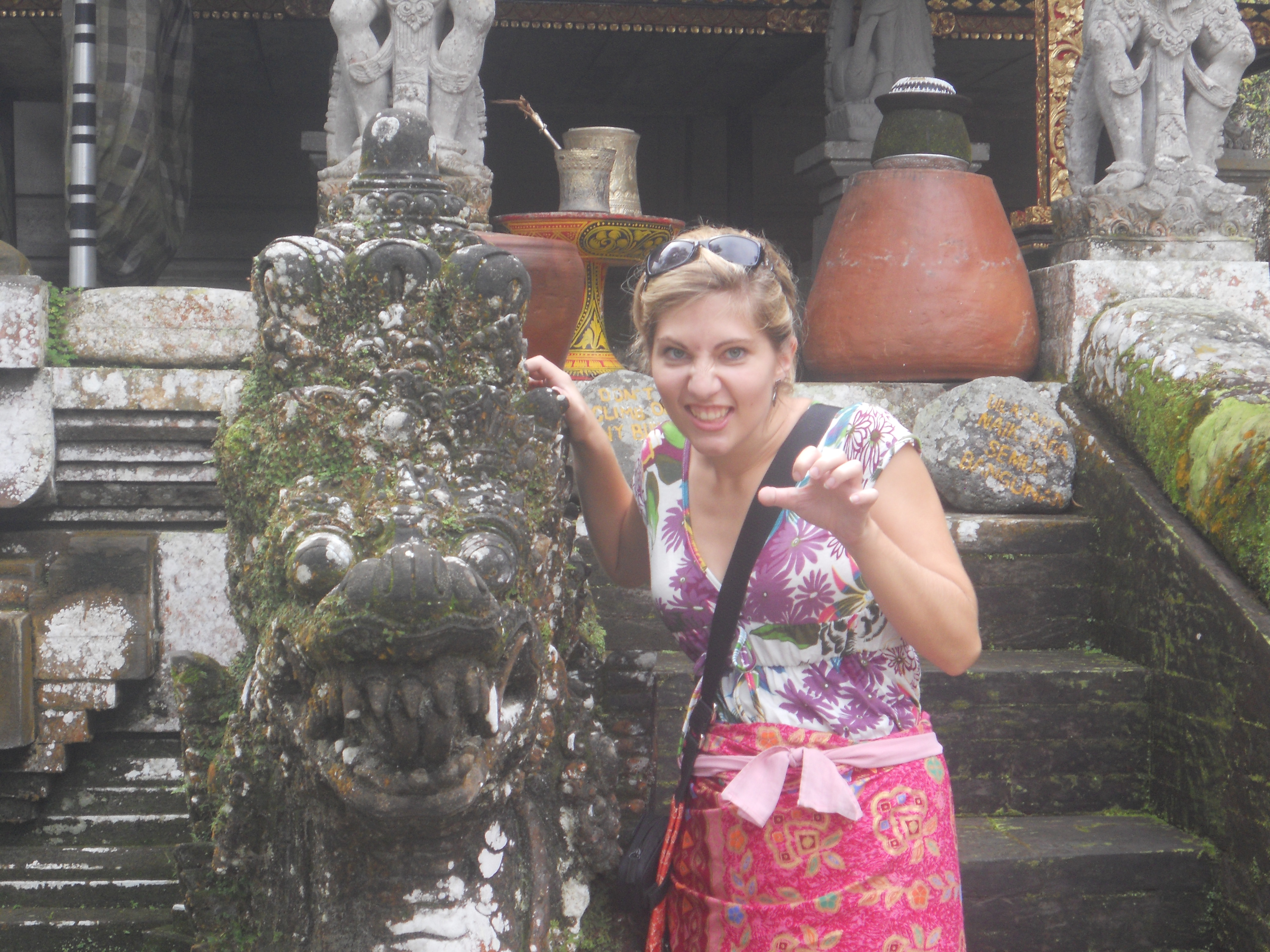
Me in my new sarong and sash next to a traditional stone carving at a Balinese temple
Our first day, my remaining travel buddies, Sarah and Michel, and I decided to hire a driver to see some of Ubud’s temples. I must say, compared to Thailand and other Southeast Asian countries, Bali’s temples are not that spectacular. Though situated in one of the world’s largest Muslim countries, Bali is actually Hindu mixed with some of the traditions and customs of its native people. Unlike the vibrant, glittery Buddhist structures in Thailand, or the colorful, heavily-ritualized Indian temples in Malaysia, Bali temples are mostly made of stone and are very basic open air complexes. One interesting feature, however, is that all the temples, storefronts, homes and structures in general have elaborate stone carvings of demons, meant to scare away evil spirits. It is also interesting to note that you can only enter a temple wearing a sarong and an accompanying sash, and women are not allowed to enter at all during menstruation.
Anyway, the first truly incredible moment I had in Bali was when I met Ketut, the medicine man in “Eat, Pray, Love” who inspired Elizabeth Gilbert to make her journey. I met Ketut a bit on a whim. A friend of mine had joked about trying to find him when I went to Bali, but I hadn’t seriously thought that would be a possibility. Imagine my delight when the man at the tourist counter told me that Ketut is still open for business and a mere 20-minute walk outside of Ubud! Seriously???
So the next morning, I giddily woke up, put on my new Bali sundress, and headed out to the home of Ketut Liyer: medicine man, palm reader, healer, painter, world-journey inspirer. When I arrived around 10 a.m., about an hour after he opened, there was already a sizeable line, though not as long as I would have expected. There was really no one there to receive customers when I walked into his open-air compound, just a group of plastic number tickets nailed to a wooden post and people lazily sitting around. To my surprise, there was almost no mention of “Eat, Pray, Love” anywhere, except for one movie poster attached to the wall. (After chatting with other customers, however, I learned they had all come because of the movie, though sadly, very few had read the book :().
I took number 13 and found a spot in the shade to reread part of “Eat, Pray, Love” while I waited. Though I ended up waiting almost two hours to see him, I didn’t mind at all. There was something about being in the sunshine with a book you love that is just completely relaxing. And there was something extra special about reading a book that takes place in the exact location that you are in right now, especially when you are just feet away from one of the book’s “characters”! (I had a similar experience while reading the last Harry Potter book in London, when the characters escaped to Tottenham Court Road, the exact street I was on when reading the story!) I was completely calm and happy as a clam.
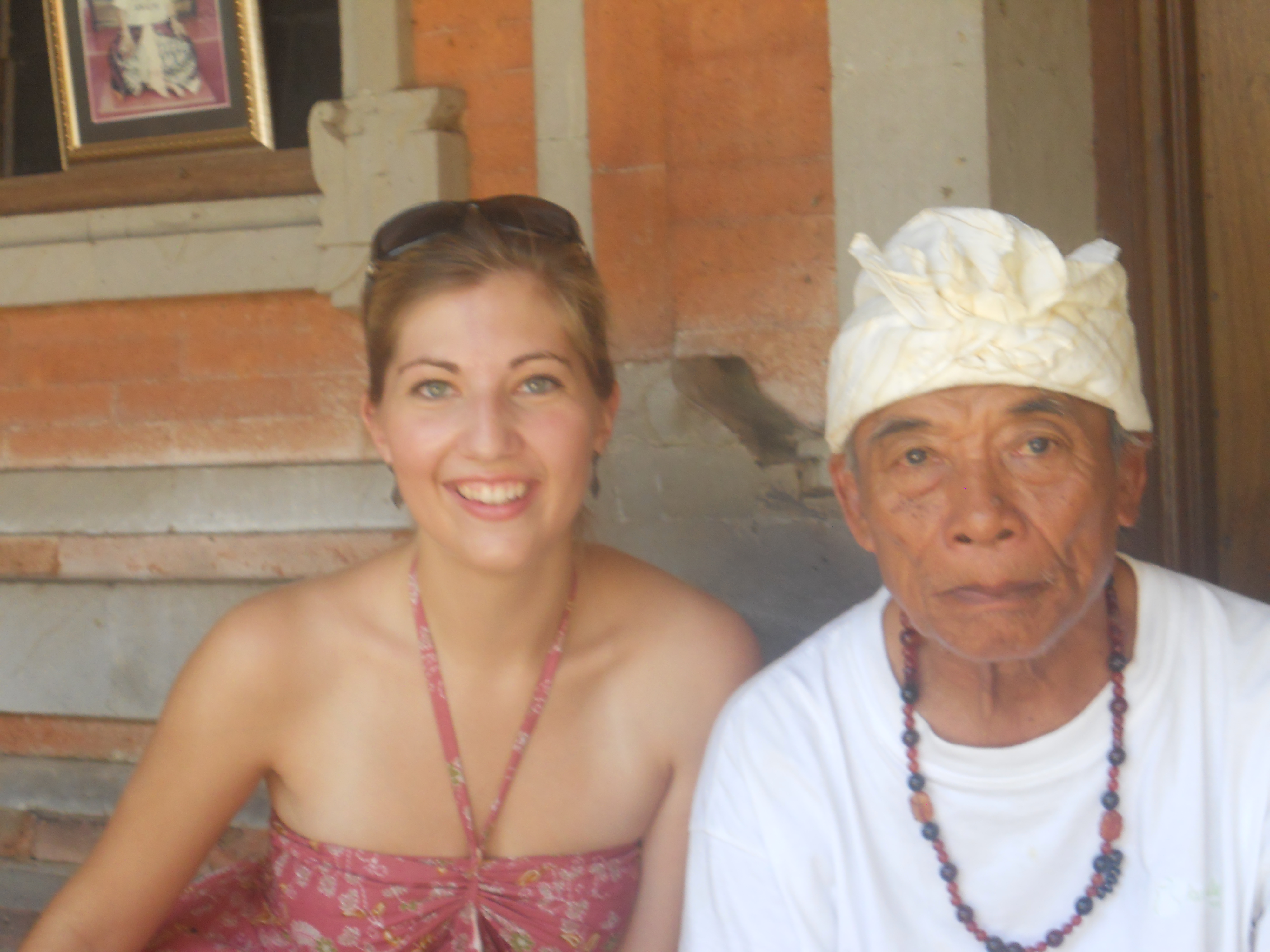
Me and Ketut, the medicine man from "Eat, Pray, Love"
When I finally got to see Ketut, my happiness soared even higher! Ketut was very flattering. To start, he told me I was “very pretty” with “sugar lips” and he could tell I was very smart. Though I wasn’t planning on taking the palm reading too seriously, I was completely delighted to discover that I would live to be 100, have a long harmonious marriage, three children and be successful in whatever profession I chose, including public relations, “beauty salon”, business and journalism. (“You lucky, you lucky!”) Though I was happy enough just to meet the man, I felt pretty good about myself after I left, even after hearing the beginning of this next customer’s session which started with, “You so pretty, you have sugar lips…”
As the week progressed, I happened to run into three other customers that had been in line with me (mostly random encounters) and soon found out that they too would live to be 100, have a long harmonious marriage and be successful in their careers…What a coincidence! In fact, one lady who did IT told me that Ketut predicted that she would be successful in “IT, beauty salon and business,” and apparently, she had sugar lips too. Hmm…
In addition to my “fortune,” my visit to Ketut’s house brought along one other, though delightfully unexpected, positive experience: my first close encounter with a monkey! (You didn’t really think I could go to Bali and not talk about monkeys, did you?)
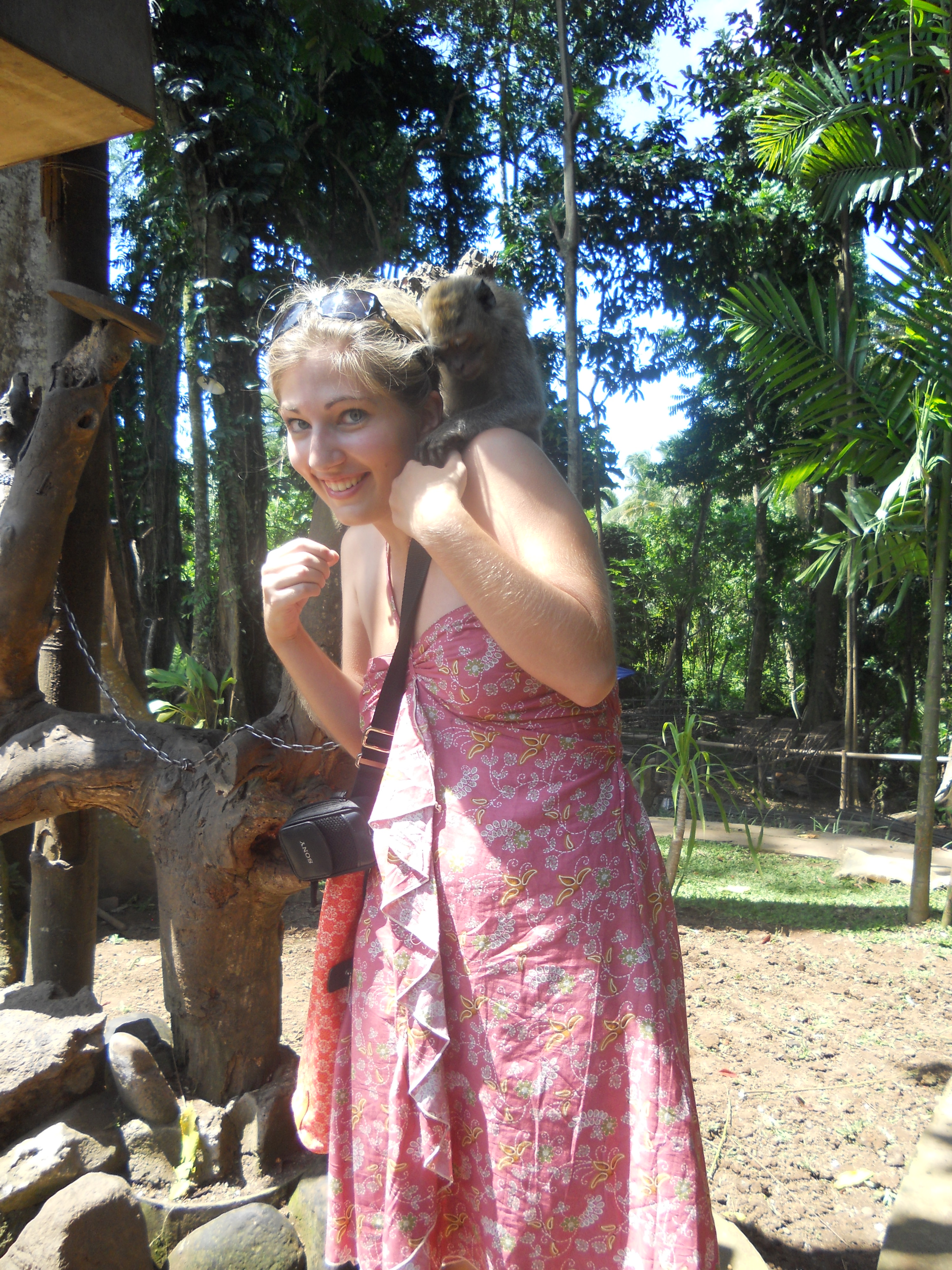
Me and Ketut's monkey, my first time "holding" a monkey!
So Ketut likes pets. In his compound (which now includes a homestay if you’re ever interested) he has a fairly extensive collection of exotic animals, though most of them are birds. As I was perusing, I noticed he had a pet monkey that wasn’t completely psychotic, and I got very excited! The monkey was chained to a post and seemed very eager to jump on to me, and after some reassurance from one of the compound’s staff, I let it… IT WAS INCREDIBLE! The monkey was not violent at all, though very eager to check my hair for bugs… It kept walking around my shoulders and head picking at my hair and my sunglasses, though never scratching or biting. It was so cool! I felt very touched, because I think the monkey liked me too, because he kept trying to jump back onto me every time I shook him off. It was AWESOME! So now I am officially over my fear of touching monkeys and am proud to say that I have let wild monkeys stand on my lap and shoulders on several occasions since my experience at Ketut’s and plan to try to interact with monkeys more frequently in the future.
Before I left for Malaysia, a friend of mine lent me “Eat Pray Love,” a memoir about a woman who spent a year traveling across Italy, India and Bali in search of love and balance. The book really hit me. I won’t credit Elizabeth Gilbert with inspiring me to travel, but instead, I found an intensely familiar voice with whom I could relate. Though Elizabeth Gilbert was in her early 30s and overcoming a messy divorce, her outlook on the world, her passions and her struggles felt so close to mine, and I felt a real connection with her.
So when I decided to move to Southeast Asia, Bali quickly neared the top of my list of places to see before I returned home. Bali was what inspired Elizabeth Gilbert to take her journey in the first place, an island she described as an exotic, enchanting paradise where everyone is joyful and at peace. If Liz loves it, I’ll love it, right?
But during the six days I spent on the Indonesian island, “balanced” and “peaceful” were not the words I would have used to describe my time there. I’m still not sure why, but something about the island really threw me off. Though beautiful, Bali is EXTREMELY touristy, and often quite obnoxiously so. Hotspots Ubud and Kuta, where we spent most of our time, are completely commercialized and you can’t walk more than two feet without being harassed by someone offering you a massage or a taxi (most of the “taxis” aren’t authorized, just random locals looking to make money by driving tourists around). Every other day I was either completely hating or completely loving the place and constantly feeling like I never quite had a grip on things.
Perhaps the deportation of a fellow traveler and my own near deportation set the tone for the rest of the week.
Before making the trip, I had read in Wikitravel that you need at least two empty pages in your passport for the Indonesian visa on arrival. Though my passport is nearly full at this point, I still had the back flap and its opposing page blank, and since the Indonesian visa is relatively small, I figured I’d be ok. So as I stood at the immigration counter, bright-eyed, energetic, looking forward to “paradise,” imagine my surprise when the creepy immigration officers pulled me into the detention room to tell me they needed to send me back to Malaysia to apply for a new passport. WTF?!
They insisted that the remaining “Amendments and Endorsements” page in my American passport was not suitable for a visa (though an “Amendments and Endorsements” page had been good enough for a Vietnam visa…) and that I could simply go back to Malaysia, apply for a new passport and come back. No big deal, right? Since I had read that section of Wikipedia, I wasn’t sure if they were telling the truth or not. However, since I had also read “Eat Pray Love,” I knew they were corrupt. After all the planning and anticipation and standing on the brink of paradise, I was not about to go back. So I asked them if there was anything I could do to change their minds…
The immigration officer then asked me, “If I let you through, what will you do to show me your appreciation?”
SAY WHAT?! I couldn’t believe I was being asked for sexual favors to get into a country!
Though completely disgusted, I asked very calmly how much it would cost for me to stay in Bali, making it very clear the only “appreciation” I would be showing him was in monetary terms. After some negotiation, I agreed to pay him $150 to let me stay.
After that little transaction, I felt kind of dirty, though partially grateful I could buy my way into a country if my passport really wasn’t valid, and I just wanted to get of there. It wasn’t until I found out my Malaysian Chinese friend Dick had also been detained, that I got really pissed off.
As a Malaysian, Dick didn’t need a visa to get into Indonesia. However, since his passport had accidentally been through the washing machine, the immigration officials said it wasn’t valid (side note: the washed up passport had been good enough to get into Singapore on a previous occasion). His options were to go back home to get a new one or pay a bribe to stay. Though Dick wanted to return on principle, I urged him to just pay the $150 to stay since we had already made plans for the week. When he went to ask to pay, they told him it would cost $300! When he asked for a lower price in Bahasa (The Malay and Indonesian languages are very similar), the official promptly responded in English, “This is not a market, sir!”
So Dick went back to Malaysia, and our week started with one man down. :(. Welcome to Indonesia.
With some of my recent trips, I haven’t had much time to actually write about life in Malaysia. Things have calmed down for a bit now, and I’m happy to say that life in Malaysia has been pretty good lately. This last month in particular has been really fun with lots of positive changes :).
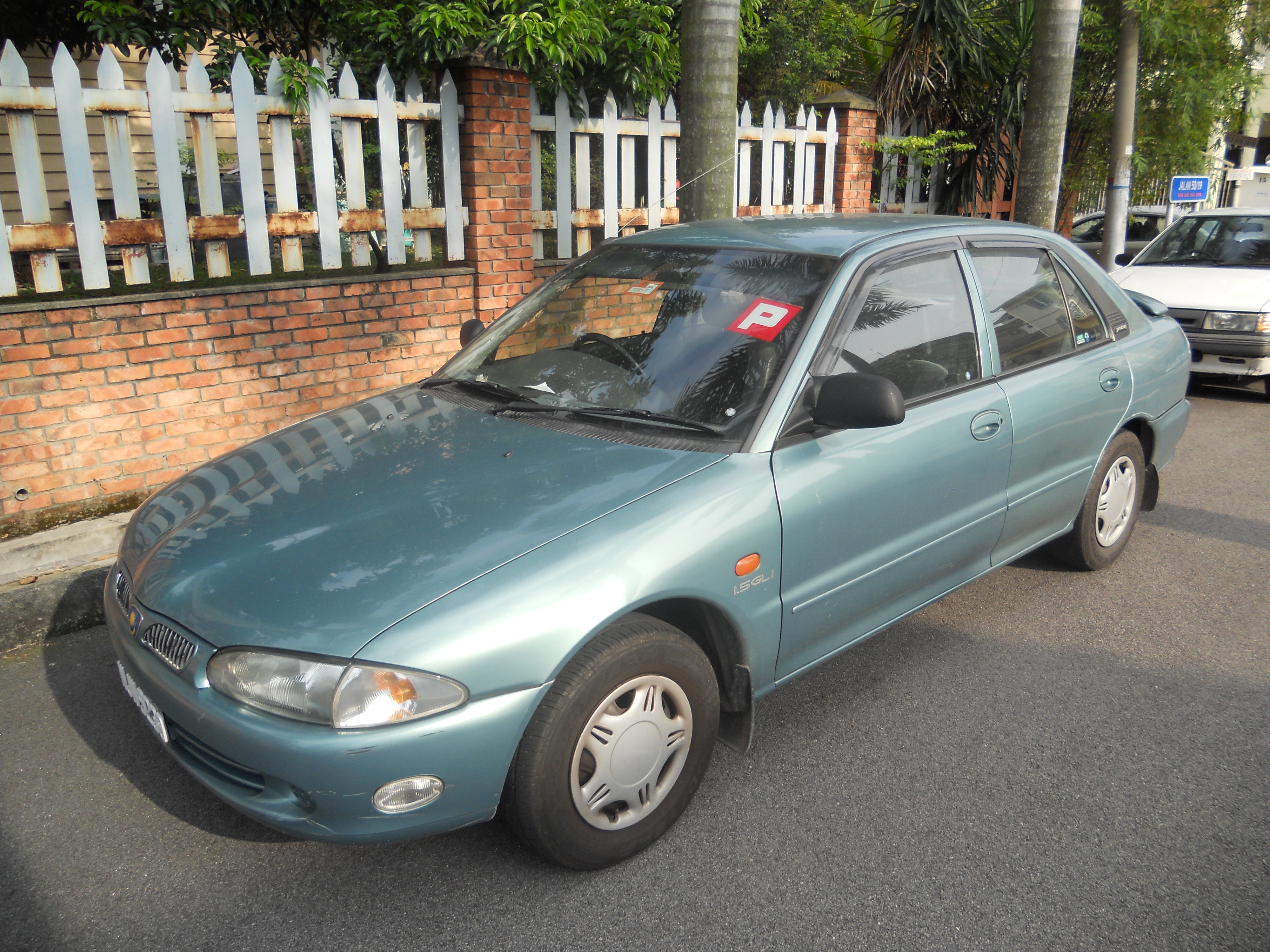
The biggest change is that I finally bought a car. Yes, I am now the proud owner of a light green, 2002 Proton Wira, a medium-sized Malaysian car that was within my budget and not the size of a clown car. No more fighting to communicate with non-English speaking taxi drivers, no more long journeys on the LRT subway, no more staying at home because going out is too much of a hassle, I AM OFFICIALLY MOBILE!!!
My car
Now, I’m not going to lie. For the record, I still HATE Malaysian drivers. Seriously, they are the most impatient, selfish drivers I have ever seen. People cut you off constantly, motorbikes weave in and out of traffic without looking and everybody parks wherever they want, regardless of whether or not they are blocking traffic or visibility for others. I have woken up in the middle of the night at least three times now with an overwhelming fear that I would die in a car crash here. I wish I was kidding, but in the end, all I can do is hope for the best and triple check my mirrors :).
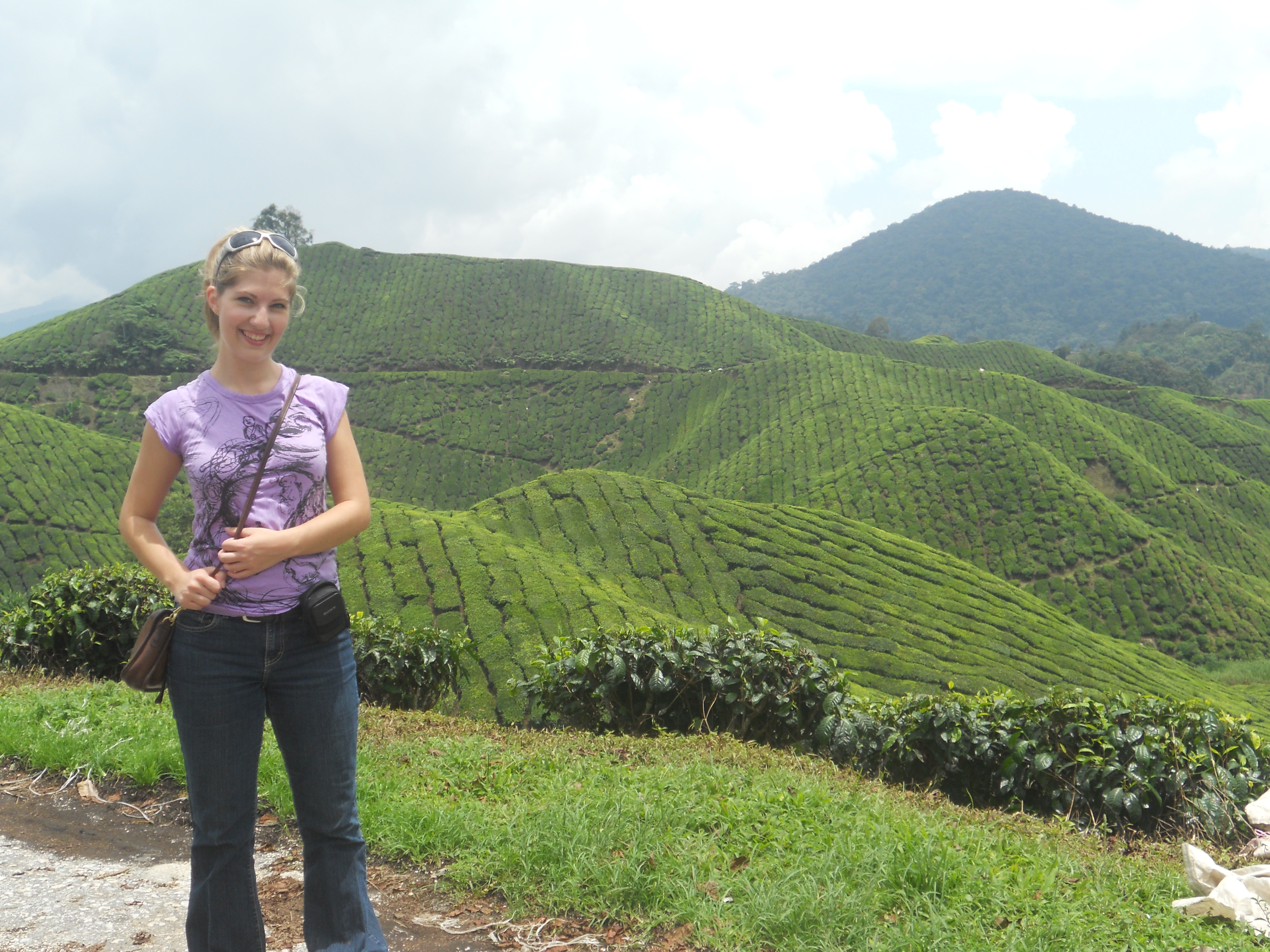
Me at the Boh Tea Plantation
Along with getting a car, I have also had the chance to explore deeper into Malaysia and see some really cool things. In March, I joined some fellow CouchSurfers on a weekend trip to the Cameron Highlands, a cooler area of Malaysia within its Titiwangsa mountain range that is a popular weekend getaway. With cooler temperatures, the area is full of tea, vegetable and flower plantations that offer breathtaking views and a welcome relief from the heat. We spent most of our time at the Boh Tea Plantation, one of Malaysia’s most established tea producers, and it was incredible. All around are hill after hill after hill of rich, green tea bushes, all manicured into neat little rows. The air is much crisper there with a vague scent of tea, and you just feel fresh as you breathe it in. I felt like I was in the Great Valley (where are my Land Before Time peeps at? :P).
At one point, we even got a glimpse of Malaysia’s former prime minister Abdullah Ahmad Badawi (2003-2009) who was also enjoying tea that day. Though I really know nothing about him, it was still pretty cool :).
Last weekend I was finally able to check out some of Malaysia’s beaches with a weekend trip to Cherating, a small village on Malaysia’s east coast known for its surfing. My Malay friend Omar invited us to join him on his weekend surfing trip, and it was a blast! Omar showed us how to surf, and though we were pretty bad, we just enjoyed jumping in the waves! As a Michigan girl, what was especially refreshing was jumping into water that wasn’t freezing cold. Though not exactly crystal clear, the water was a perfect lukewarm temperature, making it irresistible and easy to spend the entire day in. I couldn’t get enough!
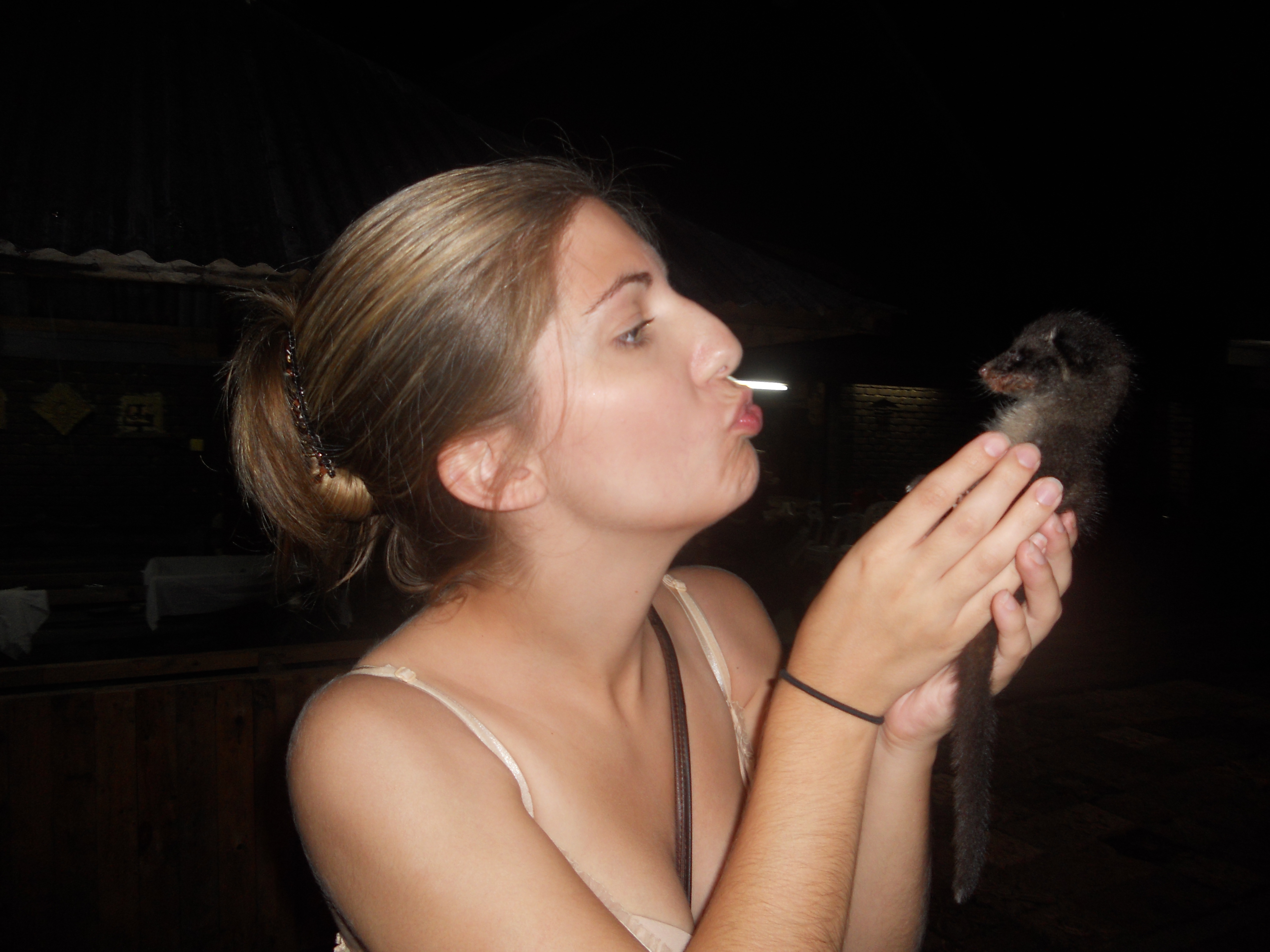
Me and the baby meerkat
Perhaps equally as cool as the surfing, however, is I got to hold some exotic pets! Yes, we all know my weakness for small, furry animals, and I was absolutely delighted when I discovered one of the village families had a baby squirrel, a baby meerkat and a baby monkey! Seriously, HOW COOL IS THAT??? I have always wanted to hold a squirrel (they just look so darn cute outside), but honestly, they’re much more rodent-like than I expected, and I was quickly disenchanted. The meerkat, however, was the sweetest little thing. It was like a small, grey “Timone” and would just sit inside of my hand, so cute! The monkey, however, was my favorite. If you’ve been reading my blog, you know that monkeys are kind of a big deal, but this was the FIRST TIME I was actually able to pet one! “Kiki” didn’t really like to be held, plus after my first monkey attack, not sure how close I wanted to be to its teeth, but I was able to feed him with a baby bottle and pet him a little, which was still really awesome!!!
So now I sit here, nursing my bright red skin, looking forward to this weekend’s trip to Perhentian Island in northern Malaysia. My face maybe sunburnt but at least it’s smiling :).
The last two days of our trip were spent exploring places outside of Saigon. Unfortunately, I was so congested and miserable at this point that I really just wanted to go back to Kuala Lumpur to get some fresh air (that should put the pollution in perspective for you). Luckily for me, the day trips (at least one of them) ended up being worth the less-than-ideal traveling conditions.
Our first day trip was a packaged tour to visit the Cao Dai Temple and the Cu Chi Tunnels, two unrelated, yet equally fascinating destinations I knew very little about. Unfortunately, our guide was terrible. He could barely speak English but insisted on talking incessantly with the high-strung enthusiasm of a small bird (that I wanted to squash). Also unfortunately, neither the temple nor the tunnels had much to read about on location, so we were pretty dependent on our guide for information. (Thank goodness for guidebooks, the Internet and fellow travelers…).
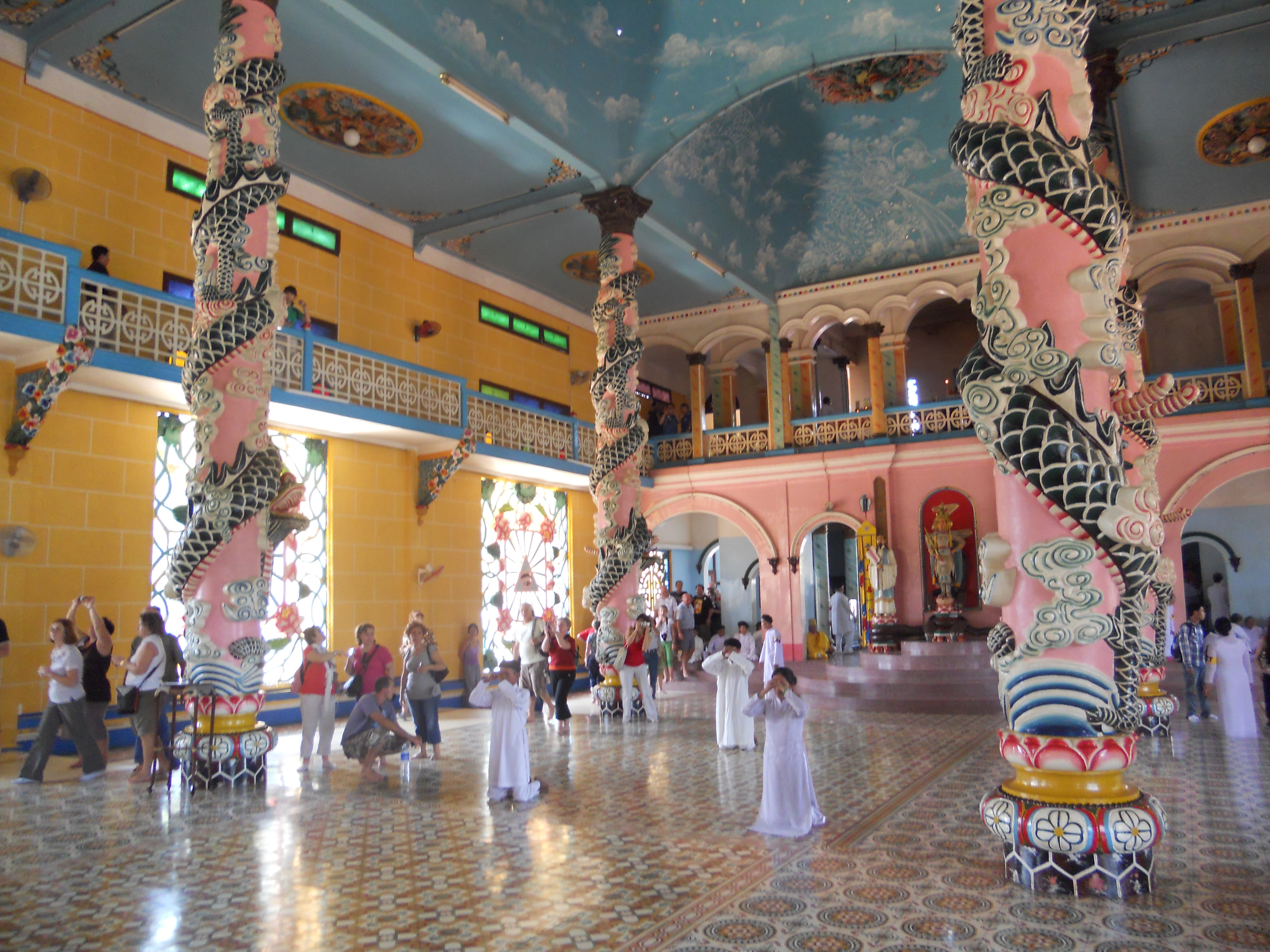
Inside of Cao Dai Temple
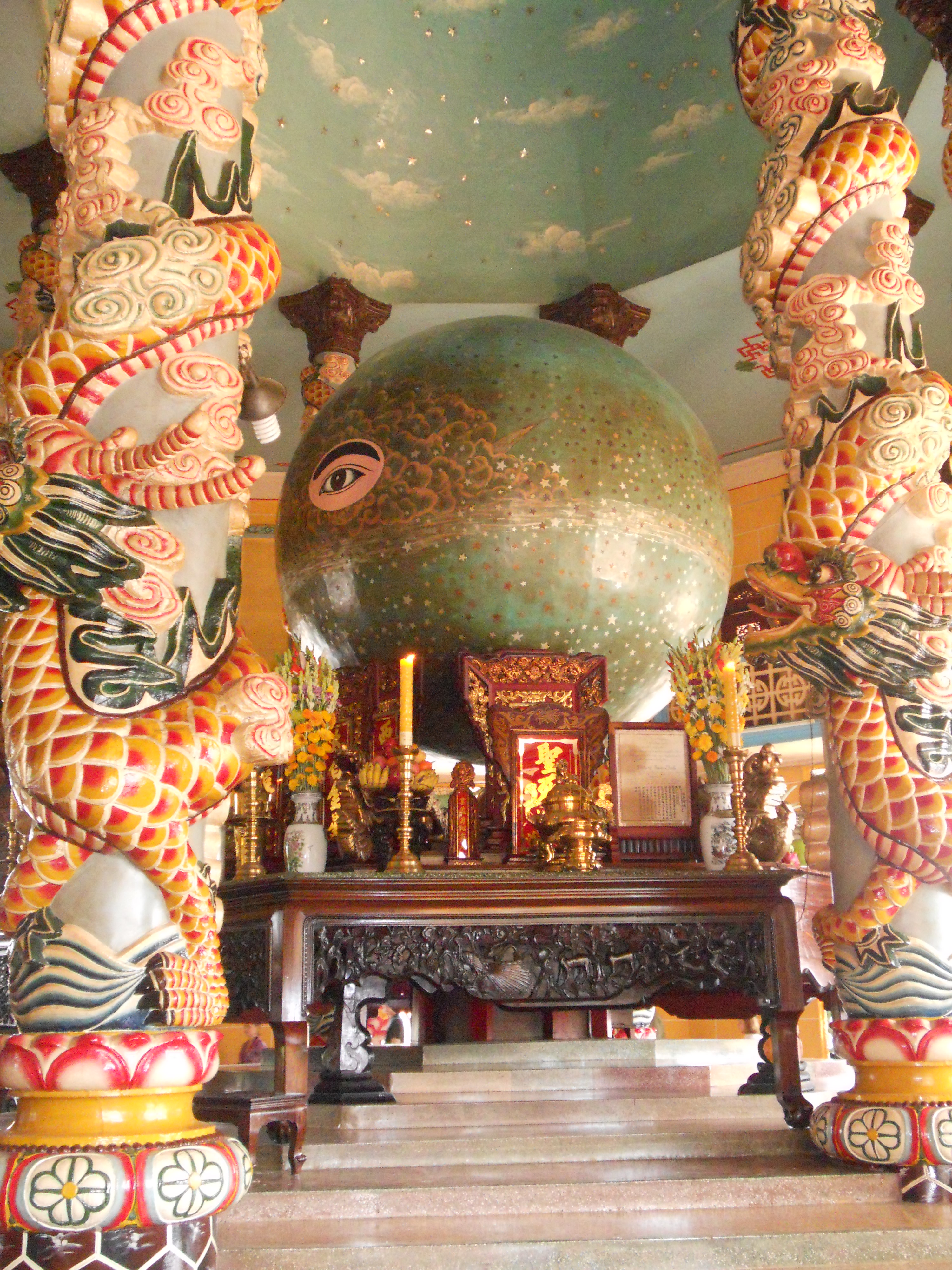
The Cao Dai Temple was unlike anything I have ever seen before. Upon walking inside, I felt like I was entering into a Dan Brown novel. The whole building is huge and colorful with bright pink and yellow walls, a ceiling painted to look like a mystical blue sky and columns with bright, cartoonish dragons encircling them. What was most fascinating, albeit creepy, however, was that the whole thing is covered in EYES! Yes, eyes! Specifically, the temple is covered in individual left eyes that seem to be watching over everything and, apparently, represent the all-seeing eye of God. In the back of the temple is also a massive orb with a huge eye in the front of it.
Orb inside the Cao Dai Temple
If the building in itself wasn’t interesting enough, the worshippers themselves definitely were. Nearly all the men and women were dressed in pure white garments, though some of the men had more elaborate outfits in bright blue, yellow or red accompanied by tall hats with eyes on them. The men and women were separated from each other on either side of the temple and entered in straight corresponding lines with the colorful men first followed by everyone else according to rank. They then proceeded to sit down on their knees and perform a combination of chants and bows.
At this point, I was so confused. I had thought this was going to be a Buddhist temple but this was completely different than anything I’d ever seen, and I had been unable to decode the incoherent babbling of our guide. Apparently, Cao Daism is a monotheistic religion that is a mystic COMBINATION of Buddhism, Taoism, Catholicism, Hinduism, Confucianism and Islam and, as far as I know, is the only one of its kind in the world (though it has an international following). Like the Catholic Church, the religion has a hierarchical structure, including priests, bishops and a pope. Like Eastern religions, they believe in reincarnation, karma, ancestor worship and strive for the eventual attainment of nirvana like the Buddha. I found the entire thing unbelievably fascinating and plan to research it a lot more soon.
This slideshow requires JavaScript.
After the temple, we headed out to the trip’s main destination: the Cu Chi Tunnels. The Cu Chi Tunnels were part of a massive tunnel network throughout Vietnam used by the Viet Cong to win the Vietnam War. The whole system was quite complex, consisting of several layers of tunnels on top of one another full of trap doors, booby traps and airtight seals that allowed them to go undetected by the South and the Americans for a long time. Some of the tunnels were built right underneath American military bases, leaving them puzzled how the Viet Cong could so easily attack them. Apparently, the tunnels were like mini-cities, full of hospitals, schools and dormitories that allowed the Viet Cong to stay under for days (though the conditions were miserable).
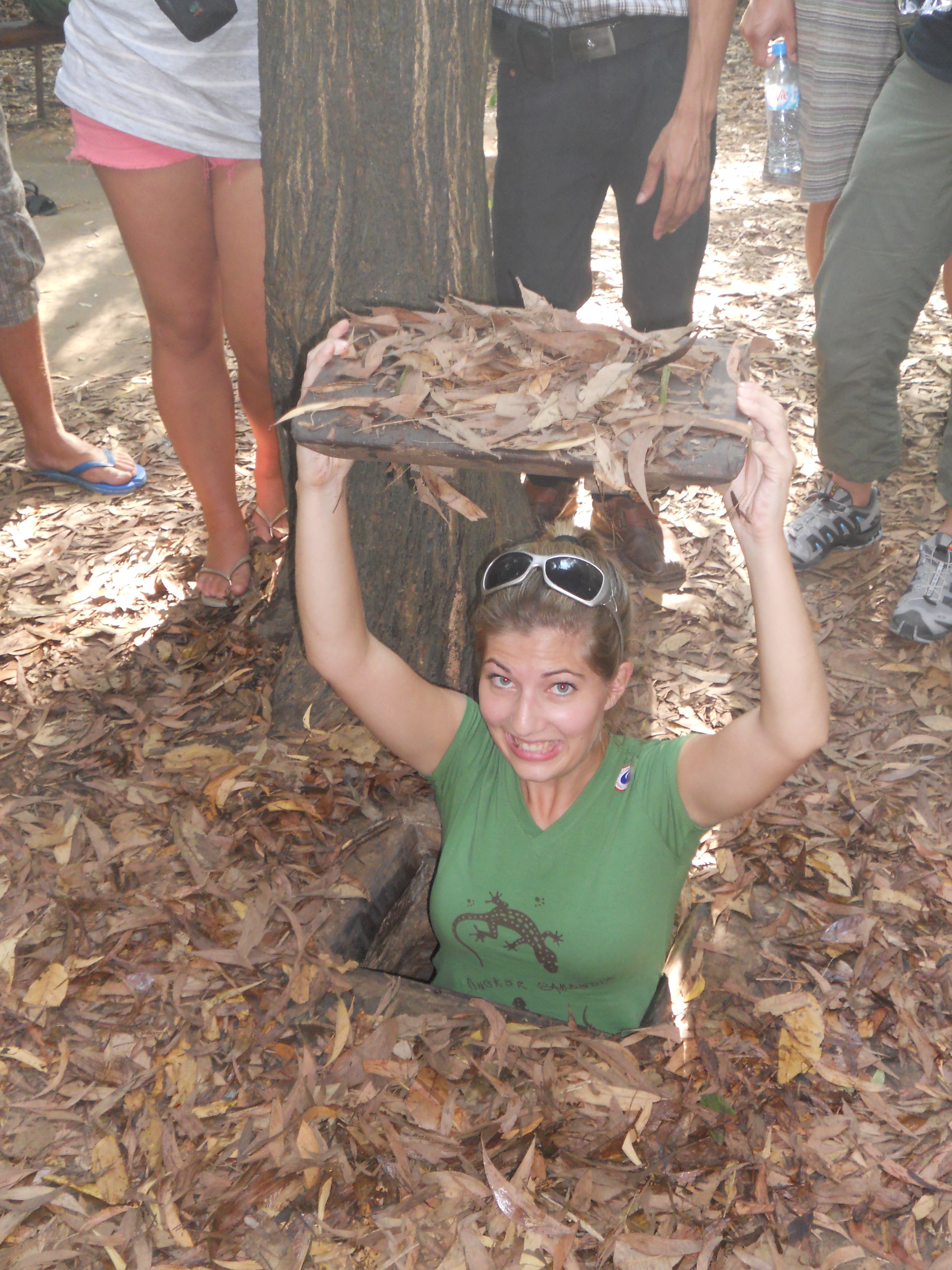
Me inside a foxhole at the Cu Chi Tunnels
Unfortunately, the site had very little information available to read, and we were, again, woefully dependent on the “expertise” of our guide. The site is also full of more anti-American propaganda, and I distinctly remember hearing the words “those crazy American devils” in the introductory video. However, the cool thing about the site is that you actually get to go into some of the tunnels and explore. Like most of my group, I decided I would walk through the long tunnel open for tourists that ran throughout the site. It wasn’t until two minutes in when we were crouching underground in the dim light with increasingly thick air that I realized how claustrophobic I was and started to panic. All I kept thinking and saying was, “Where is the exit? I have to get out!” Luckily, there were escape stairs available periodically throughout the tunnel, and I ran out the first chance I could. I’m glad I did, because you apparently have to crawl on your stomach at one point, because the space is so small. What boggles me is that some of these tunnels have been EXPANDED to accommodate tourists, who, I guess, are mostly bigger than the Vietnamese. At any size, I can’t imagine anyone staying down in those tunnels for more than a few minutes, let alone a few days. The tunnels we saw were paved and lit, but when they were actually used they were full of insects and snakes. I also read that the Viet Cong would often put dead bodies in the tunnels to deceive the Americans and, therefore, they often smelled like rotting flesh. I cringe at the thought…
As interesting as our first day trip was, our second day trip to the Mekong Delta was unremarkable, mostly involving a boat ride along the river and a bunch of super-tourist destinations where you watch them make honey and coconut candy. Nothing life-changing there.
After four days in Cambodia, Karri and I headed over to Vietnam for four days in Ho Chi Minh City (formerly known as Saigon). I must say, Saigon was…interesting. Despite being neighbors, Vietnam was really different than Cambodia. The food, the culture and the whole atmosphere were completely different. Cambodia seemed a lot more like Thailand to me, whereas Vietnam is sort of what I imagine China to be like…
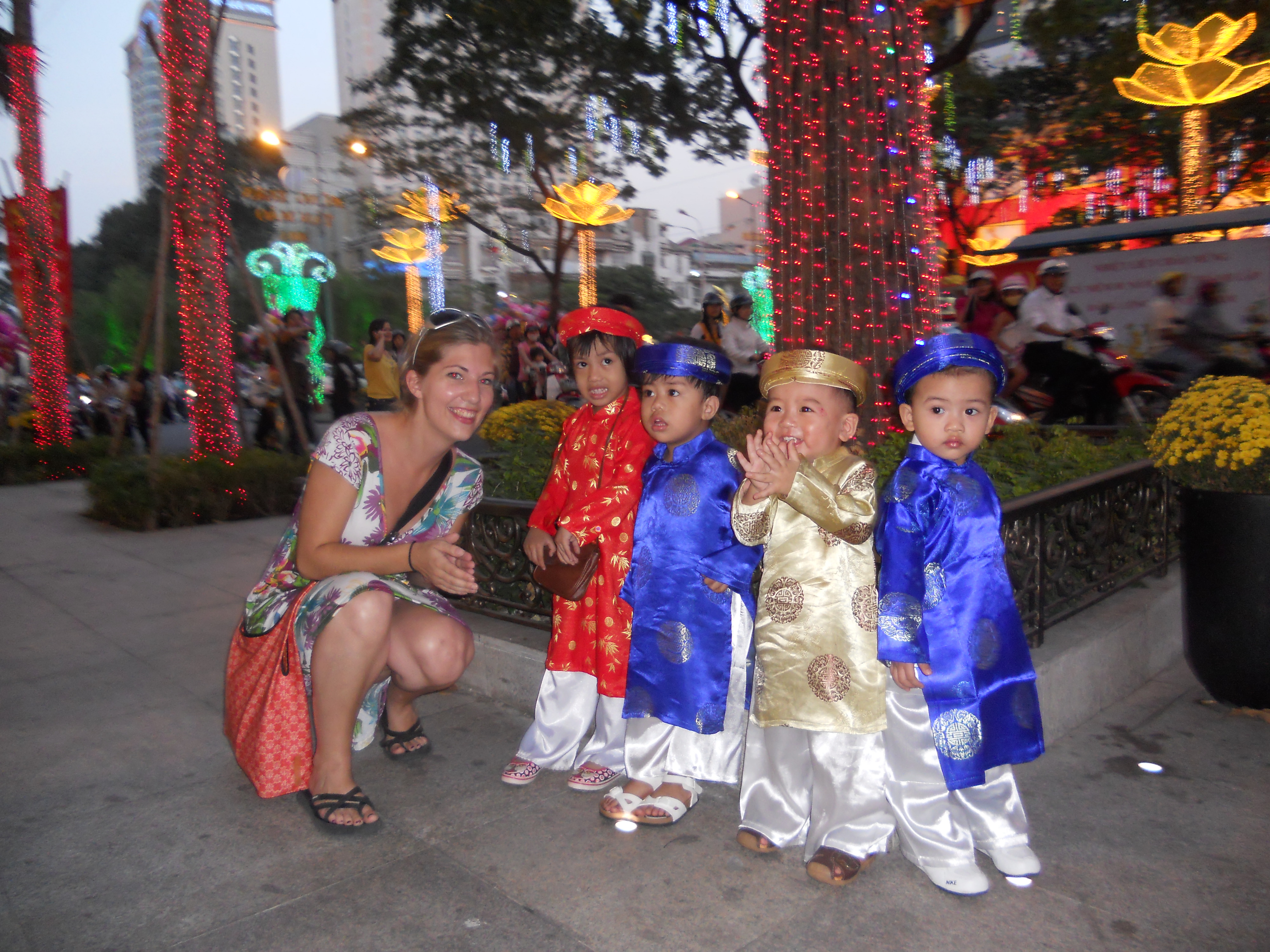
We happened to arrive during the eve of Tet, Vietnam’s biggest holiday of the year when they celebrate Lunar New Year. It was a pretty exciting time. The whole city was covered in festive New Year’s signs with red decorations and cat images, since 2011 is the Year of the Cat (however, according to China, 2011 is the Year of the Rabbit…). To our luck, Karri’s Vietnamese friend Michelle was home for the holidays and offered to show us around on her motorbike. I gotta say, at first I was scared. Traffic in Southeast Asia is crazy as it is, but Ho Chi Minh City was especially bad. The city in itself is crowded but in the streets motorbikes are SWARMING! I don’t think I’ve ever seen so many motorbikes in my life, it seemed as if nearly no one had a car. Anyway, not wanting to be rude, Karri and I hopped on and off we went on our Saigon adventure!
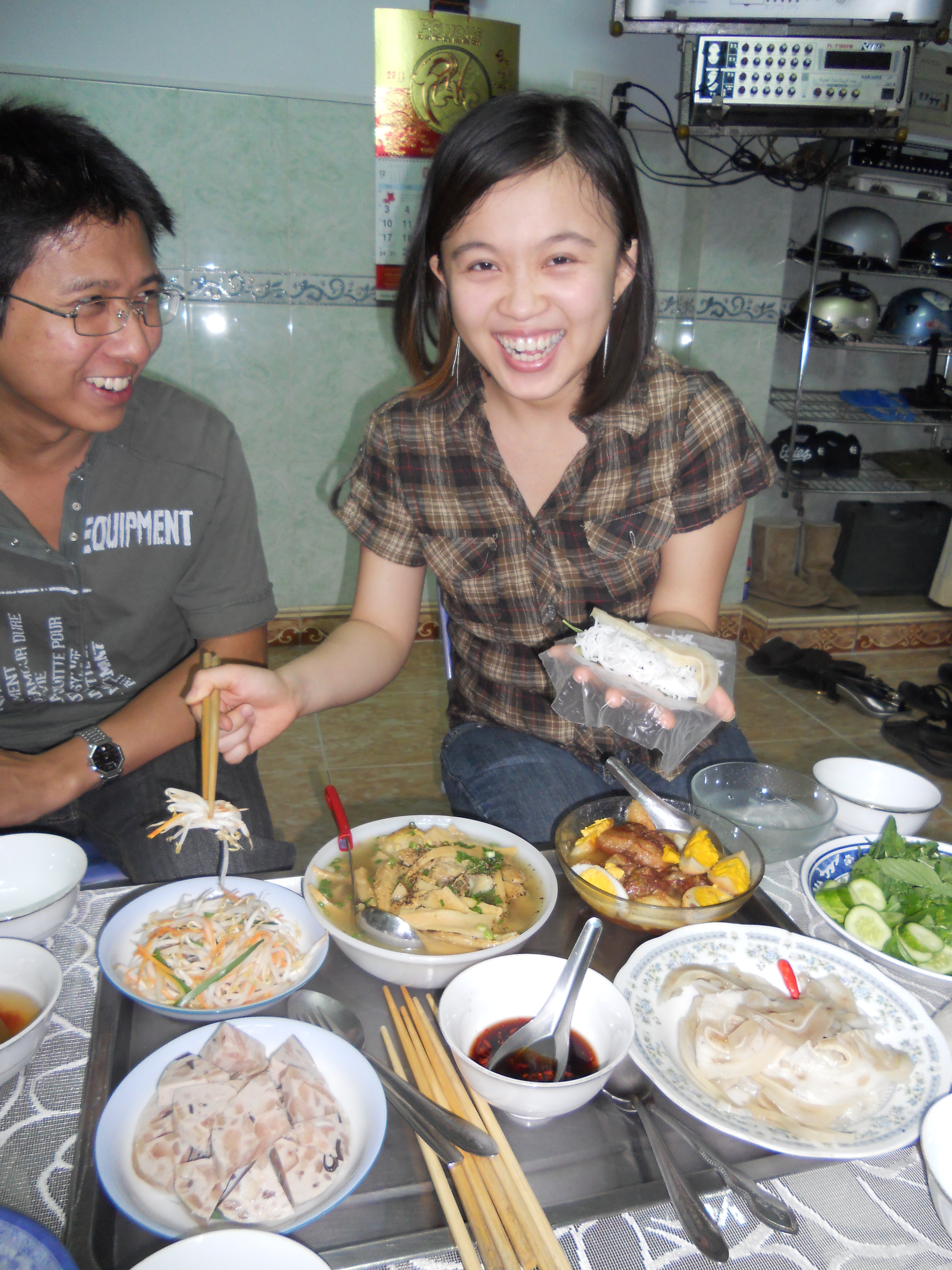
Michelle showing us how to eat Vietnamese food with rice paper
The whole evening was really fun. Aside from the rush of the motorbike ride (only a few near misses :)), we joined the rest of the city in an evening Tet promenade in the city center. The whole street had been blocked off and decorated, and people from all over got dressed up in their finest to stroll down it and meet each other. The atmosphere, though crowded, was extremely happy and festive, it was hard not to enjoy the positive energy. Afterward, Michelle invited us to her house for an authentic Vietnamese dinner. In front of us we found a spread of rice, sauces, meat and vegetables as well as this transparent paper-like food called rice paper. Michelle showed us how to dip the rice paper in water to make it clear and soft then wrap all the food inside of it to make a roll. Her rolls were definitely much tidier than mine, but in the end, they were still fun and yummy :).
Me and the Tet babies
Later that night, Karri and I decided to go to bed early, since he wasn’t feeling well and we wanted to be refreshed the next day. However, the spontaneous Lion Dance outside my window at midnight accompanied by a stream of never-ending firecracker sounds kept me awake well into the morning. Part of me felt bad for missing out on the fun, so at 1 a.m. I changed my clothes and decided to head out on my own only to find we had been locked in! Yes, as if it were a shop, our hotel had closed its doors with a big metal gate over the entrance. As I headed back to my room, stepping over the biggest cockroach I’d ever seen in my life, I just hoped there wouldn’t be a fire…
On the morning of day two, my friend Danielle flew in to join us for the remainder of the trip. Since we were planning on taking day trips outside the city the last two days, we decided to see as much of Saigon as possible while we could. Though many of the shops and restaurants were closed for the holidays, the three of us were actually able to see quite a bit. We walked all over, taking in the French colonial architecture, Notre Dame Cathedral, the Tet market and a cockfight on a sidewalk in broad daylight. By far the most interesting event, however, was the War Remnants Museum, where we spent most of the afternoon.
I must admit, before heading to Vietnam, I knew very little about the Vietnam War. I knew it was a very controversial war where many bad things happened that messed a lot of people up. I was really hoping to learn a lot at the museum. Boy was I wrong…
This was the most un-objective, propaganda-laden place I have ever been to! To start, the entire first floor is full of images of Vietnam War protests throughout the world and letters from American soldiers and political figures expressing their regret and sympathy to Vietnam. The second floor was basically a large exhibit on Agent Orange followed by dozens of pictures of deformed adults and children and their stories. I honestly can’t remember all that was on the last floor, I just remember seeing a lot of pictures of dead bodies and stories about the atrocities the “imperialist” Americans committed.
I know a lot of bad things went down in Vietnam and that history has a different perspective from the other side, but come on! From this museum, you’d think North Vietnam was some sort of angelic victim who was only defending its country. There was virtually no mention of the Cold War, the Communism/Capitalism struggle or anything else that led up to the war, nor was there any mention of the atrocities the North or the Viet Cong committed. The only real positive thing that I got from that museum was a desire to learn more about the war (objectively), and I am now reading up on it.
The whole experience was a real wake-up call for me. It scares me to think how much control a government can have over information and the power this control of knowledge has over its citizens. Though most of the people I met in Ho Chi Minh City were super nice and didn’t seem to have any anti-American feelings, it makes me nervous to think that this information is being shared with hundreds of people every day and spreading more hatred against us. The whole thing reminded me of “1984” which, if you’re read it, you know does not end very well…

 Erica in Wonderland